Ingress Pathways and Mechanical Vectors of Hydraulic Aeration
In hydraulic braking design, fluid incompressibility is taken as an absolute baseline. The moment atmospheric gases bypass internal seals, system stiffness collapses. Understanding precisely how air enters brake system circuits requires looking beyond obvious fluid leaks; microscopic pressure differentials, fluid state changes, and thermal cycles frequently draw gas past components that appear completely sealed against fluid leakage under static inspection.
Automotive braking circuits operate across broad pressure extremes—from 1,000+ psi under hard deceleration down to momentary negative pressure spikes during rapid pedal release. These dynamic pressure changes, paired with the hygroscopic nature of glycol-ether formulations, create multiple mechanical entry paths that field engineers and fleet maintenance leads frequently overlook.
The Primary Mechanisms of Air Ingress
Air generally enters a closed hydraulic circuit through one of four primary physical phenomena:
1. Dynamic Lip-Seal Deflection Under Vacuum
Caliper piston seals and master cylinder primary cups are directional. They are engineered to seal aggressively against outward hydraulic pressure. However, when a brake pedal snaps back quickly, fluid return through the master cylinder compensating port can lag behind the piston stroke. This produces a momentary vacuum within the cylinder bore or caliper housing. If the elastomer lip has hardened through heat cycling, ambient air can be drawn past the seal boundary without a noticeable fluid drip ever appearing on the garage or shop floor.
2. Localized Boiling and Dissolved Gas Precipitation
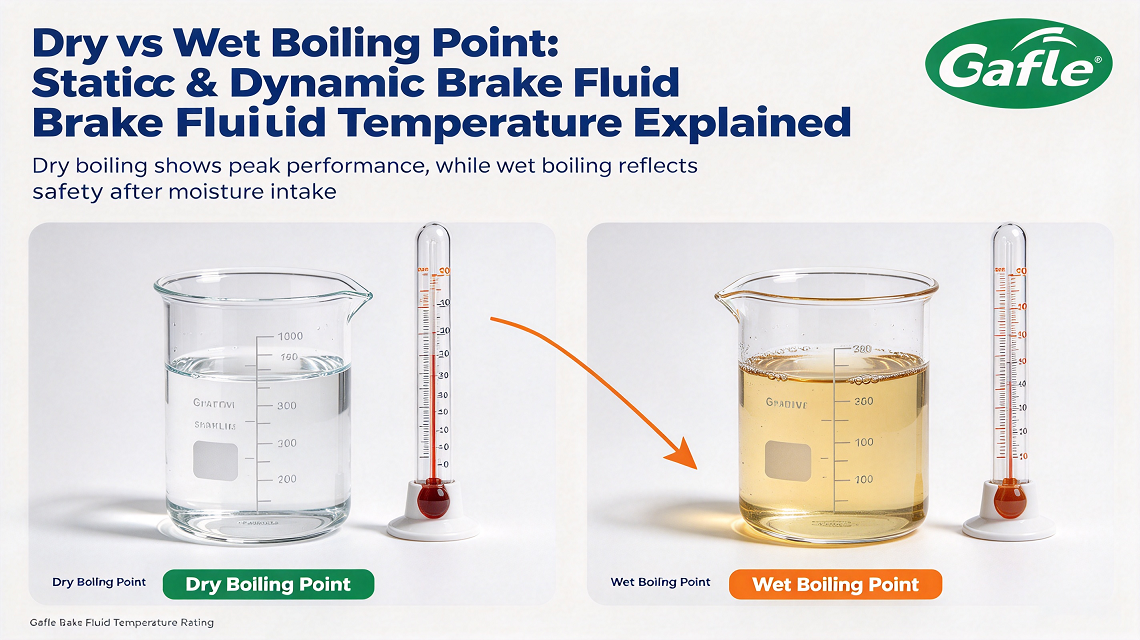
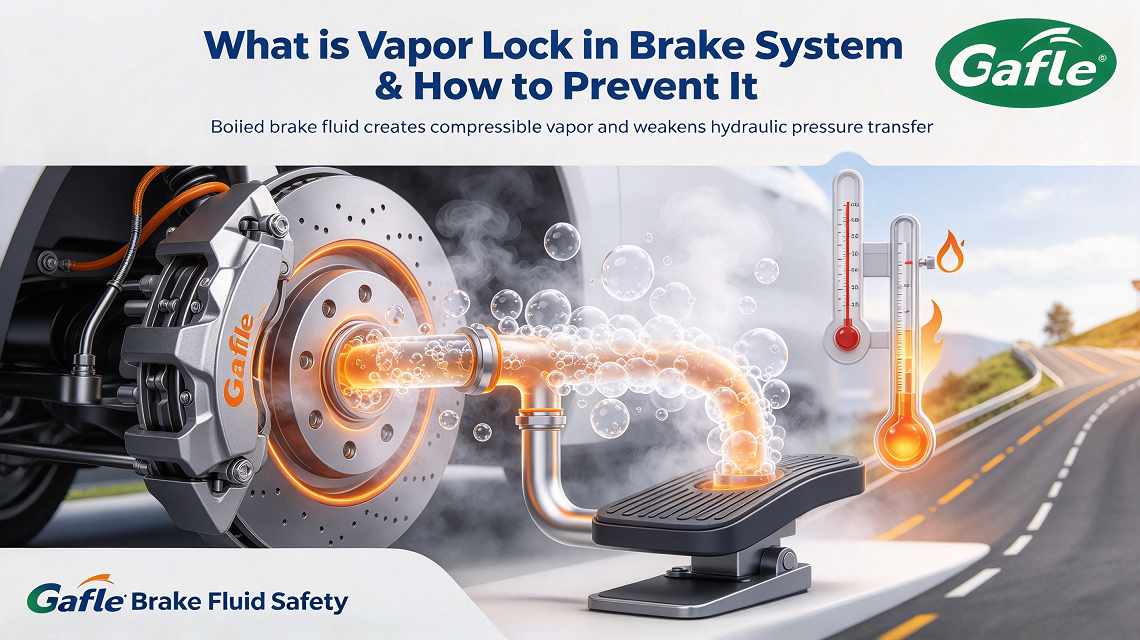
DOT 3, DOT 4, and DOT 5.1 brake fluid formulations are hygroscopic, meaning they steadily absorb ambient moisture through microscopic pores in flexible EPDM hoses and reservoir venting systems. As moisture content rises, the fluid boiling point drops significantly. During prolonged braking or high-load descent, localized caliper temperatures can easily exceed 200°C. Water within the fluid boils instantly into steam pockets. While steam condenses once the assembly cools, prolonged thermal stress often liberates dissolved gases and degrades fluid additives, leaving persistent vapor bubbles in high-mount fluid pockets.
3. Micro-Porosity in Aged Rubber Lines
Flexible rubber brake hoses degrade from the inside out due to thermal stress and mechanical flexing. As the internal nitrile or EPDM layer develops micro-cracks, pressure cycling can pull trace amounts of air through the braid layer during the fluid contraction phase that follows thermal cooling.
4. Improper Servicing and Incomplete Assembly Pre-filling
Simple assembly oversight remains surprisingly prevalent. Replacing calipers, slave cylinders, or ABS hydraulic control units without bench-bleeding the component guarantees trapped air. Once introduced, air easily migrates into the high-pressure valve bodies of modern traction control modules, where complex valving makes passive removal nearly impossible without dedicated diagnostic cycling.
Hydraulic Compressibility: Why Air Causes Soft Brake Pedal Feel
A solid hydraulic column transfers mechanical force with near-zero volumetric loss. Fluid molecules in a degassed system resist compression, translating pedal travel directly into clamp force at the rotor. Understanding why air causes soft brake pedal symptoms comes down to basic fluid mechanics: gases are highly compressible, whereas hydraulic oil is effectively non-compressible.
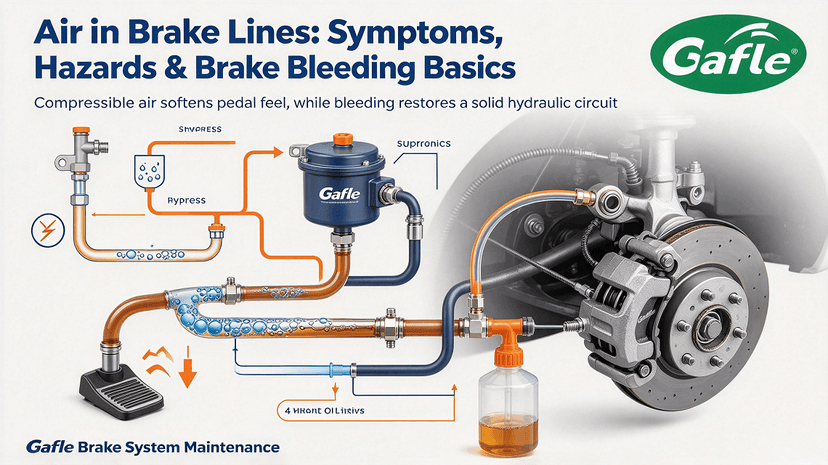
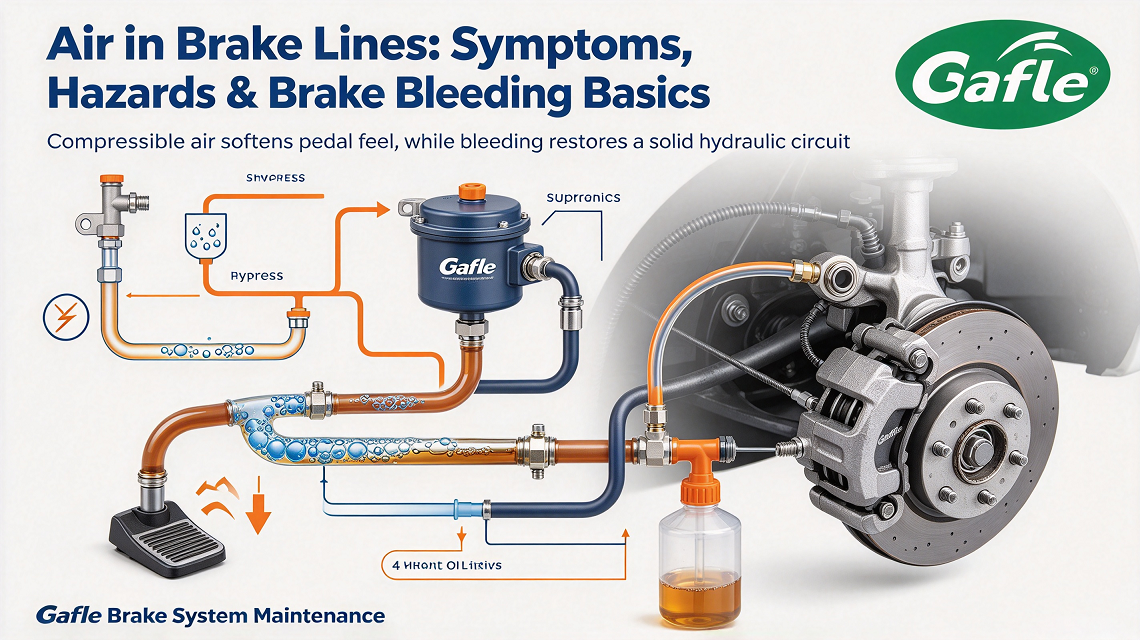
When pedal force is applied to an aerated circuit, hydraulic pressure does not immediately rise. Instead, the master cylinder stroke is consumed by compressing the distributed vapor pockets from their resting volume down to dense gas pockets. Only after the air is fully compressed does the remaining stroke transfer pressure to the caliper pistons. This delay manifests as excessive pedal travel, a spongy engagement zone, and a critical drop in overall Brake Performance. In high-speed emergency events, the displacement required to compress the gas may exceed the total stroke capacity of the master cylinder, causing complete pedal drop.
Managing the Dissolved Gas Threshold: The Brake Bleeding Principle
Restoring system integrity relies entirely on the brake bleeding principle: driving a continuous, high-density fluid column through the circuit at sufficient velocity to overcome bubble surface tension and fluid-line geometry.
Air bubbles do not merely float to the highest point in a brake line. In horizontal runs or descending lines routed along a chassis frame, fluid surface tension and drag forces hold small bubbles against line walls. If the bleeding velocity is too low—such as in passive gravity bleeding—fluid simply flows around the bubble without dislodging it.
Effective system purging requires either positive pressure at the master cylinder reservoir (typically 15 to 20 psi) or controlled vacuum draw at the bleeder valve. For assemblies integrated with electronic stability control (ESC) systems, secondary accumulator chambers must be electronically commanded open via diagnostic tools; otherwise, trapped air pockets remain isolated inside internal valve seats, degrading Brake Performance even after clear fluid emerges from the caliper bleed screw.
Preventative Engineering and Fluid Quality Control
For fleet operators, Tier-1 system builders, and workshop managers, minimizing air intrusion comes down to disciplined fluid service intervals and assembly checks:
1. Monitor wet boiling point: Test fluid every 12 to 24 months. Moisture saturation above 3% drastically increases the risk of vapor lock during sustained braking.
2. Standardize low-pressure vacuum filling in production: OEM assembly lines evacuate braking systems to sub-atmospheric pressures before injecting brake fluid, eliminating manual bleeding errors.
3. Inspect dust boot integrity: Caliper slide pins and piston dust boots prevent particulate intrusion that scores seal lips, preserving the directional seal profile that prevents vacuum ingestion.
4. Replace flexible flex-lines proactively: Upgrading to PTFE-lined, stainless-steel braided lines significantly reduces moisture permeation and eliminates dynamic volumetric expansion.
Frequently Asked Questions
Can air get into a brake system without visible fluid leaks?
Yes. A momentary low-pressure state inside the caliper or master cylinder bore can draw atmospheric air past a hardened lip seal during rapid pedal retraction, even if the seal holds fluid under static or positive pressure.
Does ABS module cycling affect air removal?
Yes. Anti-lock brake systems utilize normally closed solenoids and secondary accumulators. If air reaches these internal passages, standard pressure or pedal bleeding cannot displace the bubbles until the solenoids are electronically cycled open.
How does brake fluid contamination accelerate aeration?
Moisture-laden fluid has a drastically reduced boiling point. Under heavy operational loads, the water content flashes into vapor pockets, creating artificial air pockets inside the caliper bores that behave identically to atmospheric air.
Welcome to contact GAFLE for more information & cooperation!
peter
ZHEJIANG GAFLE AUTO CHEMICL CO.,LTD
Tel:86-579-8222 1665
Fax:86-579-8246 4690
Cel/Wechart:86-13335993986
E-mail:peter@gafle.net
Web:www.gafle.net