Understanding Engine Coolant Cavitation in Heavy-Duty Equipment
Few mechanical failures are as deceptive as cylinder wall erosion caused by cavitation. A diesel engine can run with textbook operating temperatures, normal oil pressure, and a clean oil analysis, while microscopic bubbles are quietly boring pinholes straight through its wet cylinder liners. For fleet managers and plant engineers, understanding what is engine coolant cavitation is often the difference between catching a simple additive depletion and writing off an engine block after unexpected coolant-oil cross-contamination.
Cavitation is essentially mechanical erosion driven by fluid dynamics. While often discussed strictly in the context of marine propellers or industrial slurry pumps, cooling system cavitation operates under a distinct, localized vibration mechanism that demands active chemical and physical management across heavy industrial Cooling Systems.
The Mechanics of Cylinder Liner Pitting
To diagnose or prevent the issue, you have to look at the mechanical stroke of a diesel engine. During combustion, the piston slaps against the thrust side of the cylinder wall. This impact transmits an intense, high-frequency shockwave through the thin cast iron or steel wet sleeve into the surrounding coolant jacket.
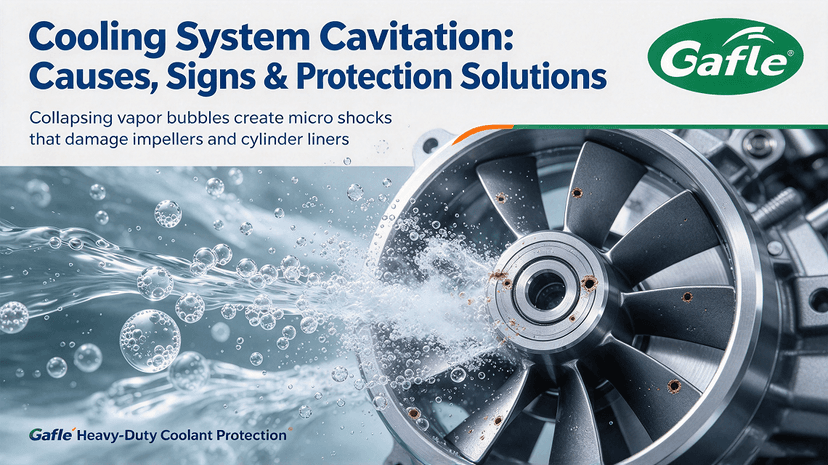
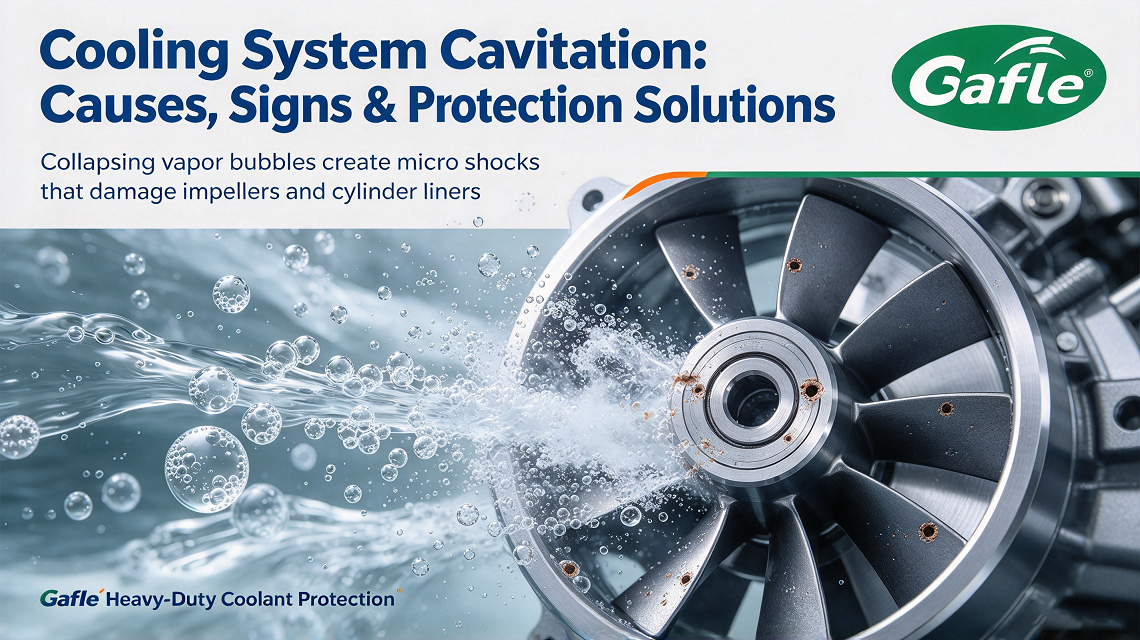
As the liner flexes backward from the fluid, it momentarily creates an ultra-low-pressure void in the coolant layer adjacent to the metal. Because the boiling point of any liquid drops dramatically as pressure drops, the coolant flash-boils at operating temperature, creating millions of microscopic vapor bubbles along the liner surface.
A fraction of a millisecond later, the liner rebounds outward. The local pressure spikes instantaneously, causing those vapor bubbles to violently implode rather than expand. This implosion generates localized micro-jets of fluid striking the metal at supersonic speeds, exerting pressures estimated well above 10,000 psi on a footprint only microns wide. Over millions of combustion cycles, these impacts blast away microscopic layers of metal, forming deep, localized pits that eventually penetrate the entire cylinder wall.
Common Vulnerability Points Beyond Wet Liners
While wet sleeve liners take the brunt of cavitation damage due to piston slap, they are not the only components at risk within industrial Cooling Systems:
- Water Pump Impellers: Sudden directional changes and pressure drops across the impeller blades can cause suction cavitation, eroding the vanes until the pump can no longer maintain design flow rates.
- Front Engine Covers and Volutes: Aluminum timing covers and pump housings subjected to high-velocity coolant swirl often show Swiss-cheese-like erosion channels near the pump discharge.
- EGR Coolers and Sharp Elbows: Tight-radius bends and localized boiling zones inside exhaust gas recirculation passages create localized pressure differentials ripe for bubble formation.
Critical Warning Signs to Watch For
Because cavitation occurs entirely out of sight inside sealed fluid passages, identifying the early warning signs requires disciplined preventative maintenance rather than visual walk-arounds.
One of the earliest red flags is a drop in additive concentration during routine coolant testing—specifically nitrite or molybdate levels if you run conventional heavy-duty formulations. As the chemistry works to re-passivate implosion sites, it depletes rapidly. Another subtle indicator is sporadic, minor coolant loss without external puddles; tiny pinholes may allow coolant to mist into the combustion chamber on the intake stroke before leaking liquid into the crankcase. By the time you spot emulsified oil—the classic milky residue on the dipstick or oil filler cap—the liner has already been breached, and bearings are actively at risk.
How Coolant Prevents Cavitation
Understanding how coolant prevents cavitation comes down to surface chemistry rather than fluid hydraulics. The mechanical vibration of the engine cannot be entirely eliminated through block design alone, meaning the fluid itself must shield the base metal.
A high-quality coolant relies on specific corrosion inhibitors to build a sacrificial molecular barrier:
- Conventional Inorganic Additives (SCAs): Traditional heavy-duty coolants use nitrites and molybdates. These compounds react with the iron liner to form a dense oxide film. When cavitation bubbles implode, they blast away this sacrificial oxide film instead of the raw metal. The free nitrites in the coolant then immediately repair and repassivate the film before the next cycle.
- Organic Acid Technology (OAT): Modern extended-life coolants use carboxylate inhibitors. Rather than blanketing the entire cooling passage, carboxylates target specific corrosion sites, forming an extremely durable chemical bond that resists mechanical implosion without requiring constant supplemental coolant additive (SCA) replenishment.
If the coolant is over-diluted with poor-quality tap water, or if the additive pack depletes, that defensive film disappears. From that point forward, every combustion cycle removes bare base metal.
Practical Maintenance Practices for Equipment Fleets
Preventing cavitation is far less expensive than dropping an oil pan to pull scored liners. Fleet operations should standardize on three non-negotiable checks:
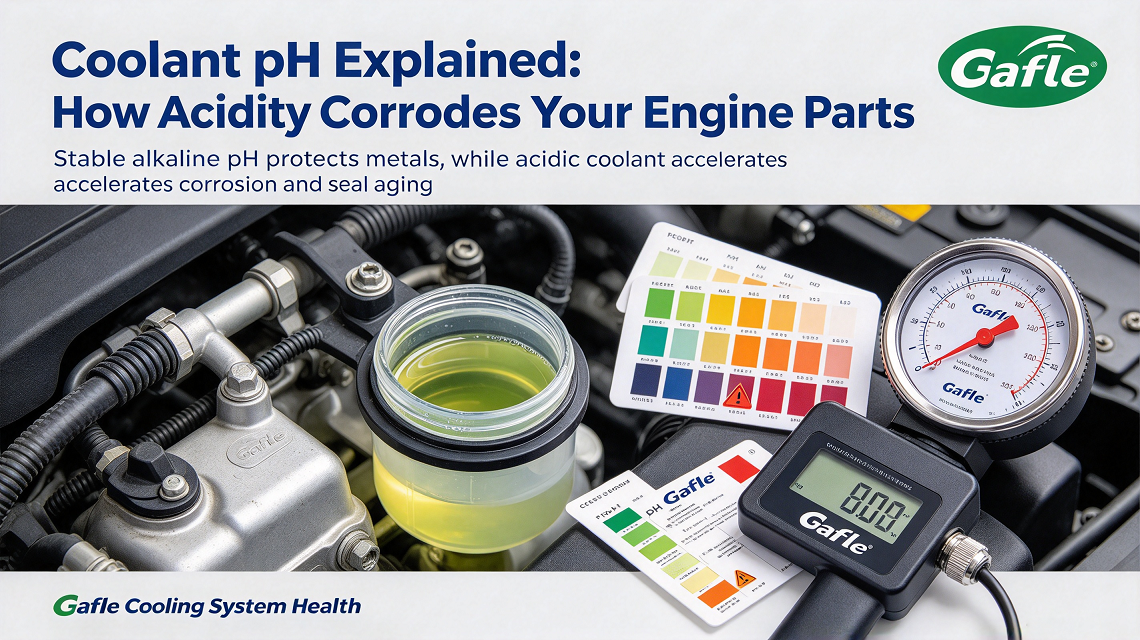
First, test your coolant at every scheduled service interval. If running conventional coolant, use 3-way test strips to verify freeze point, pH, and nitrite levels. Do not guess on concentration; maintaining a 50/50 water-to-glycol ratio ensures the fluid carries the correct surface tension and boiling point properties to resist early vapor formation.
Second, inspect the radiator pressure cap regularly. A weak pressure cap lowers system operating pressure, which lowers the coolant's boiling point and accelerates bubble formation across the entire block. A five-dollar cap failure can cause a ten-thousand-dollar engine rebuild.
Finally, never blend disparate coolant chemistries. Mixing conventional SCA coolants with OAT coolants can cause additive dropout, creating a gel that clogs passages and leaves cylinder liners completely unprotected against implosion wear.
Frequently Asked Questions
Can gasoline passenger car engines suffer from coolant cavitation?
It is far less common. Most gasoline engines feature parent-bore (dry) cylinder designs and operate at much lower compression ratios than heavy-duty diesels. Piston slap is lower in intensity, meaning the block flexes far less into the water jacket. However, water pump cavitation can still occur if the cooling system is run low on pressure or overheated.
Does a higher glycol concentration prevent cavitation better?
No. In fact, running glycol concentrations above 60% impairs the fluid's specific heat capacity and can cause cooling efficiency to drop. The anti-cavitation properties come from the chemical inhibitor packages (nitrites, carboxylates), not the ethylene glycol itself.
Next Steps for Your Operation
Evaluate your current maintenance logs and fluid sourcing protocols. If your technicians are topping off cooling systems with plain water or unapproved universal formulations, schedule a comprehensive coolant fluid analysis for your critical machinery to catch inhibitor depletion before liner failure occurs.
Welcome to contact GAFLE for more information & cooperation!
peter
ZHEJIANG GAFLE AUTO CHEMICL CO.,LTD
Tel:86-579-8222 1665
Fax:86-579-8246 4690
Cel/Wechart:86-13335993986
E-mail:peter@gafle.net
Web:www.gafle.net