For automotive engineers, fleet maintenance leads, and hydraulic systems designers, evaluating hydraulic fluid stability under thermal stress is a safety-critical exercise. When reviewing technical data sheets for glycol-based fluids, the core operational metric almost always hinges on the difference between dry and wet boiling point ratings. Understanding this distinction is not just an academic exercise; it dictates service intervals, operating margins under sustained braking, and resistance to catastrophic vapor lock in the field.
The Fundamental Distinction: Dry vs. Wet
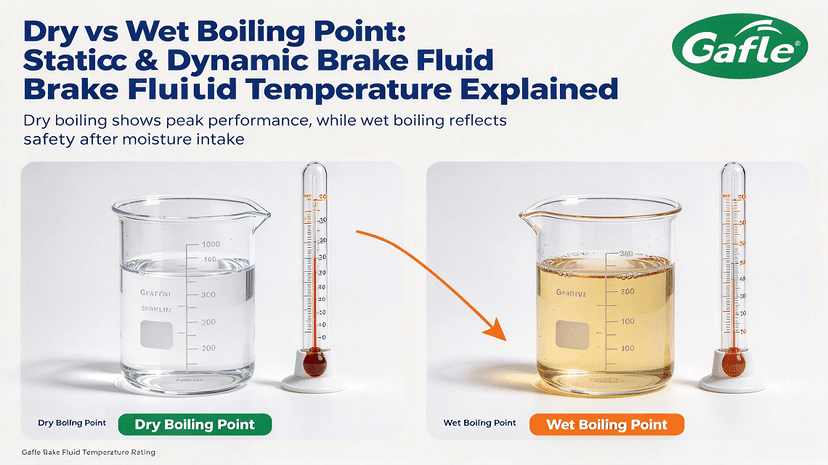
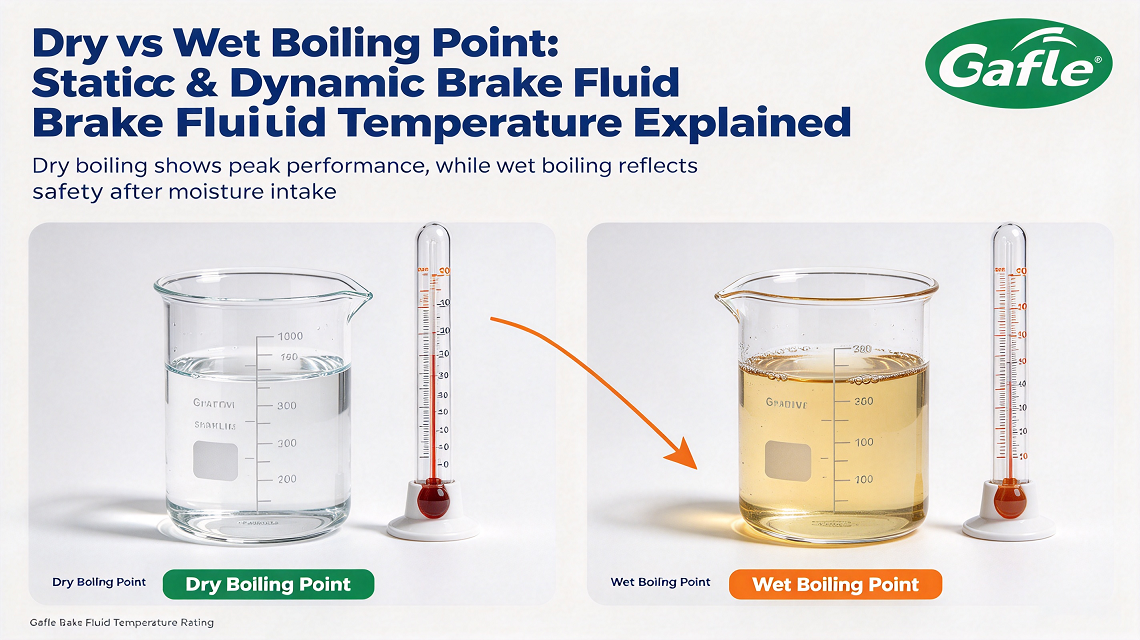
To put it simply, the dry boiling point reflects the fluid's thermal threshold in its pristine, uncompromised state straight from a factory-sealed container. At this stage, water contamination is negligible (typically less than a fraction of a percent).
The wet boiling point, conversely, measures the thermal ceiling after the fluid has absorbed ambient moisture over time. Most conventional formulations—such as DOT 3, DOT 4, and DOT 5.1—rely on polyglycol ether bases, which are inherently hygroscopic. They actively pull water vapor through microscopic pores in flexible rubber lines, master cylinder seals, and reservoir breather holes. Once moisture enters, the boiling threshold plummets.
While an off-the-shelf fluid might tout an impressive dry boiling point north of 260°C (500°F), that figure means very little eighteen months into severe fleet service if the wet rating drops into the 150°C (302°F) range. Moisture doesn't simply float on top; it miscible-blends with the fluid, creating localized pockets that boil far sooner than the base chemical stock.
The Boiling Point Test Standard: Quantifying Moisture Uptake
Standardized testing protocols remove the guesswork from thermal ratings. Under recognized standards—such as Federal Motor Vehicle Safety Standard 116 (FMVSS 116), ISO 4925, and SAE J1703/J1704—the accepted boiling point test standard prescribes precise moisture saturation levels.
To establish the wet boiling point under FMVSS 116:
- The test fluid is humidified in a controlled chamber alongside a reference fluid until it absorbs approximately 3.7% water by weight.
- The sample is then subjected to reflux boiling analysis to record the temperature at which vapor bubbles continuously form.
This 3.7% threshold is not arbitrary; empirical field data shows this is the average water concentration a typical vehicle's brake fluid accumulates over two to three years of real-world ambient exposure.
Minimum Regulatory Baselines
To put the practical difference between dry and wet boiling point figures into perspective, consider the baseline requirements specified by FMVSS 116 across common categories:
- DOT 3: Minimum dry boiling point of 205°C (401°F); minimum wet boiling point of 140°C (284°F).
- DOT 4: Minimum dry boiling point of 230°C (446°F); minimum wet boiling point of 155°C (311°F).
- DOT 5.1: Minimum dry boiling point of 260°C (500°F); minimum wet boiling point of 180°C (356°F).
Notice the steep drop across all grades: introducing just 3.7% moisture typically slashes 65°C to 80°C off the fluid's usable thermal headroom.
Hydraulic Degradation and Static Dynamic Boiling Point Dynamics
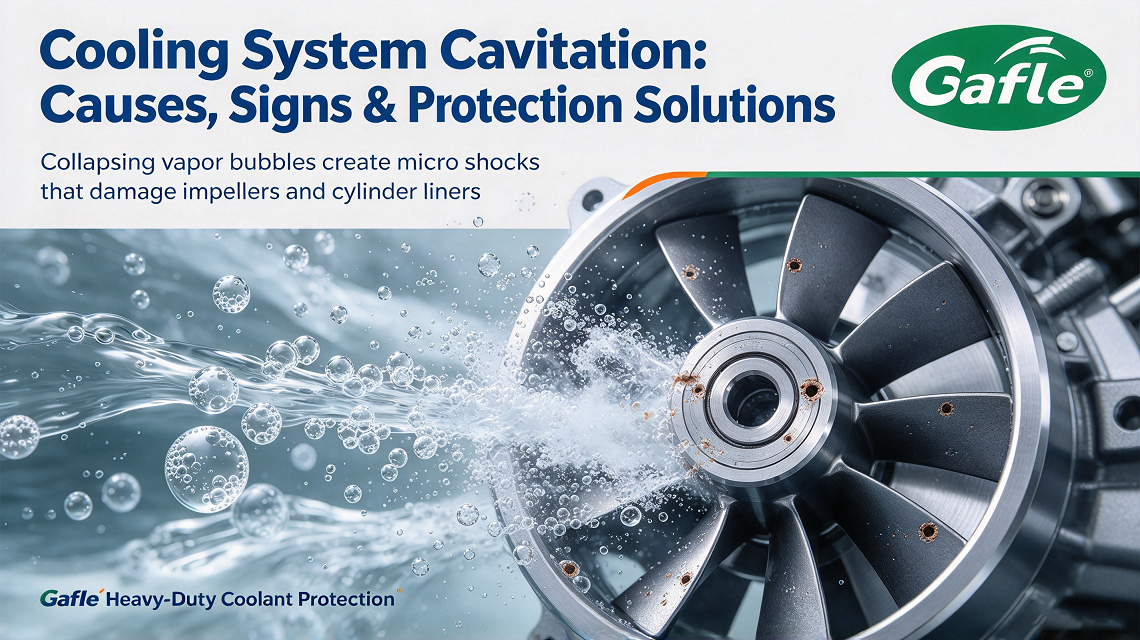
In testing laboratories, a static dynamic boiling point assessment highlights how fluids behave under contrasting system states. In a static condition—such as a fluid reservoir or resting caliper—temperature gradients may develop slowly. However, under high-cycle hydraulic modulation (such as aggressive ABS cycling or repeated heavy-payload deceleration), dynamic fluid shear and rapid heat transfer from the caliper pistons create localized flash boiling.
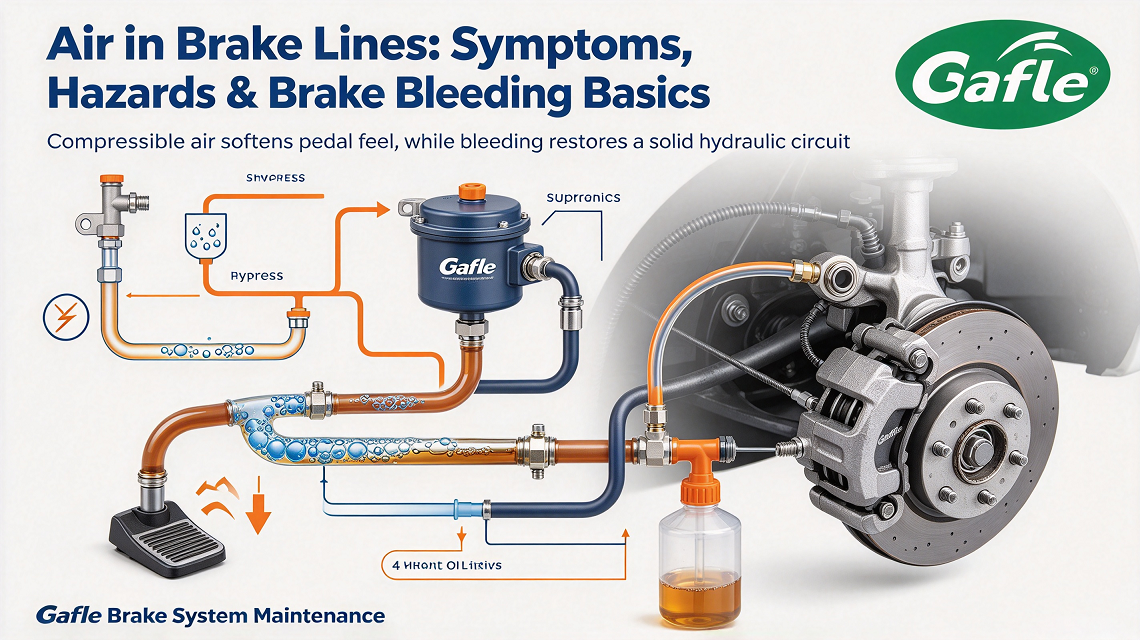
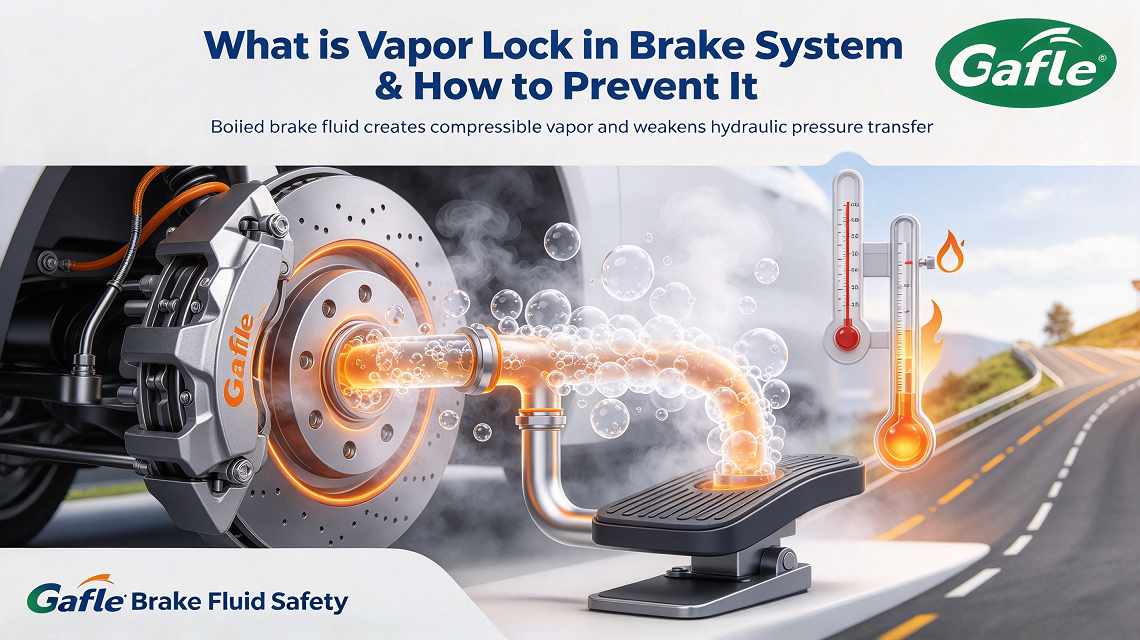
When brake fluid boils, it converts from an incompressible liquid into compressible vapor. The physical consequence is instant and dangerous: the hydraulic pedal or lever strokes fully to the floorboard without translating pressure to the friction material. If your fluid's wet margin is thin, vapor lock occurs during sustained descents or high-speed maneuvers, precisely when maximum hydraulic pressure is needed most.
Practical Recommendations for Sourcing and Maintenance
When selecting fluids for heavy-duty commercial fleets, performance platforms, or specialized machinery, keep these practical points in mind:
- Prioritize the wet rating over the dry rating: High-performance "racing" fluids often achieve dry boiling points exceeding 315°C (600°F) via specialized chemistry, but some degrade rapidly in humid environments, resulting in relatively weak wet figures. For standard fleet applications where annual flushes are impractical, a DOT 5.1 or premium DOT 4 with an elevated wet baseline is often safer than an exotic fluid that demands frequent replacement.
- Mind seal compatibility: Never confuse silicone-based DOT 5 (hydrophobic, does not absorb water) with glycol-based DOT 5.1. Introducing silicone fluid into a system designed for glycol fluids will compromise ethylene-propylene-diene monomer (EPDM) seals.
- Measure moisture, not color: Darkening fluid indicates oxidation or dissolved rubber particles, but clear fluid can still be completely waterlogged. Optical refractometers or conductivity-based moisture pens provide a far more reliable indicator of actual saturation levels.
Frequently Asked Questions
Why does water lower the boiling threshold so dramatically?
Pure water boils at 100°C (212°F) under standard atmospheric pressure. When absorbed into polyglycol matrices, water molecules lower the overall vapor pressure of the solution, dragging the composite boiling temperature sharply toward the lower limit of water itself.
Can I prevent fluid from absorbing moisture entirely?
Short of using completely sealed bladder reservoirs or transitioning systems to non-hygroscopic silicone or mineral oil bases (which present their own challenges, such as unabsorbed pooled water causing localized corrosion), glycol systems will inevitably draw in moisture. Controlled storage in hermetically sealed metal or high-density plastic containers prior to installation is essential.
Does a higher DOT rating always mean a better fluid?
Not necessarily. While higher ratings ensure better thermal resistance, some high-temp formulations trade off cold-temperature viscosity—a vital parameter for the response time of modern electronic stability control (ESC) systems in sub-zero climates.
Evaluating Your System's Hydraulic Resilience
Understanding fluid thermal thresholds is essential to designing dependable hydraulic circuits. If you are reviewing fluid specifications for mission-critical hydraulic platforms or seeking suitable materials for custom fluid handling equipment, consult with a qualified fluid engineer to balance thermal tolerance, viscosity profiles, and operational maintenance schedules.
Welcome to contact GAFLE for more information & cooperation!
peter
ZHEJIANG GAFLE AUTO CHEMICL CO.,LTD
Tel:86-579-8222 1665
Fax:86-579-8246 4690
Cel/Wechart:86-13335993986
E-mail:peter@gafle.net
Web:www.gafle.net