Why Engine Coolant Matters More in Desert Conditions Than in Winter
It is one of the more persistent misconceptions in plant and fleet maintenance that engine coolant is primarily a cold-weather consumable. While freeze protection gets the branding, understanding how antifreeze works in extreme heat is actually what saves cylinder heads, heavy-duty radiators, and stationary diesel generator blocks from catastrophic thermal failure. When ambient temperatures surge past 40°C (104°F) and duty cycles remain pegged near continuous full load, the liquid in your cooling jackets is operating right at the knife-edge of its design margins.
Engine cooling systems rely on fluid to transfer heat away from critical metal surfaces—primarily combustion chambers, cylinder liners, and exhaust valve bridges—to the radiator core, where airflow rejects that thermal energy into the atmosphere. Plain water handles raw heat absorption exceptionally well due to its high specific heat capacity, but it fails precisely when temperatures spike: it boils too early, corrodes bare metals, and generates localized vapor pockets that stop heat transfer dead in its tracks.
The Chemistry: Boiling Point Elevation and Vapor Suppression
Antifreeze formulations—typically concentrated ethylene glycol (EG) or propylene glycol (PG) blended with chemical inhibitors—rely on colligative properties to alter the boiling behavior of water. Pure water boils at 100°C (212°F) under standard sea-level atmospheric pressure. Introducing glycol disrupts hydrogen bonding between water molecules, which lowers the vapor pressure of the solution. Consequently, more thermal energy is required to force the mixture into a gaseous state.
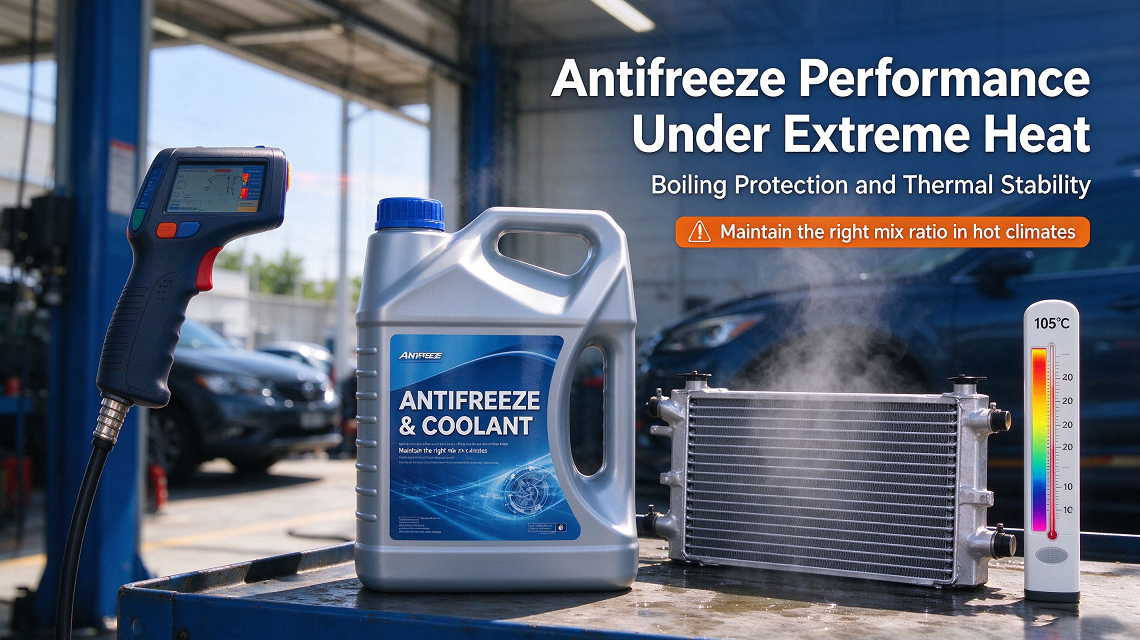
A standard 50/50 mixture of water and ethylene glycol raises the atmospheric boiling threshold to roughly 106°C (223°F). However, real coolant boiling protection in hot climate operations comes from the pairing of this chemical shift with a closed, pressurized radiator cap. For every pound per square inch (psi) of system pressure, the boiling point rises by roughly 1.7°C (3°F). Under a typical 15-psi radiator cap, that same 50/50 glycol mix will hold liquid form up to approximately 128°C (263°F).
The Vapor Blanketing Problem and Cavitation
Why not run straight demineralized water if water absorbs heat faster than glycol? The answer lies in nucleate versus film boiling. When metal temperatures climb rapidly, localized spots on the cylinder wall can easily exceed the boiling point of pure liquid.
If the fluid flashes to steam, it creates an insulating gas barrier—often called vapor blanketing. Air and steam transfer heat at a fraction of the rate of liquid coolant. The trapped heat rapidly warps aluminum heads and scorches valve guides. Glycol-based antifreeze suppresses this localized flashing, ensuring the fluid stays in direct contact with metal walls even during peak thermal excursions.
Furthermore, boiling induces micro-cavitation: tiny vapor bubbles form and violently implode against metal surfaces as pressure pulses travel through the water pump. Over several hundred operating hours, this cyclical implosion chews through cast iron water pump impellers and erodes wet cylinder liners until coolant breaches the crankcase.
Thermal Stability and Corrosion Inhibitor Breakdown
Glycol elevation is only half the equation; chemical thermal stability under sustained heat dictates how long the fluid will survive. Glycol molecules oxidize when exposed to sustained high temperatures and trace oxygen, degrading into acidic byproducts like glycolic, formic, and oxalic acids. Without robust additive packages, an overheating system turns acidic in a matter of weeks, aggressively corroding copper brass or aluminum heat exchangers.
Modern organic acid technology (OAT) and hybrid organic acid technology (HOAT) coolants deploy carboxylate-based inhibitors that resist thermal degradation far better than old-school inorganic additive (IAT) silicates and borates. In extreme heat, silicates have a tendency to drop out of suspension, forming an abrasive green-white gel that clogs heat exchanger passages and shreds mechanical pump seals. High temperature performance in industrial and commercial applications therefore leans heavily toward nitrite-free OAT or heavy-duty HOAT chemistries engineered to withstand extended thermal stress without dropping their inhibitor reserves.
Quick Reference: Coolant Mixture vs. Thermal Characteristics
Selecting the right concentration involves a direct trade-off between boiling protection and specific heat capacity:
| Glycol / Water Ratio | Boiling Point (Sea Level, 0 psi) | Boiling Point (Pressurized, 15 psi) | Specific Heat Capacity (vs. Water) | Practical Application |
|---|---|---|---|---|
| 0 / 100 (Pure Water) | 100°C (212°F) | ~121°C (250°F) | 100% (Baseline) | Track use only (with corrosion inhibitors) |
| 40 / 60 | ~104°C (219°F) | ~125°C (257°F) | ~91% | Warm-climate fleets prioritizing heat removal |
| 50 / 50 | ~106°C (223°F) | ~128°C (263°F) | ~87% | Standard industrial/automotive baseline |
| 60 / 40 | ~111°C (232°F) | ~132°C (270°F) | ~83% | Severe service with elevated pressure caps |
| 70 / 30 | ~114°C (237°F) | ~136°C (276°F) | ~78% | Maximum allowable glycol; poor heat transfer |
Laboratory Testing: Verifying High-Temperature Protection
Formulators and OEMs do not take antifreeze heat resistance on faith. Standard laboratory evaluations subject coolants to rigorous simulated operational extremes before field deployment:
- ASTM D1384 (Glassware Corrosion Test): Evaluates how multi-metal bundles (copper, solder, brass, steel, cast iron, and cast aluminum) hold up in aerated glycol solutions maintained at 88°C (190°F) for two continuous weeks.
- ASTM D2809 (Cavitation-Erosion Test): A specialized high heat antifreeze performance test that spins aluminum water pump impellers under high load and elevated temperatures to quantify metal loss from vapor collapse.
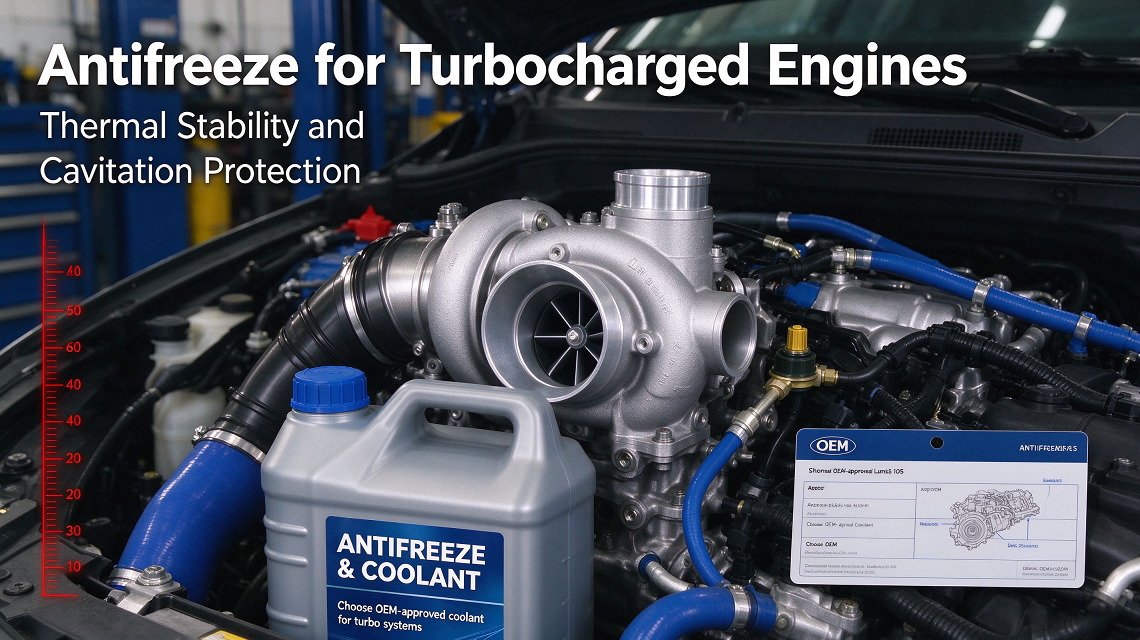
- ASTM D4340 (Heat Rejecting Aluminum Surfaces): Measures corrosion rates at heat-rejecting cylinder head surfaces under high thermal flux conditions, simulating the hot spots typical of turbocharged engines under peak pull.
Field Pitfalls: Where Hot-Climate Operations Go Wrong
One widespread maintenance error in arid regions is "over-concentrating" glycol in hopes of driving boiling points sky-high. Running concentrations above 60% drastically reduces the specific heat capacity of the mixture. Pure glycol absorbs roughly 40% less heat than pure water per unit mass. If the fluid cannot pull BTUs off the combustion chamber fast enough, the engine runs structurally hotter, even if the radiator temperature gauge looks manageable.
Another routine failure point is radiator cap fatigue. A cooling system with a failing pressure spring essentially runs at zero psi. If you lose system pressure in high ambient temperatures, your boiling point drops straight from 128°C down to 106°C. That 22-degree drop often turns a heavy grade pull into an instant boilover.
Finally, avoid topping up with local tap water. High ambient evaporation rates leave behind calcium and magnesium carbonates, which plate out on the hottest radiator tubes as thermal insulation scale. Always use deionized or reverse-osmosis purified water when diluting concentrate in the field.
Frequently Asked Questions
Can I run 100% pure antifreeze in hot weather to prevent boilover?
No. Pure ethylene glycol freezes at around -13°C and has a specific heat capacity roughly half that of water. It transfers thermal energy inefficiently, will cause internal engine temperatures to spike, and can degrade pump seals rapidly without water present to stabilize its viscosity and transfer dynamic.
Does propylene glycol perform as well as ethylene glycol in extreme heat?
Propylene glycol (PG) offers lower acute toxicity and comparable boiling point elevation, but it has slightly lower thermal conductivity and higher viscosity at equivalent temperatures. For heavy machinery operating near maximum cooling capacity, ethylene glycol remains the industry standard for sheer heat rejection efficiency.
How often should coolant chemistry be checked in high-heat environments?
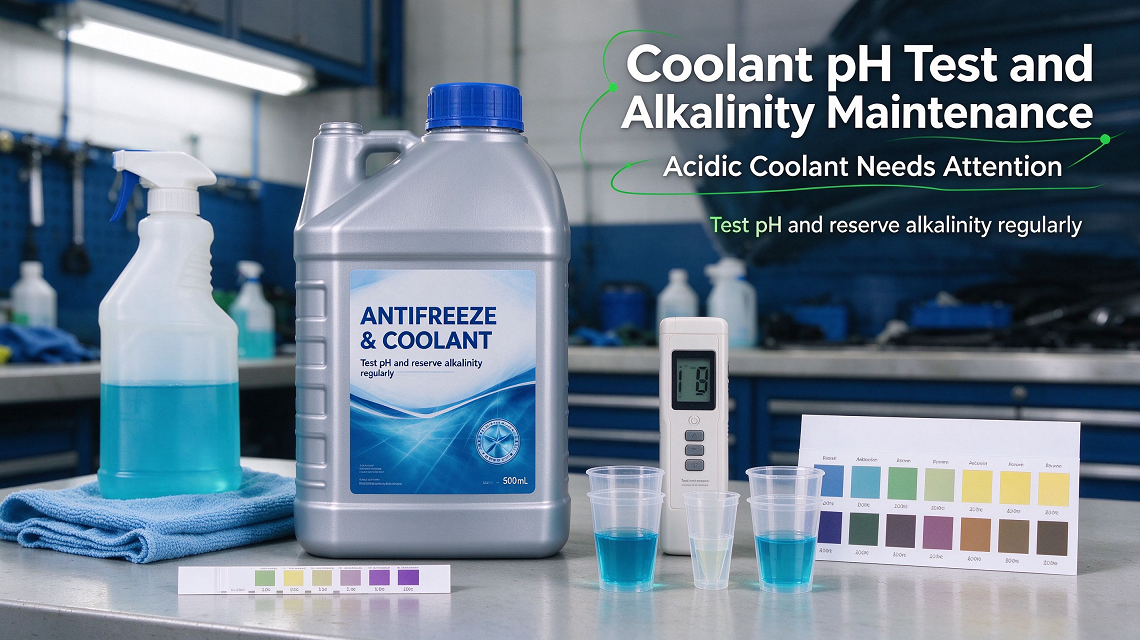
Sustained thermal loading depletes chemical buffers faster. Check concentration with an optical refractometer—not a floating ball hydrometer—at every scheduled service. Measure fluid pH and nitrite/carboxylate levels using test strips at least quarterly to spot premature acid formation before corrosion sets in.
Next Steps for Operations and Fleet Sourcing
If your machinery faces prolonged summer shifts, desert conditions, or heavy continuous duty, audit your cooling fluid specifications before seasonal heat waves hit. Verify that your inventory utilizes modern OAT or HOAT chemistry aligned with ASTM D6210 standards, test your radiator cap pressure tolerances, and calibrate your mixing equipment to hold steady at a true 50/50 balance.
Welcome to contact GAFLE for more information & cooperation!
peter
ZHEJIANG GAFLE AUTO CHEMICL CO.,LTD
Tel:86-579-8222 1665
Fax:86-579-8246 4690
Cel/Wechart:86-13335993986
E-mail:peter@gafle.net
Web:www.gafle.net