Understanding the Certificate of Analysis (COA) for Hydraulic Fluids
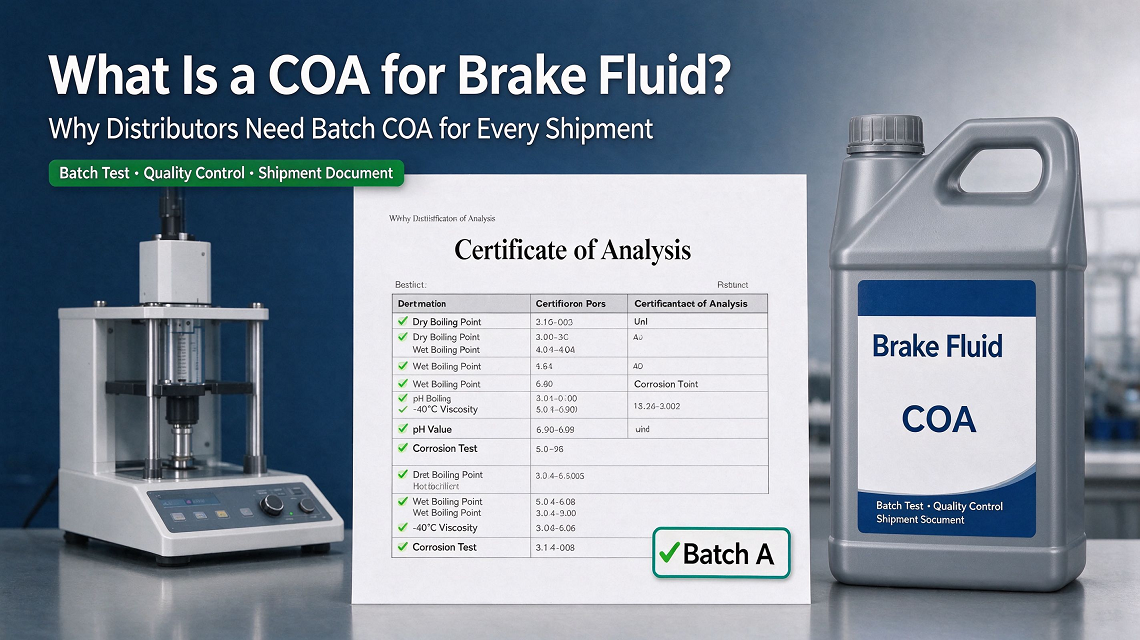
When receiving a container shipment of polyglycol or silicone-based fluid, procurement managers and lab directors cannot rely solely on the brand label affixed to the drum. What is COA for brake fluid, in practical terms? It is the authoritative batch-specific analytical record generated by the chemical manufacturer's laboratory, verifying that a specific production lot meets baseline physical and chemical standards before dispatch.
Brake fluids operate in safety-critical hydraulic systems where a variation of just a few degrees in boiling point or a slight spike in moisture absorption can lead to vapor lock and total hydraulic failure. Consequently, a generic technical data sheet (TDS) is never a substitute for a true brake fluid COA. While a TDS provides typical target properties, the COA delivers actual empirical test values tied to an identifiable batch number, produced under documented quality control protocols.
Critical Test Parameters on a Standard Brake Fluid COA
Under international standards such as FMVSS No. 116, SAE J1703/J1704, and ISO 4925, an authentic COA certificate must report several non-negotiable chemical and rheological values. When evaluating incoming documentation, technical buyers should pay close attention to the following line items:
- Dry Equilibrium Reflux Boiling Point (ERBP): Measures the boiling point of virgin fluid under zero-moisture laboratory conditions. For DOT 4 fluids, for instance, this must exceed 230°C (446°F). A reading marginally above the threshold suggests potential thermal stability issues under heavy duty cycles.
- Wet ERBP: Because glycol-ether fluids are inherently hygroscopic, they continuously pull ambient water through microscopic pores in flexible brake hoses. The wet boiling point tests the fluid after humidification (typically around 3.7% water content). This metric is arguably the single most critical longevity indicator on the report.
- Kinematic Viscosity at -40°C: Vital for modern vehicles equipped with Anti-lock Braking Systems (ABS) and Electronic Stability Control (ESC). If low-temperature viscosity exceeds specification (typically max 1500 mm²/s for standard DOT 4, or 750 mm²/s for DOT 4 Low Viscosity), hydraulic valves cannot pulse quickly enough in freezing environments.
- pH Value and Reserve Alkalinity: Standard glycol-based brake fluid generally maintains a pH between 7.0 and 11.5. Proper buffering neutralizes acidic degradation byproducts that accumulate over time, preventing accelerated corrosion of copper, steel, and aluminum system components.
- Water Content (Karl Fischer Titration): Virgin packaging must show near-zero water ingress—typically below 0.20% by weight at factory bottling.
Why Distributors Need Batch COA for Brake Fluid
There is a distinct business rationale behind why distributors need batch COA for brake fluid beyond mere regulatory compliance. In the automotive aftermarket and OEM supply chains, liability rests heavily on distributors and repackagers.
First, traceable batch records protect distributors against systemic product liability claims. If an installer reports fluid degradation or seal swelling across a fleet, having an intact batch analysis tied directly to the production lot allows the distributor's quality team to isolate whether the fault occurred at the chemical synthesis stage, during drumming, or post-delivery due to improper storage.
Second, customs agencies and port authorities in multiple jurisdictions demand an authentic batch-level analysis before clearing hazardous or semi-hazardous chemical consignments. Without accurate, lot-matched documentation, containerized shipments risk impoundment, generating severe demurrage charges while supply lines stall.
Finally, robust quality control records preserve customer trust. High-volume commercial fleet buyers, tier-one automotive suppliers, and municipal transport authorities will outright reject any fluid delivery lacking an accompanying lot COA signed by an authorized QA officer.
Common Red Flags on Vendor-Supplied Documentation
Experienced chemical auditors rarely take test sheets at face value. During vendor onboarding, look for these common discrepancies that signal inadequate lab controls or fabricated records:
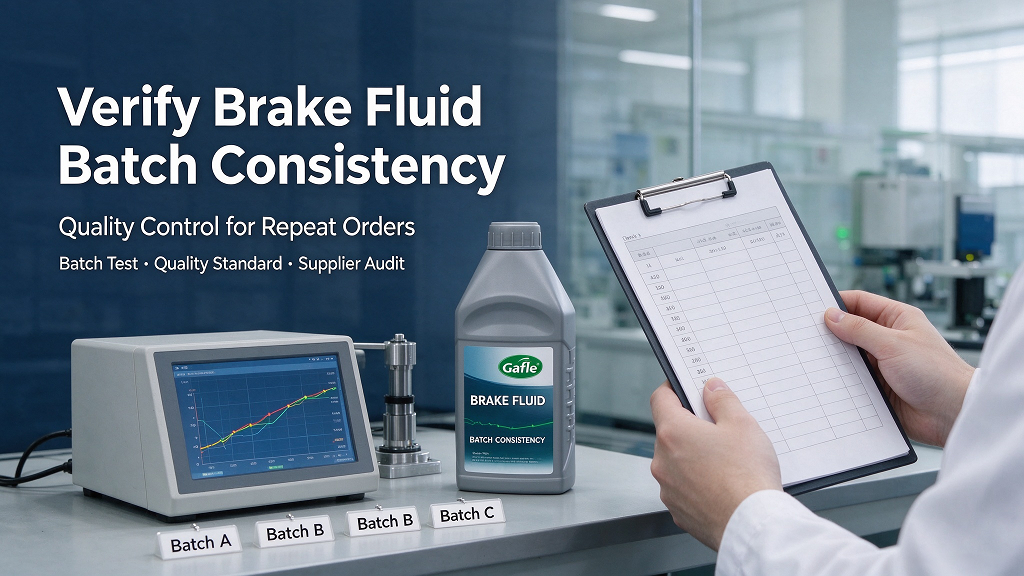
- Identical Values Across Multiple Batches: In real-world chemical blending, small raw material variations produce minor decimal shifts in viscosity, pH, and boiling points from lot to lot. If Batch A, Batch B, and Batch C show exactly the same wet ERBP down to the tenth of a degree, the supplier is likely copying values from their product specification sheet rather than conducting physical bench testing.
- Missing Test Methodology References: Legitimate certificates clearly state the test standard alongside the recorded result (e.g., ASTM D1120 for boiling point or ASTM D445 for kinematic viscosity). Vague entries without recognized methodology references undermine audit validity.
- Generic Batch Identification: The lot code on the document must precisely match the stenciling on the drums, IBC totes, or retail master cartons. Mismatches prevent downstream traceability during warranty investigations.
Practical Verification Advice for Sourcing Managers
Before accepting large-volume contracts for automotive fluids, establish an incoming goods verification protocol. Request that suppliers submit both the master product specification and recent batch certificates during the quotation phase.
For high-volume contracts, implement routine third-party verification. Periodically pull an unopened container from an incoming pallet and send it to an accredited independent laboratory for wet boiling point and moisture titration. Comparing your third-party lab's data against the factory's delivered certificate quickly demonstrates whether your supplier treats batch testing as a rigorous control process or merely as administrative overhead.
Frequently Asked Questions
Can a Technical Data Sheet (TDS) replace a COA?
No. A TDS provides nominal guidelines and typical ranges meant for engineering reference. A COA reports empirical laboratory results from a specific, physical batch of liquid chemical product.
Who is legally responsible for issuing the COA?
The primary fluid manufacturer or authorized chemical toll-blender that manufactured and tested the product lot must issue and endorse the document with their laboratory or quality management stamp.
How long should a distributor retain brake fluid COA records?
Most automotive quality management standards, such as IATF 16949, recommend retaining critical fluid records for the entire production lifespan plus an additional calendar period (often 10 years or more) to align with statutory liability windows for vehicle components.
Welcome to contact GAFLE for more information & cooperation!
peter
ZHEJIANG GAFLE AUTO CHEMICL CO.,LTD
Tel:86-579-8222 1665
Fax:86-579-8246 4690
Cel/Wechart:86-13335993986
E-mail:peter@gafle.net
Web:www.gafle.net