Understanding Traditional Heat Transfer Chemistry
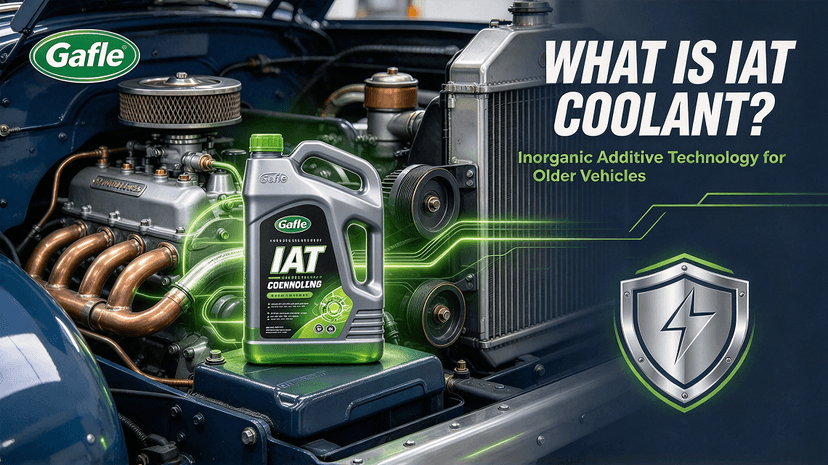
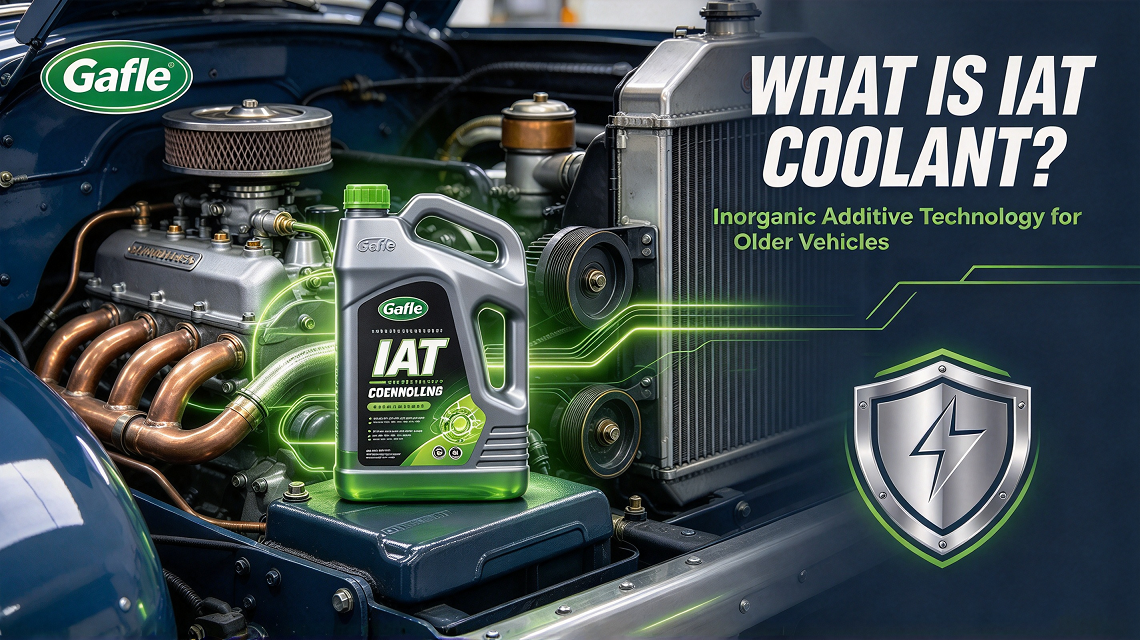
If you manage legacy plant equipment, stationary generators, or older transport fleets, you will eventually face the question: what is IAT coolant, and why do some cooling systems still insist on it? IAT stands for Inorganic Additive Technology. For decades, it was the baseline specification across automotive and heavy industrial engines, instantly recognizable by its vivid green dye. While modern passenger cars have long migrated to extended-life alternatives, inorganic additive technology coolant remains an essential operational chemical for specific metallurgical profiles—particularly systems containing high concentrations of copper, brass, and traditional solder.
At its core, an IAT coolant combines an ethylene glycol or propylene glycol base with concentrated inorganic mineral salts, primarily silicates and phosphates. These inhibitors do not bond chemically with the base metals in a slow passivation layer. Instead, they deposit a fast-forming physical blanket over all internal coolant-wetted surfaces. For a shop manager maintaining older radiators with copper fins and soldered seams, that rapid barrier is precisely what prevents aggressive galvanic corrosion from eating through thin tube walls within weeks of operation.
How Inorganic Inhibitors Protect—and Why They Degrade
The rapid coating action of silicates is both the strength and the primary limitation of this chemistry. When fresh coolant circulates, silicates quickly passivate cast iron liners and yellow metals. Phosphates stabilize pH levels and mitigate cavitation pitting on wet sleeve liners and water pump impellers. In high-vibration applications, that immediate sacrificial layer provides peace of mind that bare metal is shielded immediately upon startup.
However, that protective coating comes at a steep maintenance cost. The typical IAT coolant service life is remarkably short compared to modern chemistries, rarely exceeding 2 years or 24,000 to 30,000 miles. Over time, heat cycles cause silicates to drop out of solution. Once depleted, the chemistry leaves the cooling passage bare; worse, the precipitated silicates turn into an abrasive, gritty residue that scores water pump mechanical seals and blocks narrow heater core tubes. Monitoring reserve alkalinity via test strips is non-negotiable for maintenance crews running traditional coolant, because once the corrosion inhibitors deplete, glycol turns acidic rapidly.
Comparative Analysis: IAT vs OAT HOAT Coolant
Specifying coolant is no longer a matter of matching colors. Dye formulations are arbitrary today, and mistaking chemistry types can cause catastrophic blockages. To evaluate IAT vs OAT HOAT coolant formulations accurately, engineers look at how inhibitor packages interact with specific system metals:
| Coolant Technology | Primary Inhibitor Package | Typical Service Life | Optimal System Metallurgy |
|---|---|---|---|
| IAT (Inorganic Additive Technology) | Silicates, phosphates, borates | 2 years / 30,000 miles | Cast iron, copper, brass, lead-soldered radiators |
| OAT (Organic Acid Technology) | Carboxylates (organic acids), no silicates | 5 years / 150,000 miles | Modern aluminum blocks, brazed aluminum heat exchangers |
| HOAT (Hybrid Organic Acid Technology) | Carboxylates blended with low silicates/nitrites | 5 years / 100,000+ miles | Mixed-metal fleets, modern diesel engines, cast iron with aluminum heads |
Organic Acid Technology (OAT) provides a long operational life because carboxylates only interact chemically with emerging corrosion sites rather than coating every square inch of the internal jacket. But this reaction is slow. If placed inside an older radiator built with lead solder and brass tubes, an OAT package may not form a barrier quickly enough to stop solder bloom—a white, crusty corrosion product that permanently plugs cooling passages. Hybrid options (HOAT) attempt to bridge the gap by combining organic acids with a modest dose of silicates, offering the quick-passivation benefits of traditional chemistries alongside extended drain intervals.
The Real-World Danger of Cross-Contamination
The single most common error seen in maintenance yards is mixing conventional formulations with extended-life alternatives. When an operator tops off an engine containing IAT with an OAT or silicate-free formulation, the chemical equilibrium shifts. The mineral salts destabilize, dropping out of suspension and creating a thick, gelatinous sludge.
This gel collects at the bottom of the radiator tank and within narrow oil cooler passages, causing localized thermal hotspots and premature head gasket failure. If a facility decides to convert an older engine from traditional inorganic additives to a modern HOAT or OAT product, the cooling circuit must be thoroughly cleaned with a dedicated neutralizer and flushed multiple times with deionized water before introducing the new chemical charge.
Field Selection Criteria for Maintenance Engineers
When deciding whether to retain an inorganic formulation for your machinery, use these practical parameters:
- Radiator Construction: If the unit uses copper-brass cores joined by traditional solder seams, stick with IAT chemistry or a carefully vetted low-silicate hybrid coolant specified for vintage yellow metals.
- Fleet Turnaround and Maintenance Culture: IAT requires strict calendar-based drain-and-refill intervals. If your operational tempo does not allow biannual coolant flushes, keeping older machines on pure IAT invites neglected, acidic coolant.
- Make-Up Water Purity: Inorganic salts drop out much faster in hard water. Always mix concentrates with deionized or reverse-osmosis water; never allow field personnel to top off with municipal tap water high in calcium and magnesium.
Frequently Asked Questions
Can I tell if an engine has IAT coolant just by the green color?
No. While conventional inorganic coolants historically used bright fluorescent green dye, chemical suppliers now use green, yellow, and orange across various OAT and hybrid formulations. Always verify the inhibitor chemistry through system documentation or chemical test strips rather than relying on visual inspection.
What happens if I exceed the service life of an inorganic coolant?
Once silicates deplete, the pH drops below 7.0, turning the fluid acidic. In this state, the coolant actively corrodes cast iron liners and yellow metals, generating scale that acts as a thermal insulator and leads to localized boiling, warped heads, and seized water pump bearings.
Is IAT still used in modern passenger vehicles?
Virtually no modern light-duty vehicle leaves the factory with pure inorganic additive technology. Aluminum-heavy engine architectures and environmental demands for low maintenance have pushed the entire automotive industry toward long-life OAT and P-OAT (phosphated OAT) formulations.
Welcome to contact GAFLE for more information & cooperation!
peter
ZHEJIANG GAFLE AUTO CHEMICL CO.,LTD
Tel:86-579-8222 1665
Fax:86-579-8246 4690
Cel/Wechart:86-13335993986
E-mail:peter@gafle.net
Web:www.gafle.net