Brake Fluid and Clutch Systems: What Buyers and Technicians Need to Know
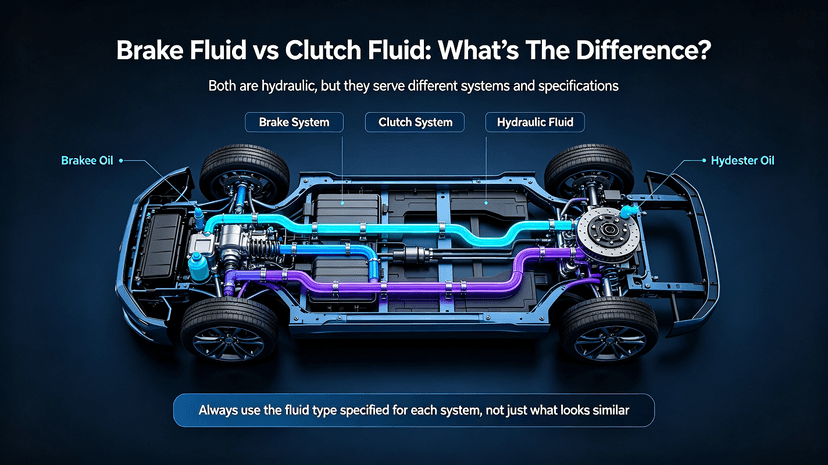
Brake fluid sits at the center of two systems that many shops and fleet managers treat separately: stopping power and clutch actuation. That overlap creates a common question in maintenance and parts sourcing, especially on manual-transmission vehicles: can you use brake fluid for clutch fluid? The short answer is often yes, but only when the manufacturer designed both systems for the same hydraulic chemistry. That “often” matters. Mix the wrong fluid into a hydraulic circuit and you can create seal damage, sluggish pedal feel, or a service problem that takes far longer to fix than to diagnose.
For engineers, sourcing teams, and repair decision-makers, the real issue is not just what goes into the reservoir. It is understanding the fluid family, the component compatibility, and the maintenance habits that keep a system reliable over time. A clutch and brake circuit may look similar from the outside, but the operating demands are not identical. Heat exposure, contamination risk, and service intervals all shape how these fluids behave in practice.
The practical difference between brake and clutch hydraulics
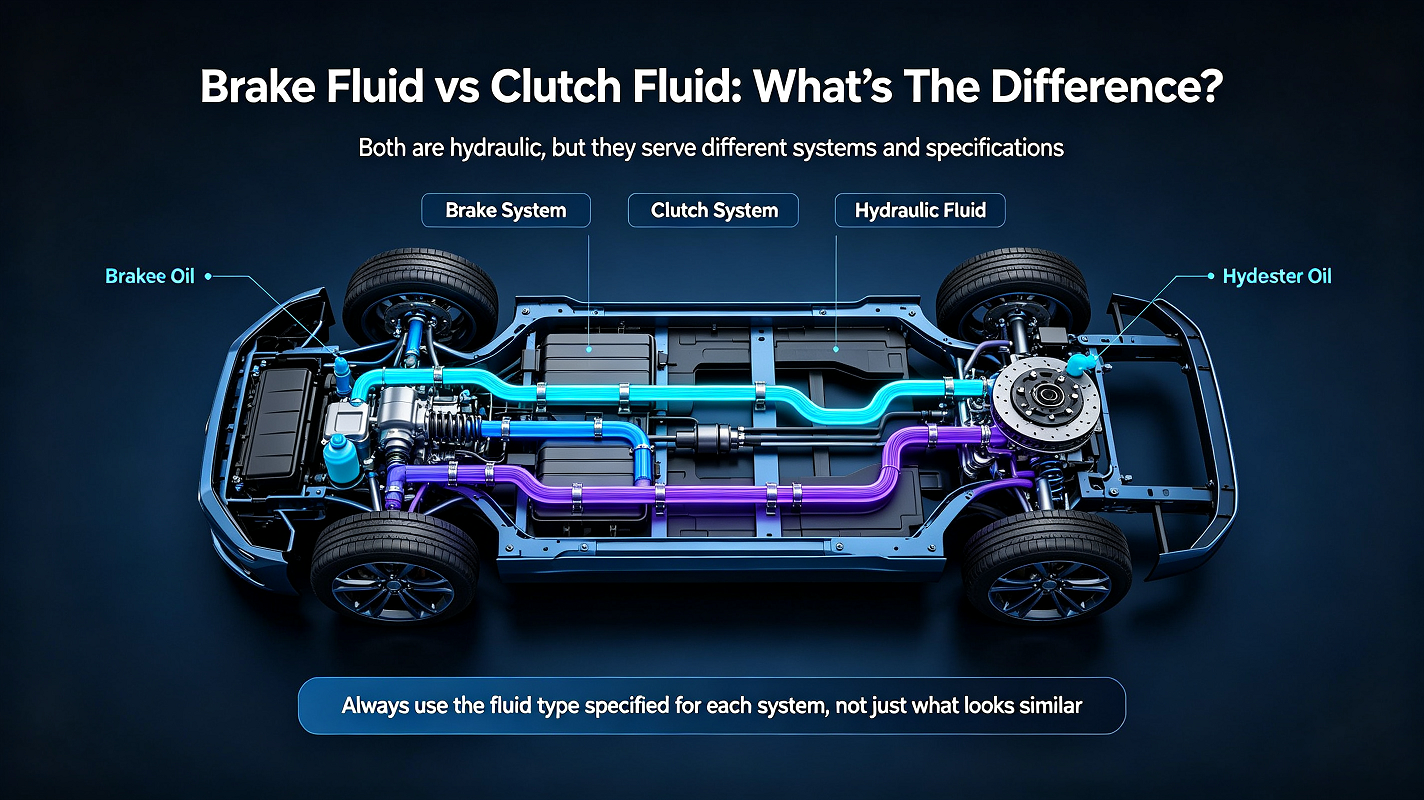
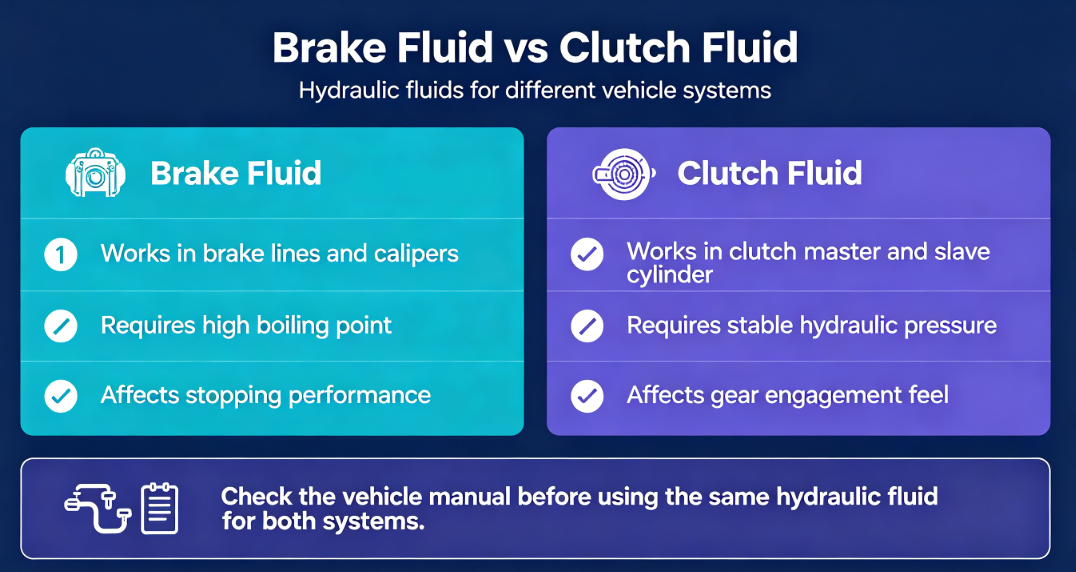
In many passenger vehicles, clutch fluid and brake fluid are effectively the same type of hydraulic fluid. Some vehicles share a reservoir; others use separate reservoirs with the same specified fluid. In that sense, the question often comes down to the system design rather than a universal rule. The Difference is less about the name on the bottle and more about what the vehicle manufacturer approved for seals, cylinders, and hoses.
Brake systems are safety-critical and operate under repeated high load. Clutch systems also rely on hydraulic pressure, but the duty cycle can feel different in use. A driver may not notice slight degradation immediately, which is exactly why contamination or the wrong specification can linger until the pedal feel becomes inconsistent. That delayed warning is one reason technicians should not assume interchangeability just because the fluids look similar.
Quick reference: what to verify before topping off or replacing fluid
Before anyone opens a cap or orders product, check the service information for the vehicle, machine, or platform. Look for the required fluid specification, not just the system name. If the manual says a particular hydraulic fluid type is required, follow that. If brake and clutch reservoirs are separate, confirm whether they share the same chemistry. If they do not, do not cross-fill them.
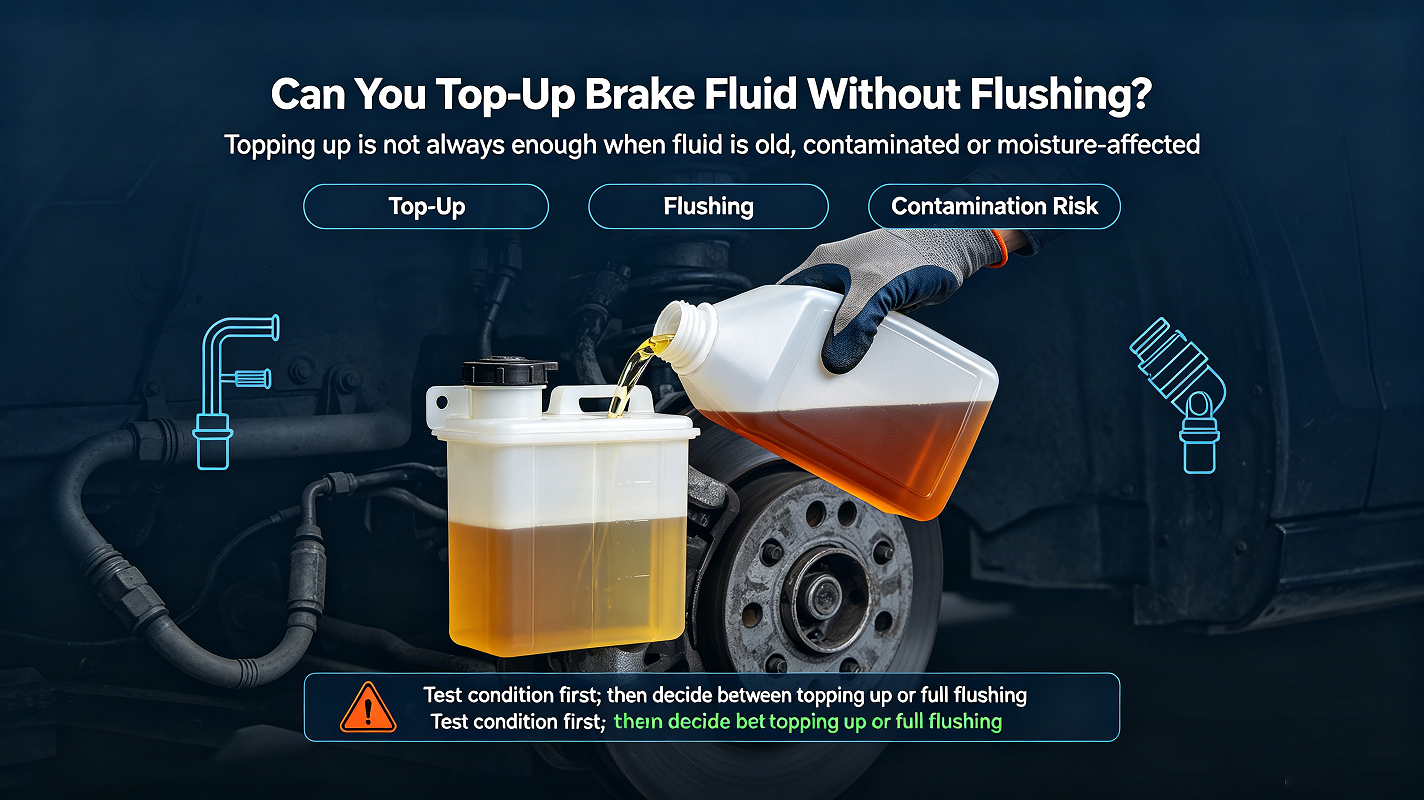
A practical caution: fluid containers that have been opened and sitting around the shop are a frequent source of trouble. Moisture absorption is a well-known concern for glycol-based brake fluid, and a poorly sealed container can turn a routine top-off into a future corrosion issue. It is the kind of small oversight that does not show up on the invoice but does show up later in the bay.
When the answer to “can you use brake fluid for clutch fluid” is yes
The answer is yes only when the vehicle maker specifies the same fluid for both circuits. That is common enough to cause confusion, but it should not lead to blanket assumptions. A clutch master cylinder, slave cylinder, seals, and lines are all part of the compatibility equation. If the system was engineered around brake fluid, then using the approved brake fluid is normal maintenance, not a workaround.
Where teams get into trouble is substituting based on convenience. A shop may have brake fluid on hand and assume it will work in every clutch system. That can be a costly shortcut. In hydraulic systems, compatibility is a material decision, not a convenience decision.
Common mistakes that create preventable repairs
One mistake is mixing fluid types because both are clear or amber and appear interchangeable. Another is topping off without flushing after contamination. Dirt, water, and degraded fluid do not behave politely inside master cylinders. A third is relying on memory instead of the service manual, especially across mixed fleets where some models share hydraulic fluids and others do not.
There is also a sourcing mistake: buying on label language alone. “Hydraulic fluid” is a broad term, and it does not tell you whether the product suits a brake system, a clutch system, or both. If the vehicle documentation names a specification, that specification should drive procurement. It is the cleaner way to avoid callbacks and mixed inventory errors.
Buyer guidance for maintenance, repair, and fleet support
For maintenance managers and parts buyers, the most useful habit is to standardize by application, not by convenience. Keep records of which models use the same fluid family. Train technicians to confirm reservoir caps, manuals, and service labels before topping off. If you support a broad fleet, consider a simple cross-reference sheet at the point of service. That small bit of discipline saves real time.
Also, do not ignore the feel of the system after service. A pedal that becomes spongy, inconsistent, or slow to return deserves attention. It may indicate air in the lines, degraded fluid, or a compatibility issue. Catching it early is cheaper than replacing cylinders or hoses later.
FAQ: fast answers for shop-floor decisions
Is brake fluid always safe for clutch fluid?
No. It is safe only when the manufacturer specifies the same fluid for both systems.
Why do some vehicles use the same fluid for brakes and clutch?
Because the hydraulic design and seal materials were selected to work with that fluid family from the start.
Should opened fluid containers be reused months later?
Only with caution. Moisture exposure and contamination can make old fluid a poor choice for critical hydraulic systems.
What to do next
If you are choosing fluid for service stock, verify the exact specification for each platform and separate the items that only look similar. If you are troubleshooting a clutch issue, do not assume the fluid is correct just because the reservoir is full. The right decision here is usually a careful one, and in hydraulic systems, careful is what keeps vehicles in service.
Welcome to contact GAFLE for more information & cooperation!
peter
ZHEJIANG GAFLE AUTO CHEMICL CO.,LTD
Tel:86-579-8222 1665
Fax:86-579-8246 4690
Cel/Wechart:86-13335993986
E-mail:peter@gafle.net
Web:www.gafle.net