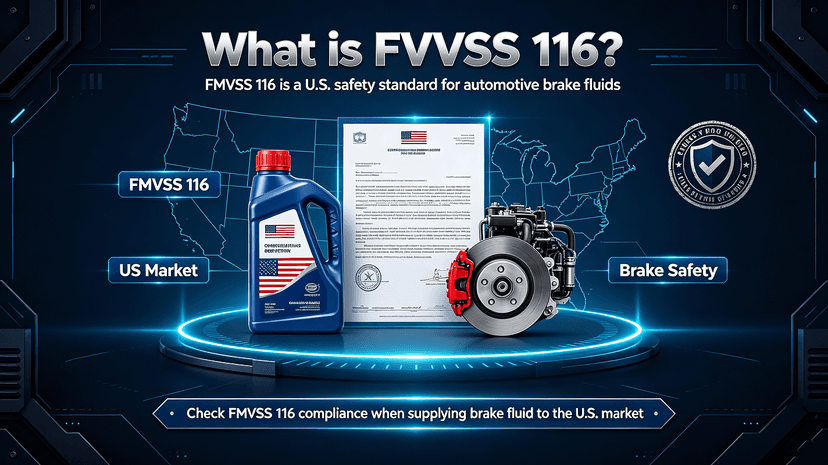
FMVSS 116 and Why It Matters to Brake Fluid Buyers
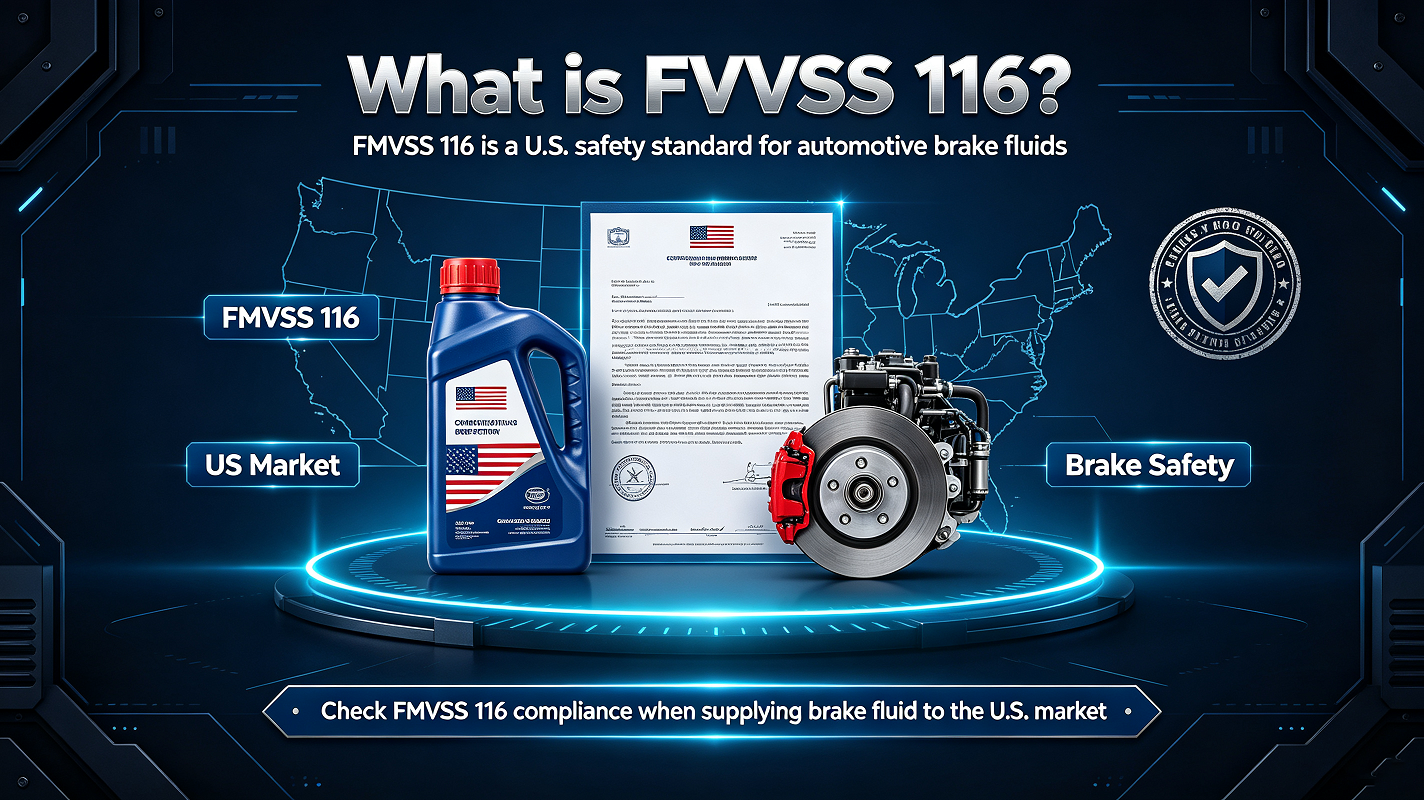
FMVSS 116 is the U.S. brake fluid standard that shapes how suppliers formulate, test, label, and document brake fluid for road vehicles. For engineers, sourcing managers, and product teams, the practical question is not just whether a fluid “works,” but whether it fits the regulatory framework, the vehicle application, and the supply chain paperwork that comes with it. In other words, FMVSS 116 is not a background detail. It is part of the buying decision.
This matters because brake fluid is one of those components where a small mismatch can create outsized consequences. The wrong chemistry, the wrong performance claims, or incomplete documentation can slow down vehicle launches, complicate service parts programs, or create avoidable compliance risk. Buyers who understand FMVSS 116 brake fluid requirements tend to ask better questions early, which usually saves time later.
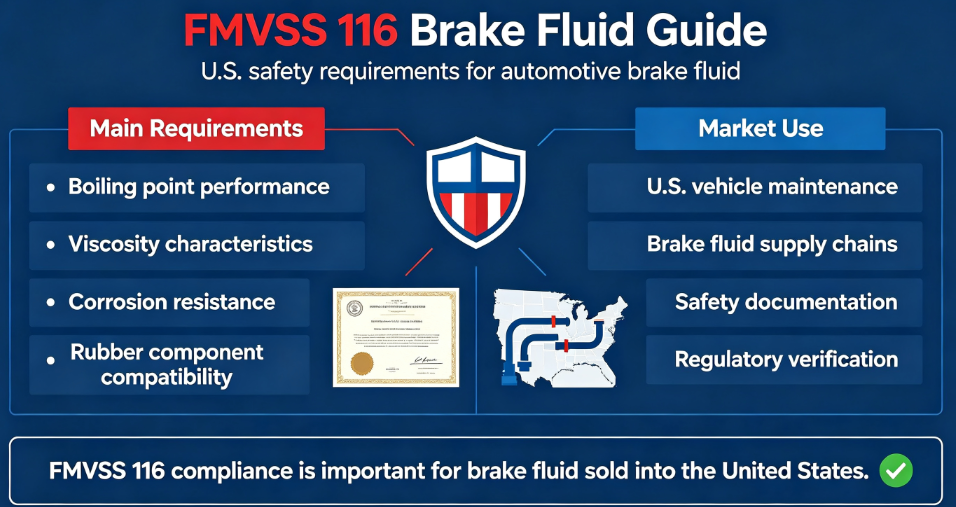
What FMVSS 116 Covers in Practical Terms
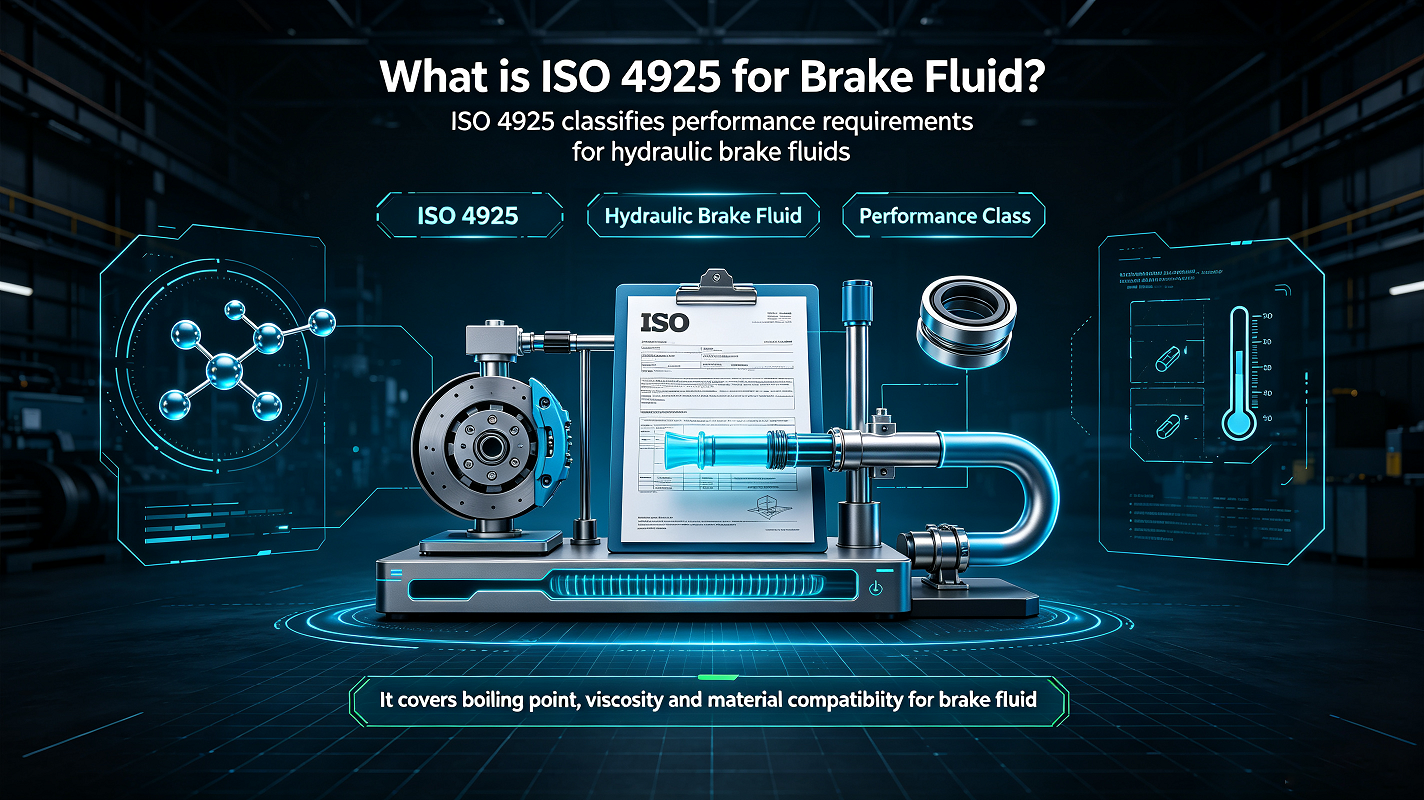
In plain language, FMVSS 116 is the U.S. brake regulation that defines performance and identification expectations for brake fluid. It is not just about one number on a datasheet. It is about a set of properties that influence how the fluid behaves in real braking systems: boiling performance, low-temperature flow, corrosion resistance, material compatibility, and stability over time.
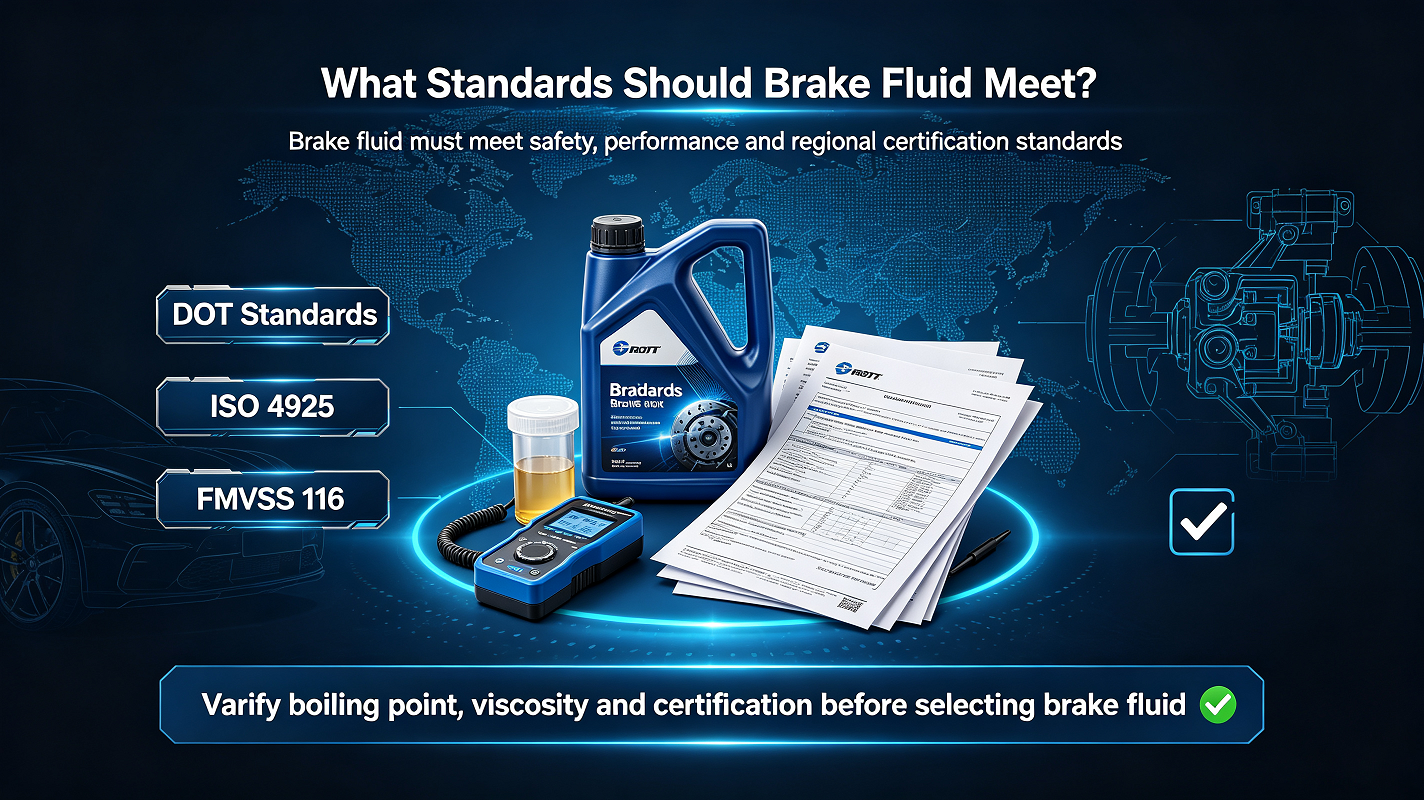
The standard is often associated with classifications such as DOT 3, DOT 4, DOT 5, and DOT 5.1, but those labels are only useful if the underlying product matches the intended application. A purchasing team should be careful here. A label can suggest compatibility, yet the system design may still demand a specific fluid type. That is especially important when fleets, aftermarket channels, and OE programs overlap.
Quick Reference: What Buyers Usually Need to Verify
1. Intended fluid type
Check whether the application calls for glycol-based fluid, silicone-based fluid, or another approved chemistry. Mixing the wrong types can create service problems fast.
2. Performance claims
Ask for the exact test basis behind boiling points, viscosity, and other key properties. Broad marketing language is not enough when the purchase is tied to a specification.
3. Labeling and traceability
Brake fluid packaging should support clear identification, lot traceability, and handling instructions. For regulated products, that paperwork often matters as much as the liquid itself.
4. Compatibility notes
Confirm whether the product is compatible with seals, hoses, reservoir materials, and service procedures used in the target vehicle platform.
Why the Standard Affects Sourcing and Product Development
For sourcing teams, FMVSS 116 is a filter. It narrows the field of acceptable brake fluid suppliers and helps distinguish between a commodity fluid and a regulated automotive fluid intended for U.S. use. For product teams, it influences platform decisions much earlier than many people expect. The fluid selection can affect warranty positioning, maintenance intervals, and even packaging and user instructions.
There is also a supply chain reality here: not every region follows the same vocabulary or testing emphasis. A fluid that is acceptable in one market may still need separate validation, documentation, or packaging changes before it is fit for a U.S. program. That is one reason why “equivalent” is a word buyers should use carefully.
Common Mistakes Buyers Make
One frequent mistake is assuming that all brake fluid is interchangeable if the container shows a DOT designation. It is not that simple. Vehicle systems, service procedures, and material compatibility can change the answer. Another common issue is overlooking the difference between a product that meets a requirement and a product that is well supported by technical data.
Buyers also sometimes focus only on price per liter and miss the cost of compliance work, requalification, or customer support. In a regulated category, a low unit price can be a false bargain if the supplier cannot back up the claim set with consistent documentation.
Practical Buyer Advice for FMVSS 116 Programs
Start with the application, not the product brochure. Ask which vehicle systems will use the fluid, what the service environment looks like, and whether the requirement is for OE fill, aftermarket service, or both. Then request the data package that supports the claim against FMVSS 116. If the supplier cannot explain the test basis clearly, that is usually a warning sign.
It is also worth aligning internal teams early. Procurement may be looking at cost and supply continuity, while engineering is focused on performance and compatibility. Quality may want traceability and change control. FMVSS 116 sits at the intersection of all three, so a short internal review often prevents a longer external dispute.
FAQ: FMVSS 116 in Everyday Procurement Work
Is FMVSS 116 the same as a product certification?
Not exactly. It is a U.S. brake regulation that defines requirements, but buyers still need supplier evidence, test documentation, and correct labeling to support a purchasing decision.
Can one brake fluid fit every vehicle?
No. Even when products share similar labels, compatibility depends on the brake system design and the intended service use.
What should I ask a supplier first?
Ask which FMVSS 116 category the fluid is intended to meet, what test data supports that claim, and whether the product is suitable for your exact application.
Next Step for Buyers and Engineers
If you are qualifying brake fluid for a new program, or reviewing an existing supply base, treat FMVSS 116 as a working specification, not a formality. Build your checklist around application fit, documentation, compatibility, and traceability. That approach is usually more effective than chasing the lowest-cost sample and hoping the paperwork catches up later.
For teams making sourcing decisions, the safest path is to confirm requirements early, compare supplier data carefully, and keep the discussion tied to the real vehicle system. Brake fluid is not glamorous, but it is one of the few materials where compliance discipline shows up directly in safety and service performance.
Welcome to contact GAFLE for more information & cooperation!
peter
ZHEJIANG GAFLE AUTO CHEMICL CO.,LTD
Tel:86-579-8222 1665
Fax:86-579-8246 4690
Cel/Wechart:86-13335993986
E-mail:peter@gafle.net
Web:www.gafle.net