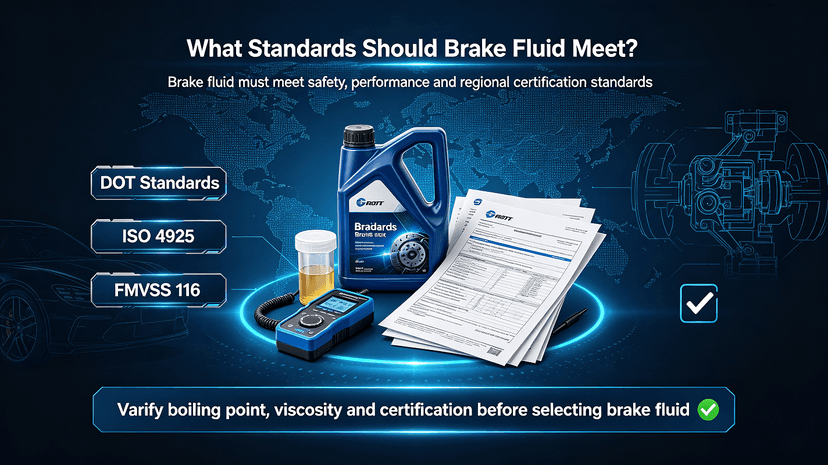
Brake Fluid Standards: What Buyers and Engineers Need to Check Before Approving a Product
Brake fluid is not a commodity you can source on appearance alone. In a hydraulic braking system, the fluid has to transfer force consistently, survive heat, resist moisture-related performance loss, and stay compatible with seals and metals over time. That is why buyers, engineers, and quality teams spend so much time asking the same practical question: what standard should brake fluid meet, and how do you verify it before it goes into production or aftermarket supply?
The short version is this: the right brake fluid is defined less by marketing language and more by its specification, test basis, and intended application. A passenger-car formulation is not automatically suitable for heavy-duty use, and a fluid that looks acceptable on paper may still create problems if its wet boiling behavior, viscosity, or material compatibility do not match the system. For anyone responsible for automotive brake safety, that difference matters more than packaging claims.
Why the standard matters more than the label
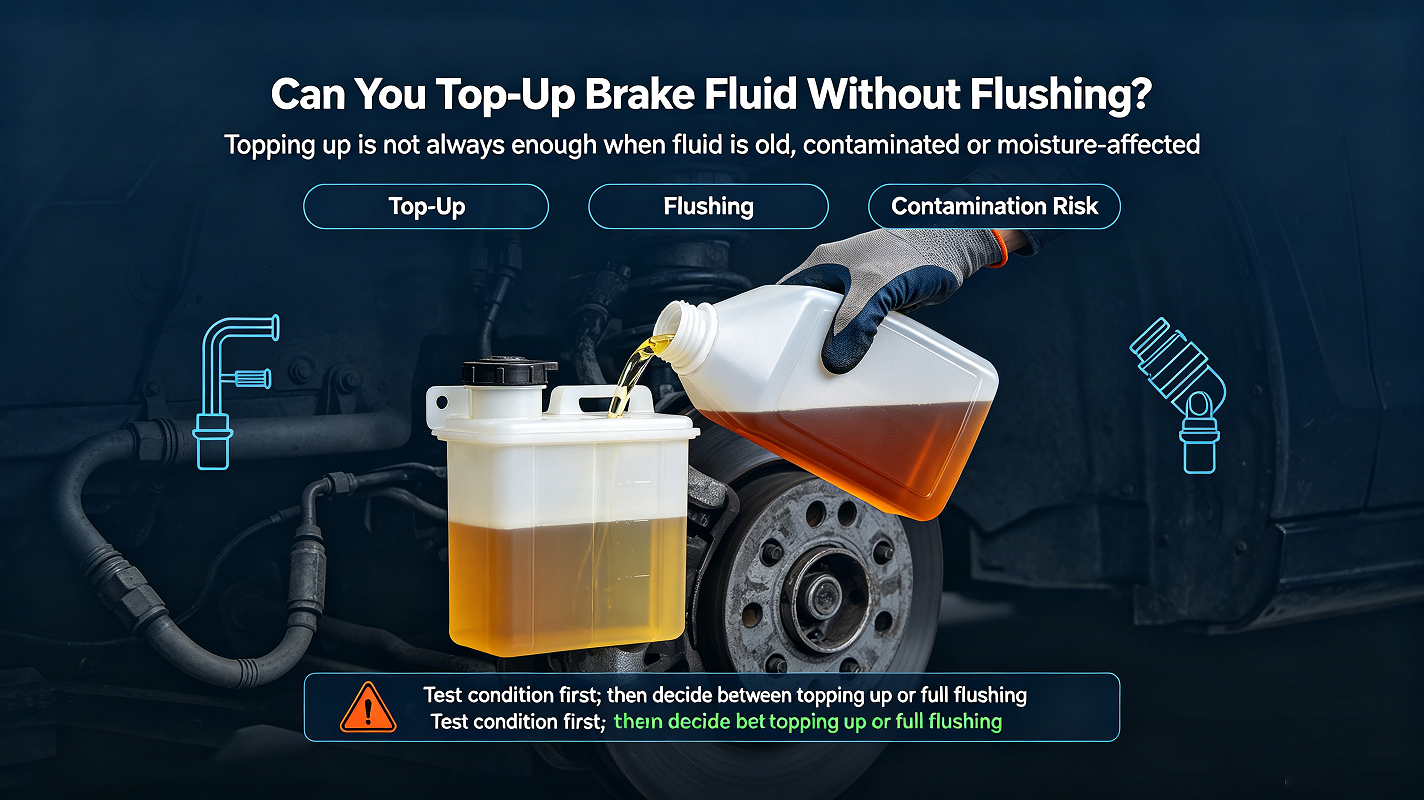
Brake fluid works in a closed hydraulic circuit, but it is never truly isolated. It absorbs moisture over time, sees temperature spikes near calipers and wheel cylinders, and must remain stable through years of vibration and service. Once the fluid absorbs enough water, boiling point drops and pedal feel can change. That is where a recognized standard becomes useful: it gives procurement and engineering teams a common reference point for performance, not just composition.
For buyers, the main risk is simple. If the fluid does not match the system requirement, the failure may not show up at receiving inspection. It shows up later in the field, when a vehicle has already been assembled or sold. That is a costly place to discover an incompatibility, especially when the issue could have been caught by comparing the supplier’s documentation against the equipment requirement.
Common brake fluid types and what the buyer should check
DOT-based fluids
Most commercial brake fluids are supplied to DOT-type classifications, which are tied to performance requirements rather than a single chemical recipe. In practice, that means the buyer should look at the exact grade, the claimed dry and wet boiling performance, and the fluid’s viscosity at low temperature. Two products may both claim the same category and still behave differently in cold weather or high-heat braking.
OEM or system-specific specifications
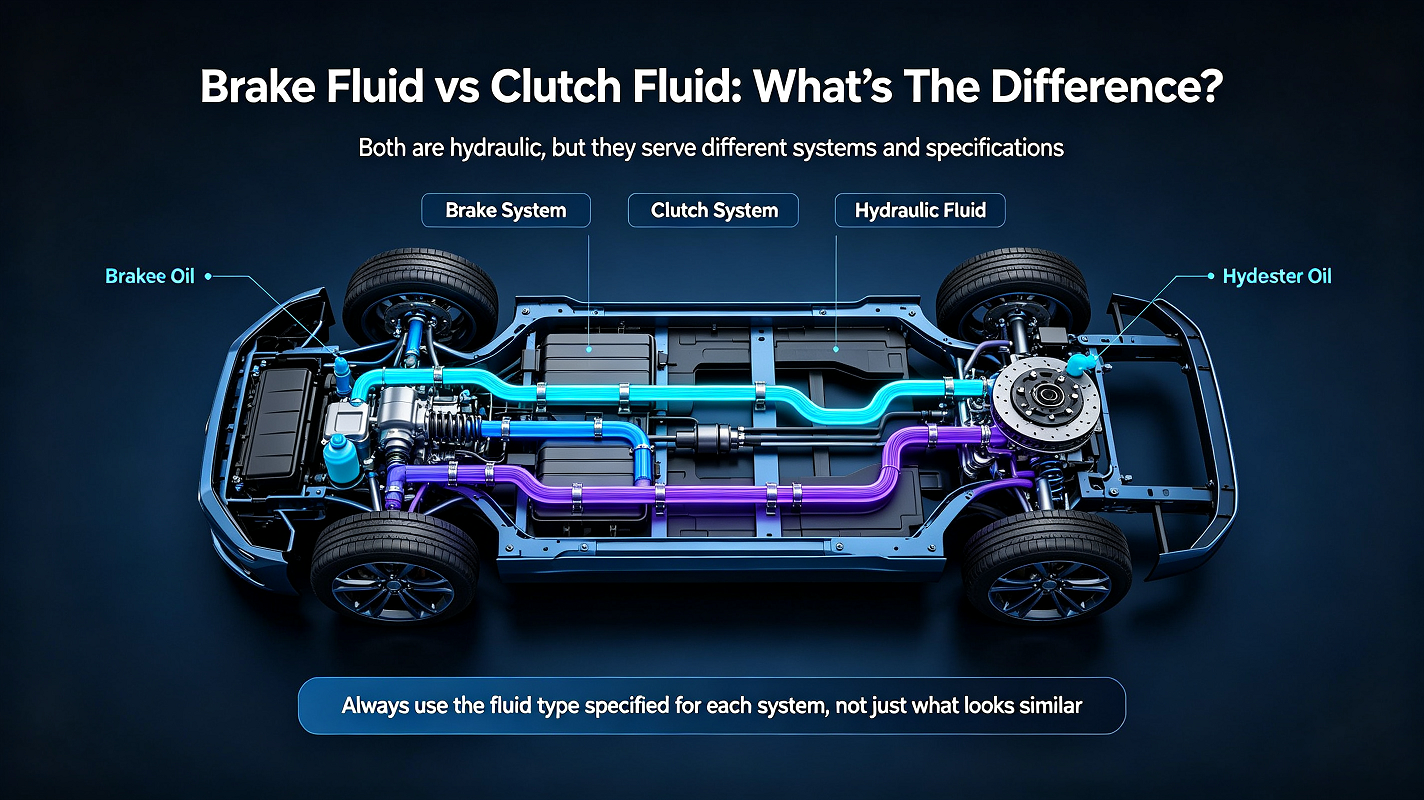
Some vehicle platforms call for a manufacturer-specific specification. In those cases, the OEM requirement should override general assumptions. A fluid that meets a broad market category may still be wrong for a particular ABS or stability-control system if the viscosity profile is off. This is one of those details that can be easy to miss during sourcing because the label language sounds close enough.
Specialty or racing fluids
High-performance fluids may advertise higher boiling points, but that does not automatically make them better for every application. Some are optimized for short service intervals or track conditions, not long drain intervals or all-weather daily driving. Buyers should avoid treating a specialty formulation as a universal upgrade.
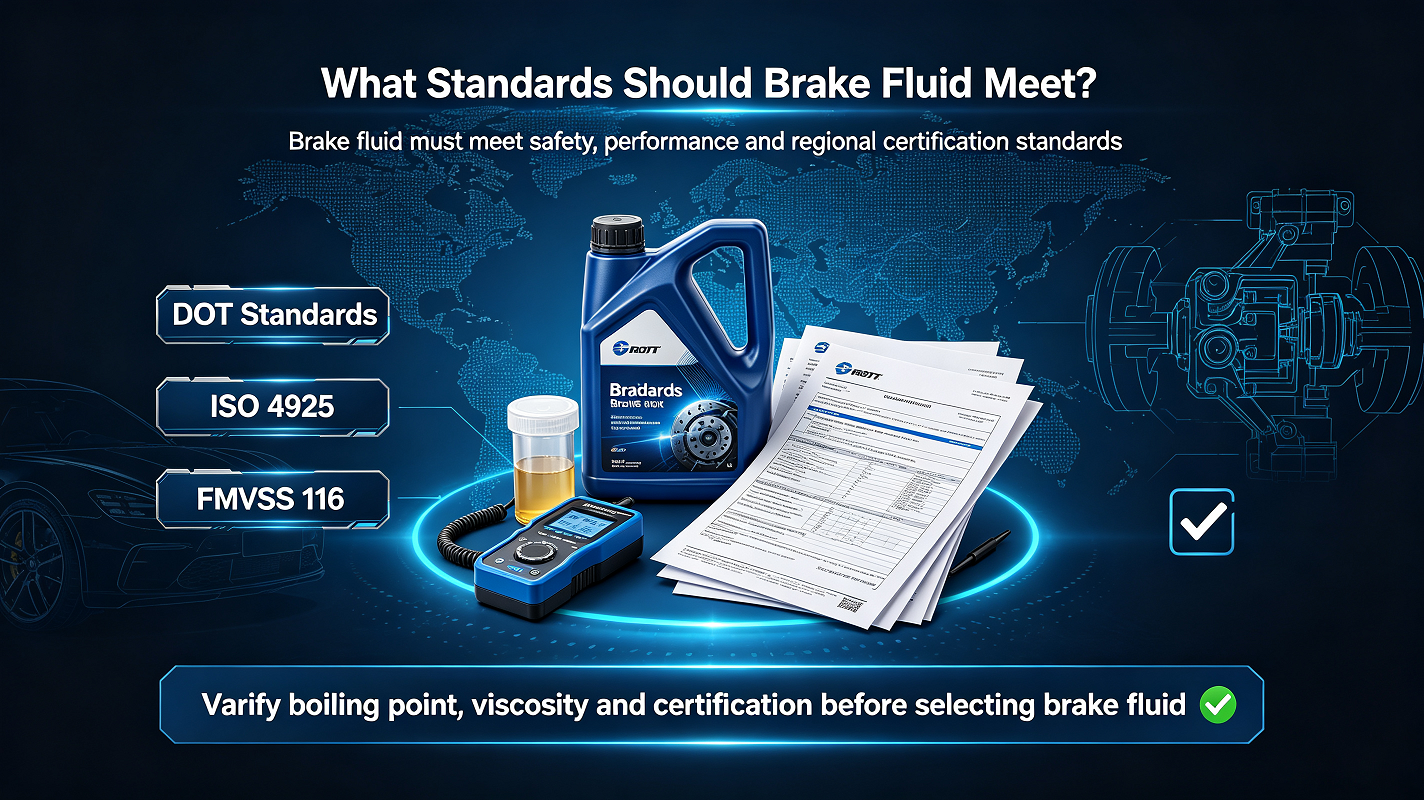
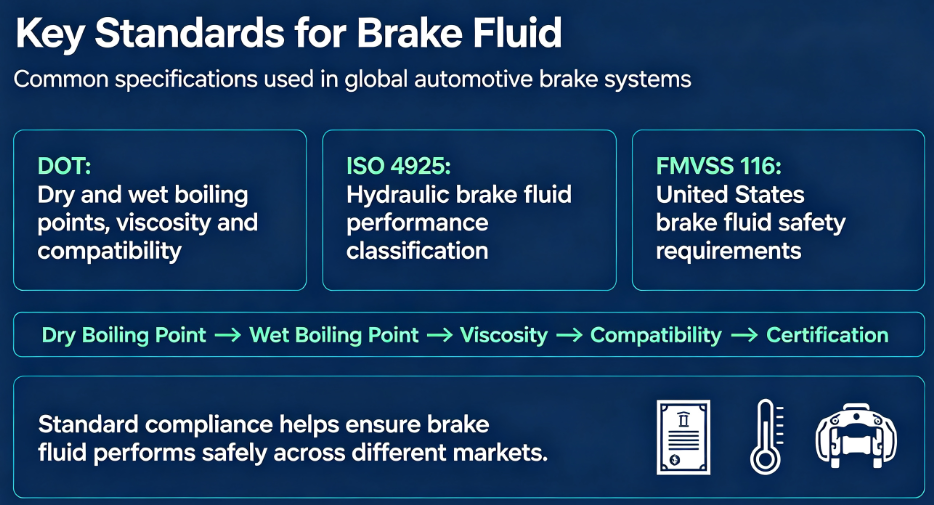
What standards should brake fluid meet?
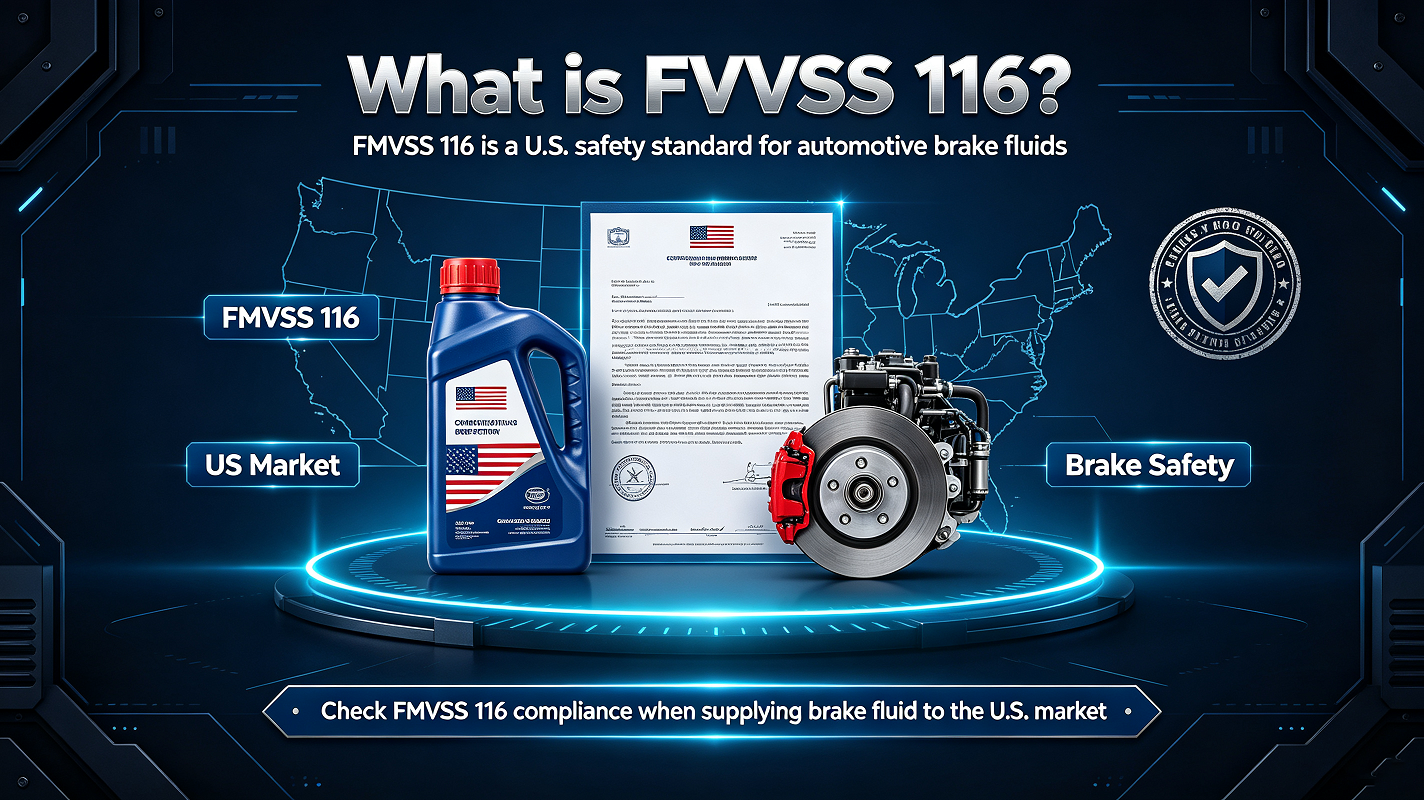
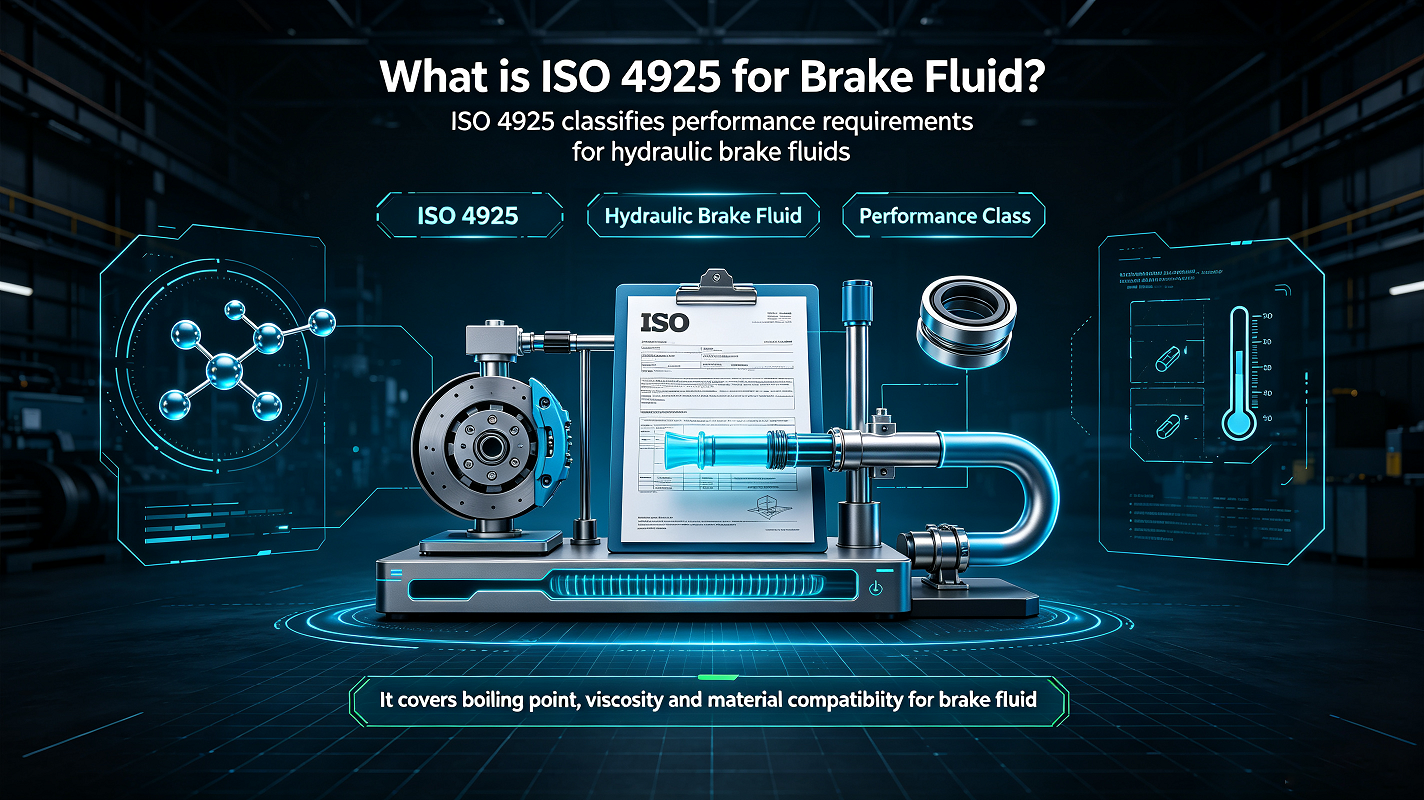
That question usually starts with the vehicle program, the regional market, and the braking system design. A sound review process typically checks the published specification, the test method behind the claim, and the compatibility data for seals and metals. If the supplier says the fluid meets a certain requirement, ask for the supporting documentation rather than stopping at the declaration itself.
At minimum, a sourcing team should confirm the following before approval:
• The exact grade or specification claimed on the technical data sheet
• Dry and wet boiling performance
• Low-temperature viscosity where relevant
• Compatibility with elastomers, hoses, and internal metals
• Packaging and contamination control
• Traceable lot identification and quality documentation
That list is not glamorous, but it is more useful than a sales brochure. It also helps separate a genuinely suitable product from a bottle with a familiar name and vague wording.
Certification, documentation, and the limits of a datasheet
Certification language can be helpful, but it should never be read in isolation. A certificate may show that a fluid was tested to a given requirement, yet that does not automatically guarantee the exact shipped lot, the packaging condition, or the long-term stability of the product in storage. Engineers and procurement teams should compare the declared specification with current test data and make sure the documentation is current, legible, and consistent across batches.
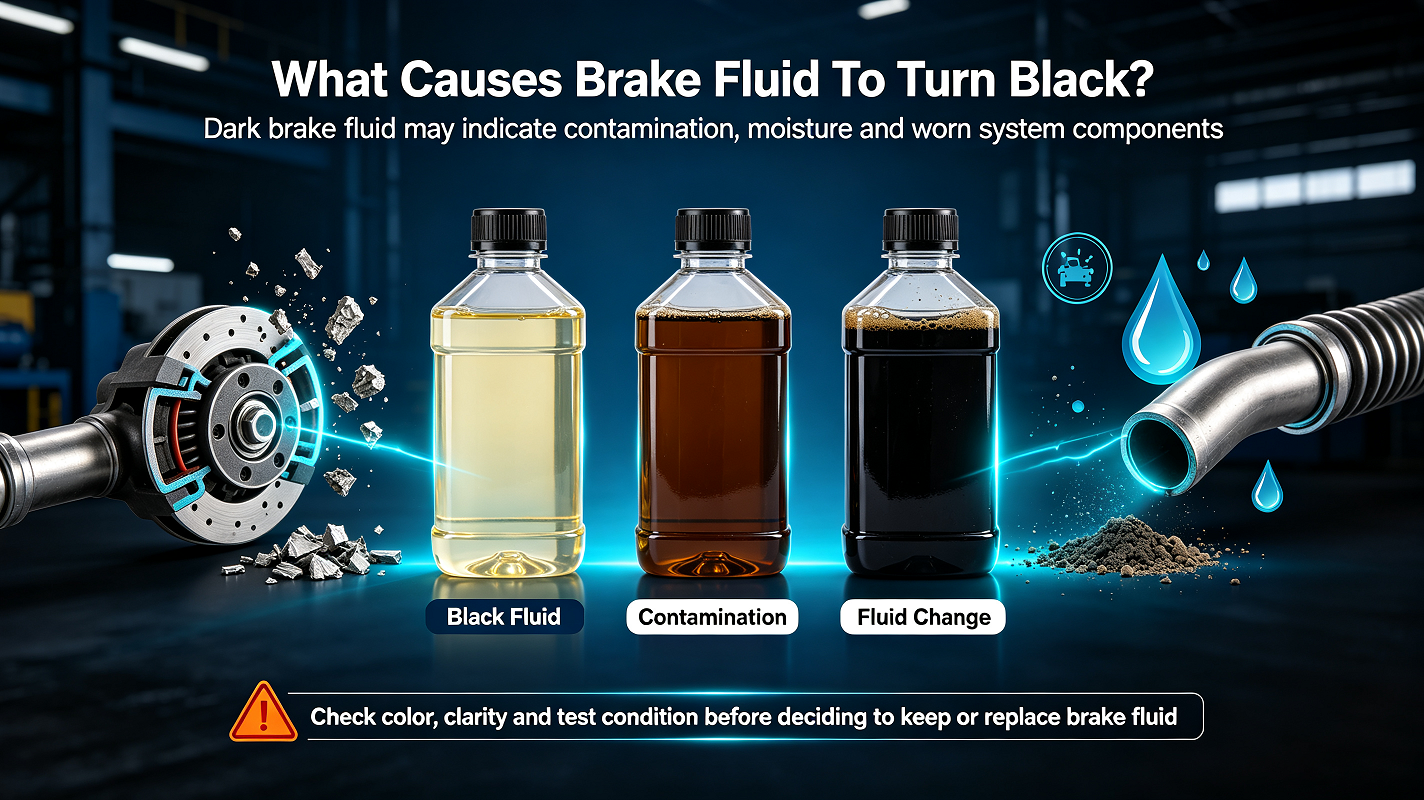
One practical caution: brake fluid is sensitive to contamination. Even a technically correct product can become a problem if it is exposed to moisture during transfer or if containers are left improperly sealed. For that reason, packaging quality is part of the sourcing decision, not just a warehouse detail.
Common mistakes in brake fluid sourcing
The most common mistake is assuming all fluids in the same category are interchangeable. They are not. Another frequent issue is buying against a price target without checking the complete specification. A cheaper fluid can look attractive until it creates service complaints, warranty exposure, or assembly-line rework.
There is also the habit of mixing old inventory with new approvals. That may seem efficient, but if the product specification changed even slightly, the supply chain may inherit a hidden mismatch. For safety-critical systems, that is not a shortcut worth taking.
Buyer advice for automotive brake safety
If you are sourcing brake fluid for production, aftermarket packaging, or service networks, start with the system requirement first and the supplier second. Ask which standard the fluid is designed to meet, how that claim is supported, and whether the product fits the operating temperature range and service profile you expect. Then verify the packaging and traceability controls.
For engineering teams, the key decision is not simply “does this fluid work?” but “does it work in this braking system, in this climate, over this service life?” That framing keeps the review grounded in real use rather than brochure language.
FAQ
Can one brake fluid work for every vehicle?
No. Some fluids are broadly applicable, but many vehicles and braking systems have specific requirements.
Is a higher boiling point always better?
Not always. Boiling point is important, but it is only one part of the specification. Viscosity and compatibility also matter.
Should I rely on the bottle label alone?
No. Check the datasheet, test basis, and any supporting documentation before approval.
Next step for sourcing teams
If you are qualifying a new brake fluid supplier, use the vehicle requirement as your starting point and ask for full technical documentation before pilot approval. A careful specification review takes less time than correcting a braking issue after launch, and in this category that is usually the better trade.
Welcome to contact GAFLE for more information & cooperation!
peter
ZHEJIANG GAFLE AUTO CHEMICL CO.,LTD
Tel:86-579-8222 1665
Fax:86-579-8246 4690
Cel/Wechart:86-13335993986
E-mail:peter@gafle.net
Web:www.gafle.net