
Why Brake Fluid Color Gets Attention in the First Place
Brake fluid is one of those maintenance items that drivers rarely think about until something looks wrong. When it starts to turn black, the change can trigger immediate concern, and for good reason. Brake fluid is supposed to do a hard job quietly: transfer hydraulic force, handle heat, and keep braking response consistent. If the fluid darkens, the question is not just cosmetic. It raises a real maintenance issue about contamination, fluid age, and whether the braking system still has the right condition to perform safely.
For engineers, sourcing managers, and maintenance teams, the decision is less about panic and more about diagnosis. Is the dark color a normal sign of aging, or is it pointing to seal wear, moisture, or internal wear debris? And if the fluid is dark, is black brake fluid dangerous right now, or simply a warning that service is due soon? The answer depends on the system, the fluid type, and what else is happening inside the master cylinder, lines, and calipers.
What Dark Brake Fluid Usually Means
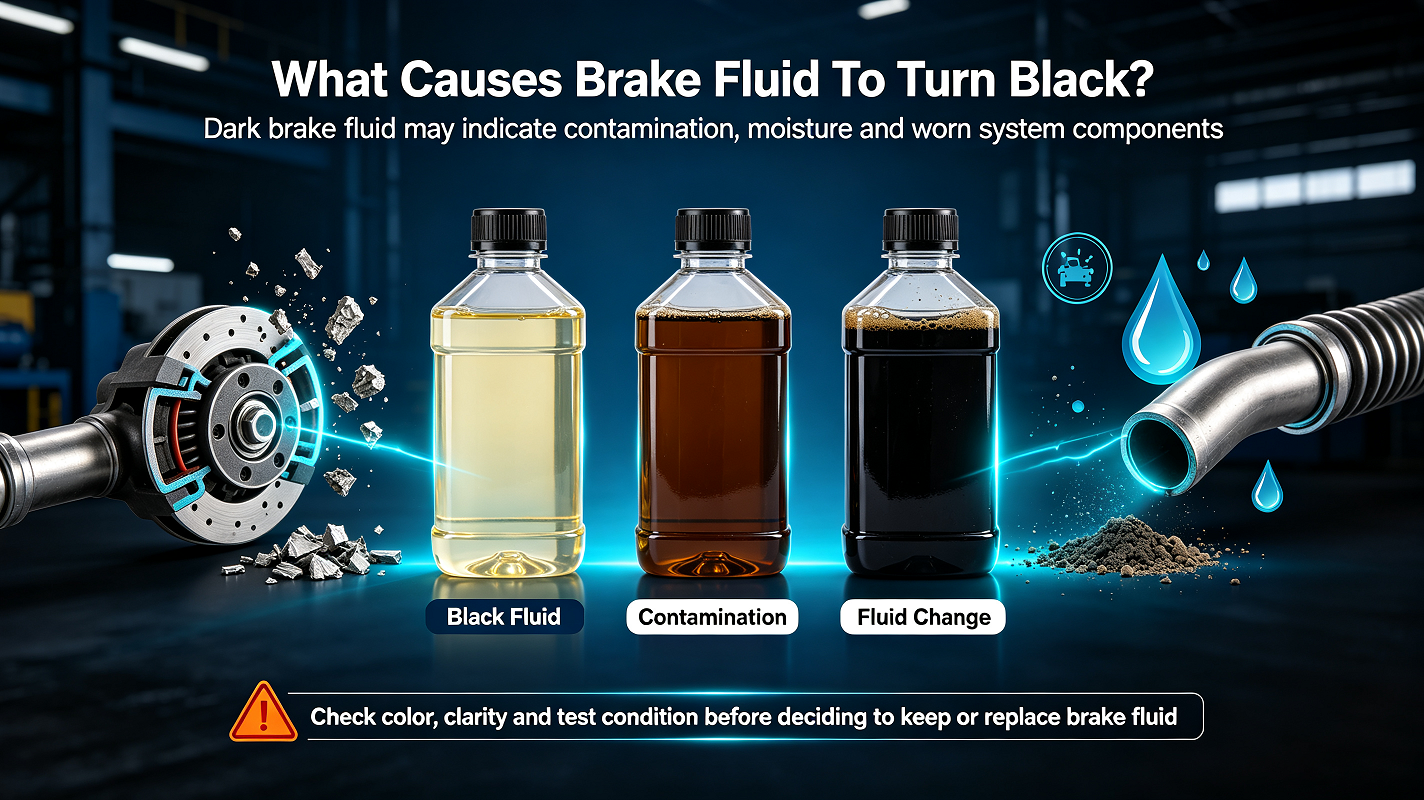
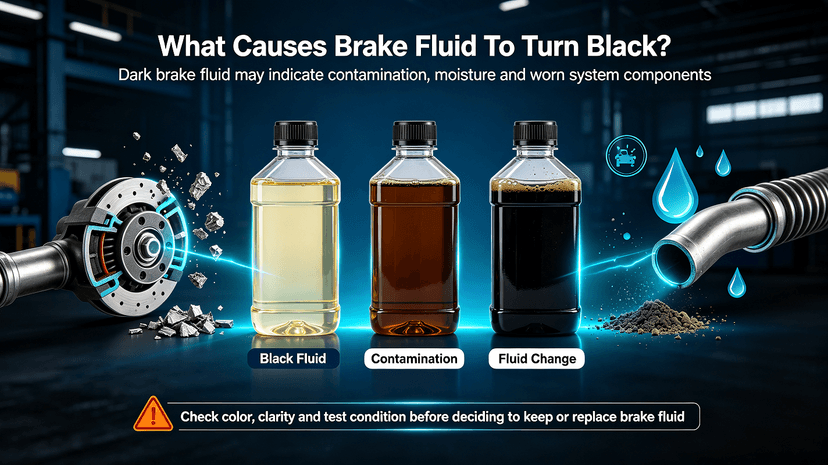
Fresh brake fluid is typically clear to light amber, though the exact shade depends on the formulation. Over time, heat cycles, absorbed moisture, and contact with rubber components can change the appearance. The most common reasons for dark-colored fluid are not mysterious: oxidation, thermal stress, wear debris, and contamination from deteriorating seals or hoses.
That said, color alone is not a complete diagnostic tool. Some systems darken slowly without an immediate performance issue, while others show rapid discoloration after a component problem. In practice, a dark reservoir should be treated as a signal to inspect the system, not just top off the fluid and move on.
Common causes behind the color change
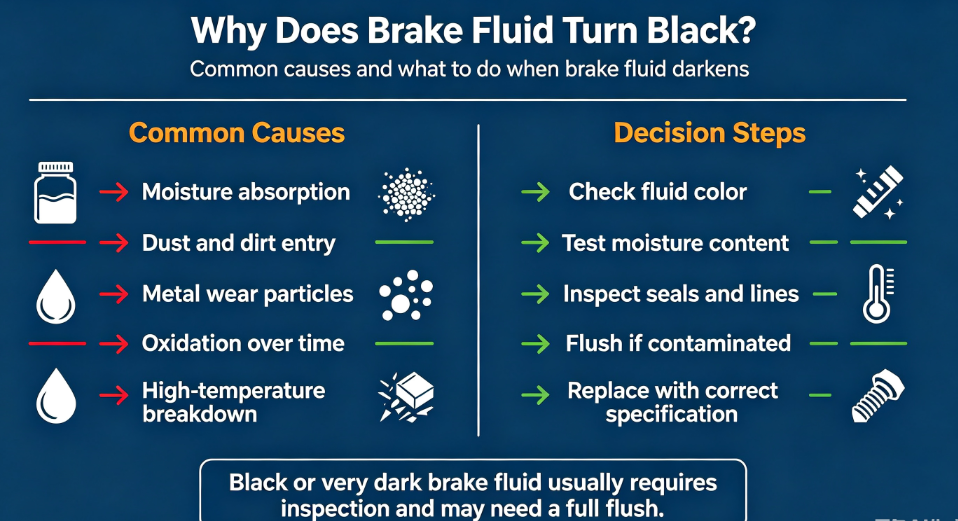
Heat is a frequent culprit. Repeated braking cycles can accelerate chemical breakdown, especially in vehicles or equipment working under heavy load. Moisture absorption is another issue, particularly for glycol-based brake fluids, which are hygroscopic by nature. Water lowers boiling performance and can contribute to internal corrosion, both of which are bad news in a hydraulic braking circuit.
There is also the matter of internal wear. As seals age, they can shed material or allow debris into the fluid. Rubber particles, corrosion products, and fine contamination can all make the fluid appear darker. If the reservoir looks black rather than merely amber-brown, that usually suggests a more advanced issue than simple aging.
Is Black Brake Fluid Dangerous?
In short: it can be. Dark fluid does not automatically mean failure is imminent, but it should not be treated as harmless. The practical risk is that the fluid may no longer perform reliably under high temperature or heavy braking. If moisture content is elevated, boiling point drops. If contamination is present, valves, ABS components, or seals may not respond as intended. That is where a visual problem becomes a system-level concern.
The safest approach is to evaluate brake fluid as part of the full hydraulic system. If the fluid is dark and the pedal feel has changed, if there is delayed response, or if service history is unknown, the case for inspection is strong. A simple color check is not a laboratory test, but it is often the first clue that the fluid’s condition has drifted out of acceptable range.
What Buyers and Maintenance Teams Should Check
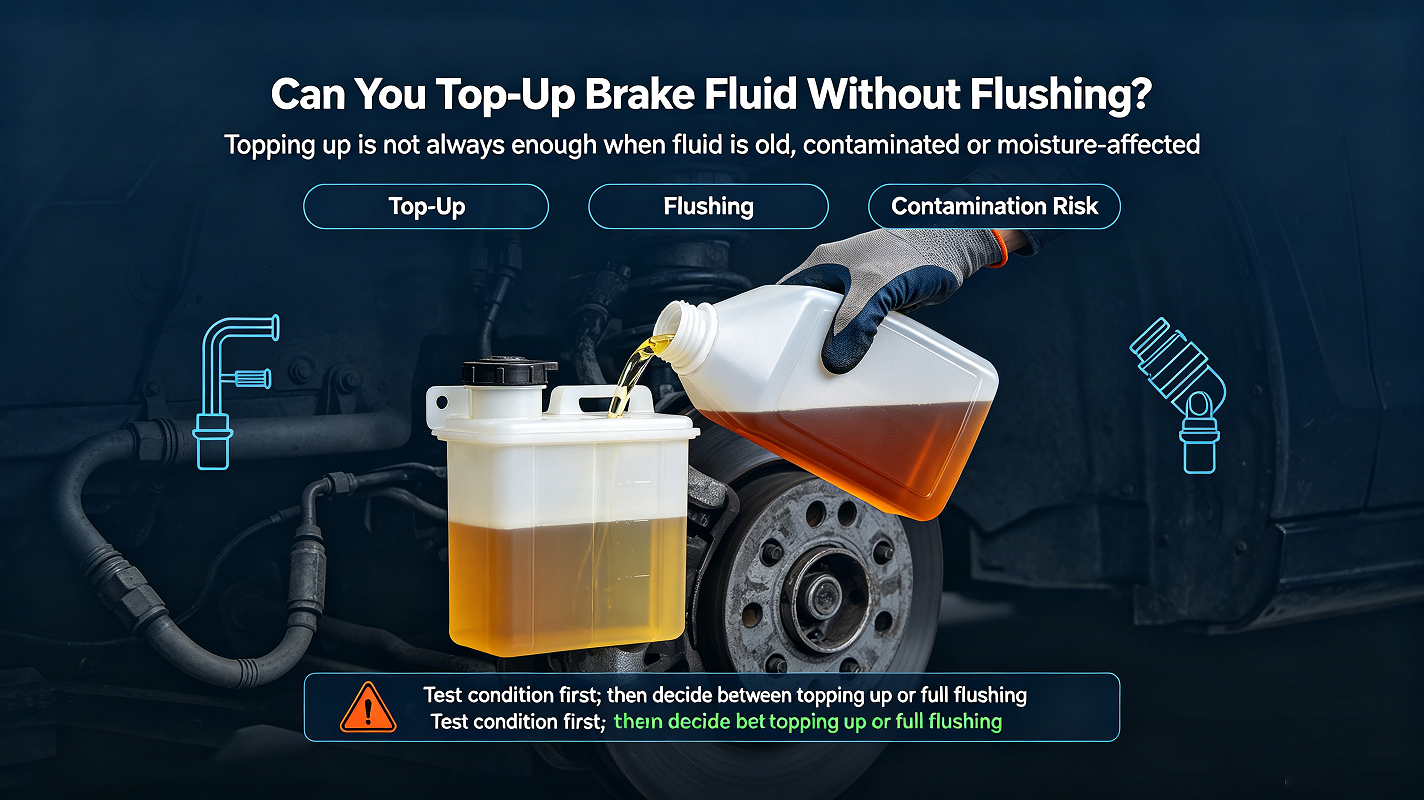
For fleet managers, service buyers, and production teams managing vehicles or machines, the decision is usually whether to flush, inspect further, or both. Start with the basics: service history, reservoir appearance, pedal feel, and any sign of leaks around master cylinders, wheel cylinders, calipers, or hose connections. If contamination is visible, a fluid change alone may not solve the underlying issue.
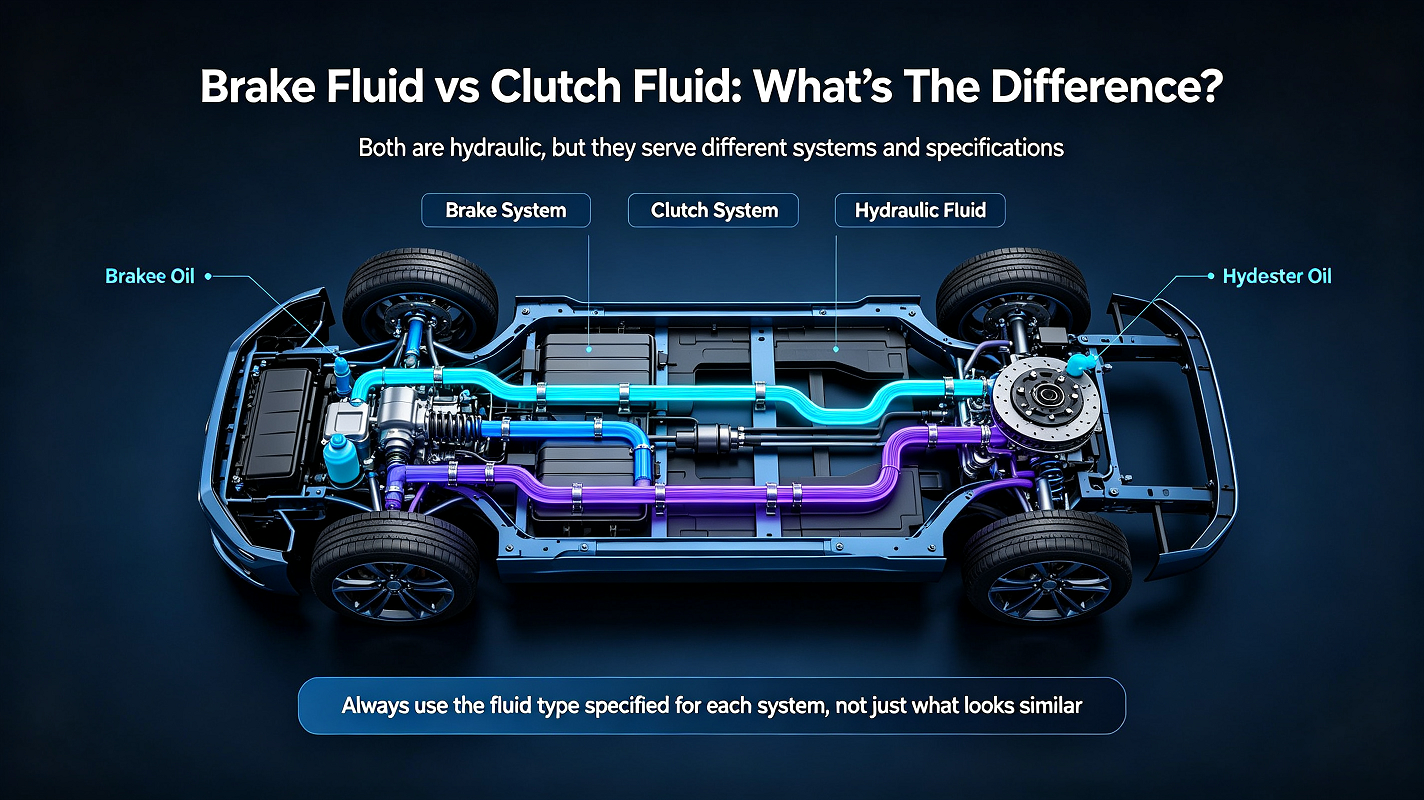
It is also worth matching the fluid to the application. Different brake fluid specifications are not interchangeable in every case, and mixing the wrong type can create compatibility problems. That is an avoidable mistake, but one that still happens when maintenance is handled reactively instead of by specification.
Practical Mistakes to Avoid
One common error is treating dark fluid as a cosmetic issue and postponing service. Another is flushing fluid without checking why it darkened in the first place. If the system has a worn seal, damaged hose, or corrosion inside a cylinder, fresh fluid may buy time but not fix the source.
There is also a buyer-facing caution here: don’t assume every black reservoir means the same thing. A lightly amber-to-brown color may reflect age. Deep black fluid, sludge, or visible particles suggest more serious contamination and deserve a closer look.
FAQ: Quick Answers on Dark Brake Fluid
Does brake fluid always turn black when it needs changing?
No. Some fluids degrade without becoming jet black. Condition matters more than color alone.
Can brake fluid darken from normal use?
Yes, especially after heat exposure and long service intervals. Normal use can still signal the end of a service window.
Should black brake fluid be flushed?
Usually it should at least be inspected and very often replaced, but the reason for the discoloration should be checked too.
What to Do Next
If brake fluid has darkened, treat it as a maintenance finding, not a curiosity. Verify the fluid specification, inspect for contamination, and decide whether a flush is enough or whether the system needs component-level attention. For teams managing safety-critical equipment, that small reservoir inspection can prevent a much larger repair later.
Welcome to contact GAFLE for more information & cooperation!
peter
ZHEJIANG GAFLE AUTO CHEMICL CO.,LTD
Tel:86-579-8222 1665
Fax:86-579-8246 4690
Cel/Wechart:86-13335993986
E-mail:peter@gafle.net
Web:www.gafle.net