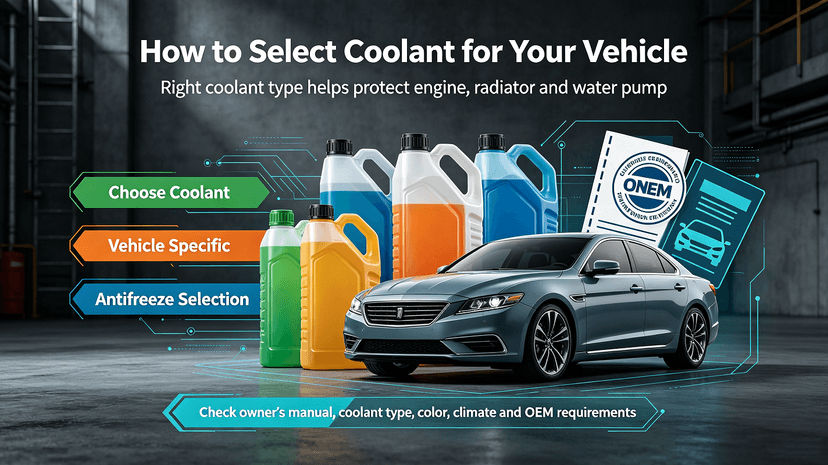
Why choosing coolant is not a trivial maintenance task
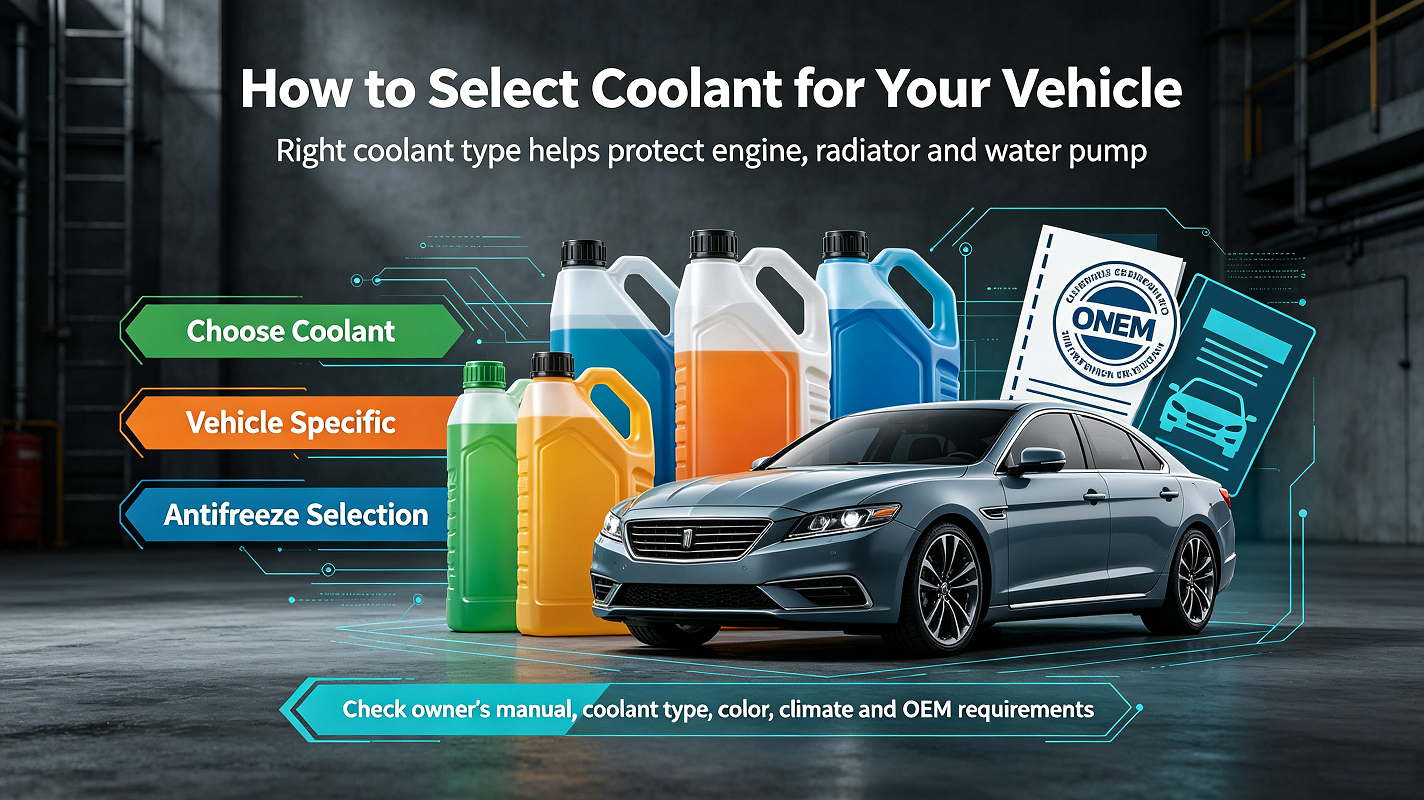
To choose coolant properly, you have to look beyond the color on the bottle. Coolant does more than keep an engine from freezing. It also helps control boil-over, limits corrosion inside aluminum, steel, rubber, and plastic components, and supports the water pump, radiator, heater core, and seals over time. Pick the wrong fluid, and the issue may not show up immediately. That is what makes coolant a slightly annoying subject for buyers: the consequences are often delayed, but the repair bill is not.
For engineers, sourcing managers, and vehicle owners alike, the real question is not “which coolant is best” in the abstract. It is which coolant matches the vehicle design, service interval, and maintenance history. That is where a coolant selection guide by car model becomes useful, because the answer often depends on what the manufacturer specified for that exact cooling system.
Start with the owner’s manual, not the label color
The safest way to pick the right coolant is still the oldest one: check the vehicle manual, service information, or OEM specification. Modern cooling systems are designed around particular inhibitor packages. Some engines want traditional inorganic additive technology, some use organic acid technology, and others rely on hybrid blends. A bottle that says “universal” may work in many applications, but “many” is not the same as “all.”
Color can be helpful, but it is not a standard you can trust by itself. Two green coolants can be chemically different. Two pink coolants can be different as well. For that reason, vehicle specific coolant is usually the more reliable shopping phrase than “the same color as what was in the tank.”
Quick comparison: what buyers are usually trying to sort out
Traditional coolant
Often associated with older vehicles and shorter service intervals. It is commonly chosen for legacy platforms that were designed around that chemistry. If a classic or older fleet unit already uses it, switching casually can create compatibility questions.
Long-life coolant
Frequently used in modern passenger vehicles and commercial platforms. These formulas are designed to stay stable longer, but only when they match the system’s material package and OEM approval requirements. Long-life does not mean universally compatible.
Hybrid formulas
These sit between traditional and long-life approaches. They are sometimes used where manufacturers want a balance of corrosion protection and service life. In practice, the details matter more than the marketing language on the jug.
What matters most when comparing products
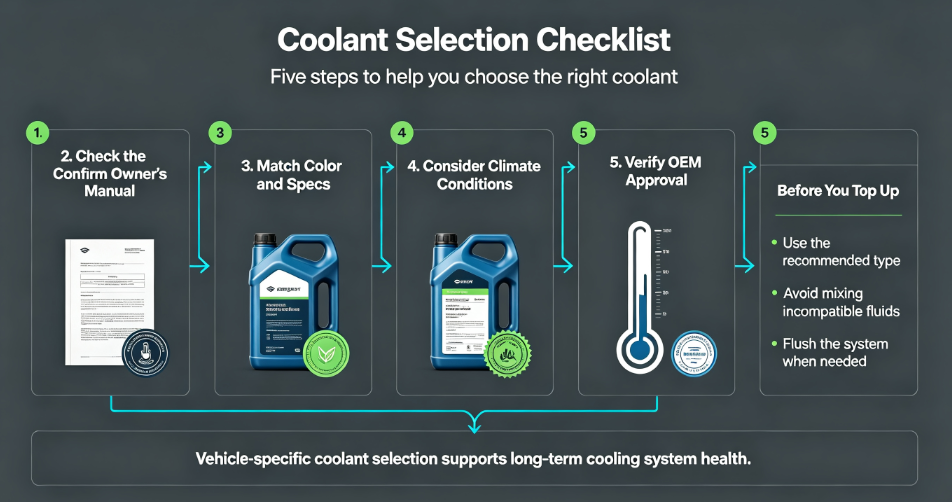
When you are comparing options, the practical checklist is usually simpler than the chemistry would suggest. First, confirm the required specification. Second, note whether the coolant is premixed or concentrated. Third, check whether the system needs distilled or deionized water when dilution is required. Fourth, verify whether the formula is approved for the engine family, not merely “compatible with” it.
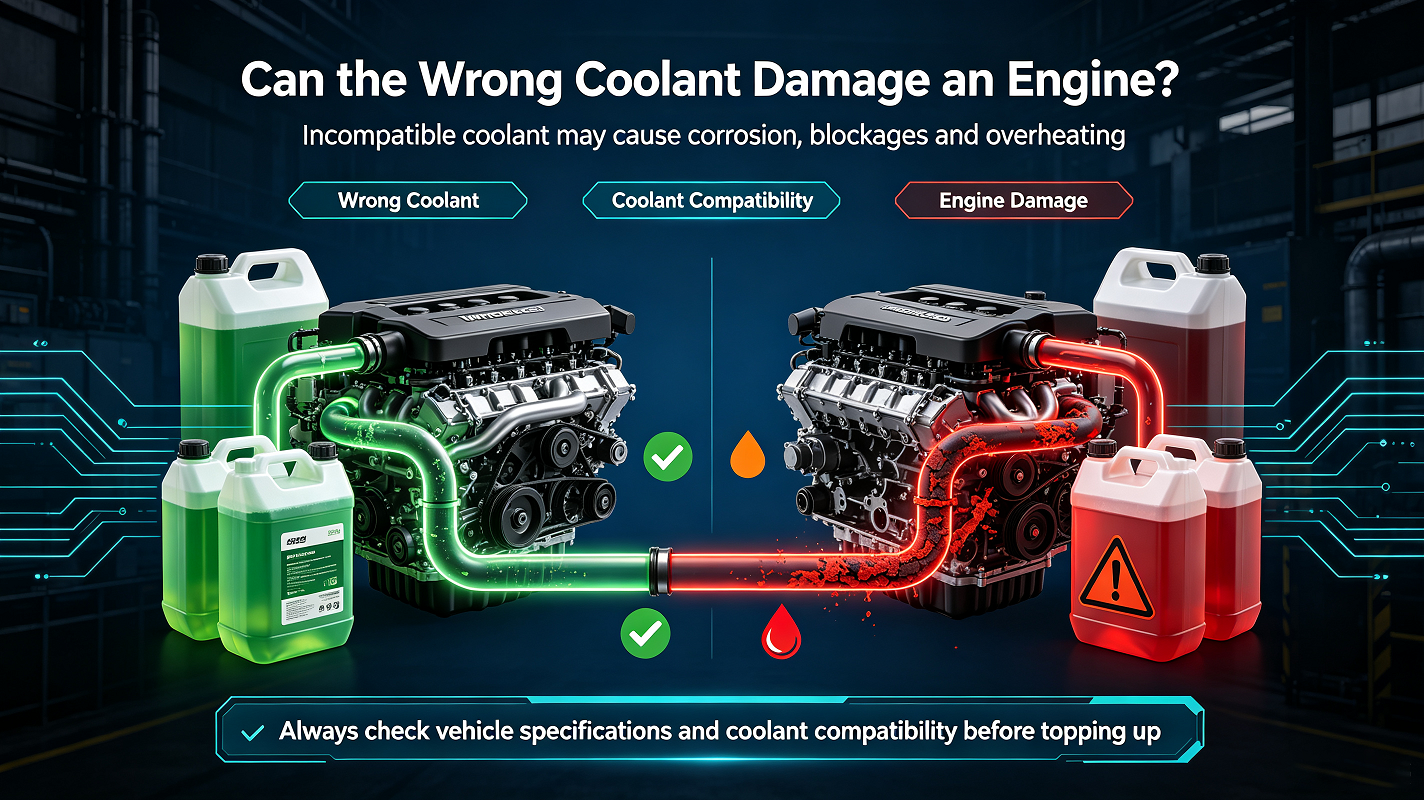
The phrase antifreeze selection often gets used as if all coolants are interchangeable. They are not. The wrong inhibitor package can upset corrosion protection, shorten hose life, or create sludge when mixed with an incompatible fluid. That is especially worth watching in mixed fleets, where a workshop may service multiple makes and models on the same shelf of inventory.
Common mistakes buyers still make
The most common mistake is topping up with whatever is available. A one-time emergency top-off may not destroy an engine, but repeated mixing is a bad habit. Another mistake is assuming “extended life” means “no need to inspect.” Coolant still ages, contamination still happens, and leaks still develop. A third mistake is ignoring previous service history. If a used vehicle or machine arrived with an unknown fill, it may be worth flushing before switching chemistry, rather than hoping for the best.
There is also a procurement mistake that shows up in fleets: buying a bulk coolant based only on price per gallon. That can look efficient on paper, but the hidden cost may be compatibility problems across different platforms. If your organization handles multiple vehicle makes, a tighter coolant selection guide by car model is often cheaper than trying to make one product do everything.
A practical way to narrow the choice
Use this order of operations: identify the vehicle or equipment model, find the OEM specification, confirm the coolant type required, and then decide whether you need premixed or concentrate. If the application is a mixed fleet, split the inventory by platform family instead of by color. That is not glamorous, but it reduces error at the service bay.
For buyers trying to choose coolant for resale, service, or internal maintenance, it helps to ask a few direct questions. Is the coolant intended for light-duty passenger vehicles, heavy-duty diesel engines, or both? Is the product suitable for aluminum components and mixed-metal systems? Is it labeled for a specific brand approval or simply a broad compatibility claim? The answers usually tell you more than the packaging design does.
When a flush is the better decision
If the system history is unknown, the old coolant looks contaminated, or the vehicle is being converted from one chemistry to another, a full flush may be the more defensible path. That said, flushing is not a cure-all. If there is an underlying gasket issue, radiator fouling, or water pump wear, fresh coolant will not solve it. It only gives the cooling system a clean starting point.
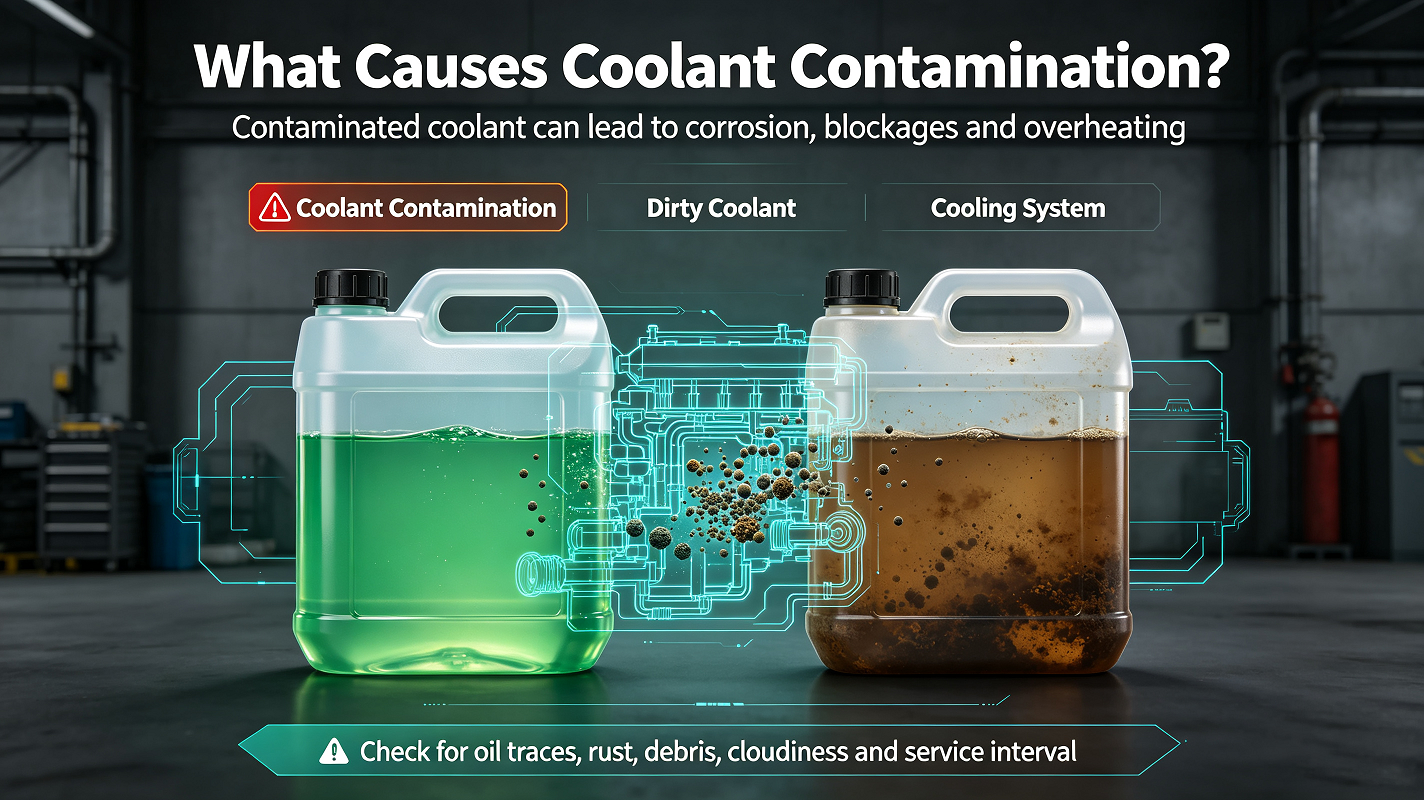
This is one of those cases where a cautious buyer saves money. If the system is serviced properly, the coolant can do its job quietly for a long time. If not, the first sign of trouble may be overheating, brown residue, or corrosion in places that are expensive to reach.
FAQ: short answers buyers usually want
Does coolant color tell me what to buy?
Not reliably. Color is a visual aid, not a chemical specification.
Can I mix different coolants?
Only if the manufacturer says the products are compatible. Otherwise, mixing is a risk, especially over time.
Is premixed coolant better than concentrate?
Premixed is convenient and reduces dilution errors. Concentrate can be useful in service operations, but it depends on disciplined mixing and water quality control.
What is the safest first step?
Check the manual or OEM service data before buying anything. That remains the most dependable answer to pick the right coolant.
A final buyer-facing note
There is no single universal fluid that removes the need for judgment. The best coolant choice is the one that matches the vehicle design, the existing system chemistry, and the service plan you can actually maintain. If you are unsure, treat that uncertainty as a signal to verify the specification rather than guessing from appearance.
If you need to choose coolant for one vehicle, one workshop, or an entire fleet, start with the OEM requirement and work outward from there. That simple step prevents a surprising number of cooling-system problems later.
Welcome to contact GAFLE for more information & cooperation!
peter
ZHEJIANG GAFLE AUTO CHEMICL CO.,LTD
Tel:86-579-8222 1665
Fax:86-579-8246 4690
Cel/Wechart:86-13335993986
E-mail:peter@gafle.net
Web:www.gafle.net