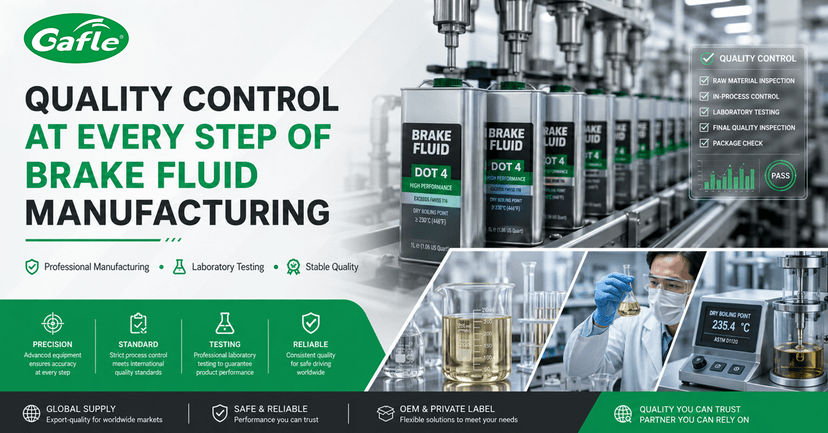
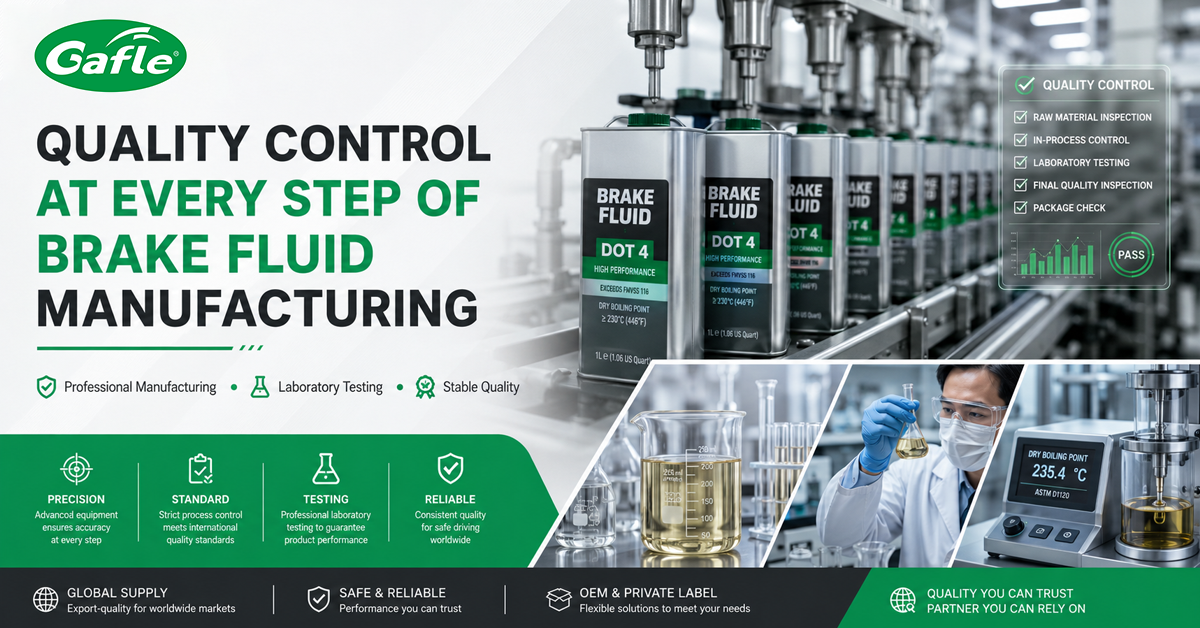
Quality Control at Every Step of Brake Fluid Manufacturing
Brake fluid is a safety-critical automotive fluid. It transfers hydraulic pressure from the brake pedal to the braking system, helping vehicles slow down and stop safely.
Because brake fluid works under high temperature, high pressure, moisture exposure, and different climate conditions, quality must be controlled carefully at every stage of production. For importers, distributors, and automotive brands, choosing a professional Brake Fluid Manufacturer with a complete quality-control system is essential.
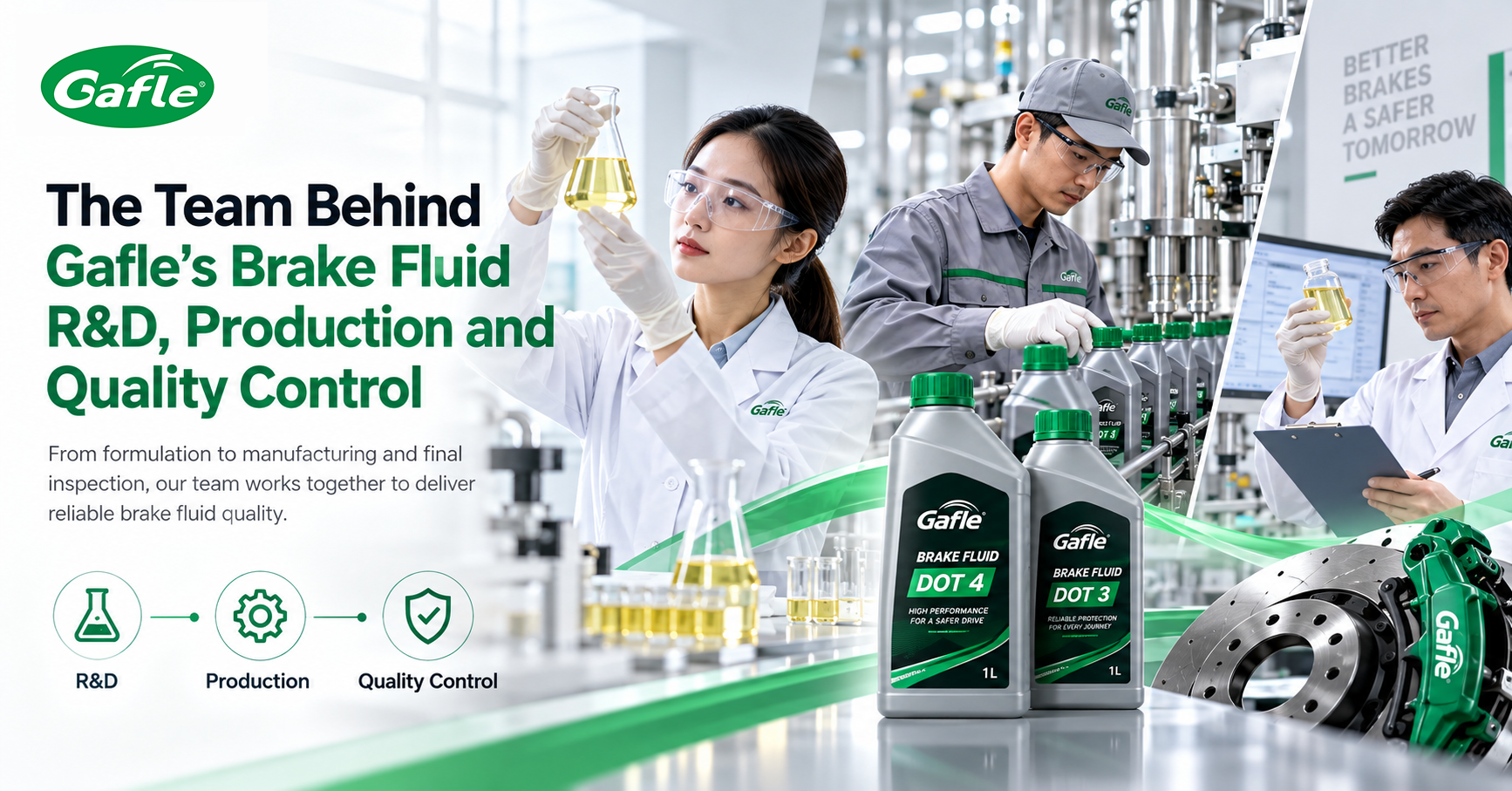
At Gafle Brake Fluid Factory, quality control is not only a final inspection. It is built into every step of Brake Fluid Manufacturing, from raw material inspection to laboratory testing, filling, packaging, and batch traceability.
This article explains how professional Brake Fluid Quality Control helps create stable, reliable, and market-ready brake fluid products for global customers.
Why Brake Fluid Quality Control Matters
Brake fluid directly affects braking performance and vehicle safety. If the product quality is unstable, it may cause problems such as:
- Lower boiling point
- Poor low-temperature viscosity
- Increased corrosion risk
- Reduced brake response
- Moisture contamination
- Packaging leakage
- Inconsistent batch quality
For overseas buyers, poor quality can also create business risks, including customer complaints, product returns, damaged brand reputation, and loss of distributor trust.
This is why importers should not only ask about price. They should also evaluate the factory’s Brake Fluid Quality Control system.
Step 1: Raw Material Inspection
Quality control starts before production begins.
Raw materials directly affect brake fluid performance, including boiling point, chemical stability, viscosity, corrosion protection, and rubber compatibility.
A professional Brake Fluid Factory should inspect raw materials before they enter production. This helps prevent unstable or contaminated materials from affecting the finished product.
At Gafle Brake Fluid Factory, raw material control is an important part of our manufacturing process. By selecting and checking materials carefully, we help ensure stable performance from the beginning.
Step 2: Formula Control During Brake Fluid Manufacturing
Brake fluid production requires accurate formulation.
A professional Brake Fluid Manufacturer must control:
- Formula ratio
- Blending sequence
- Production temperature
- Mixing time
- Moisture exposure
- Equipment cleanliness
Even small changes in the production process may affect the final brake fluid performance.
Professional formula control helps ensure that each batch meets the required product specifications and maintains consistent quality.
Step 3: Production Process Control
During Brake Fluid Manufacturing, process control is essential.
A reliable factory should monitor every important production stage, including:
- Blending
- Filtration
- Storage
- Transfer
- Filling preparation
- Production environment
This helps reduce contamination risk and improve batch consistency.
For importers, stable production control means the product they receive today should match the product they reorder in the future.
Step 4: Brake Fluid Testing in the Laboratory
Brake Fluid Testing is one of the most important parts of quality control.
A professional brake fluid factory should not rely only on visual inspection. Product performance must be verified through laboratory tests.
Common brake fluid testing includes:
Dry Boiling Point Test
This test evaluates the high-temperature performance of fresh brake fluid.
Wet Boiling Point Test
This test shows how the brake fluid performs after moisture exposure.
Low-Temperature Viscosity Test
This helps confirm whether the fluid can flow properly in cold conditions.
Corrosion Test
This evaluates protection for metal components inside the braking system.
Rubber Compatibility Test
This checks whether the fluid is compatible with seals and rubber parts.
Chemical Stability Test
This helps confirm long-term product stability during storage and use.
At Gafle Brake Fluid Factory, Brake Fluid Laboratory Testing supports both product development and finished-product quality verification.
Step 5: Filling Line Quality Control
After the brake fluid passes laboratory testing, it enters the filling stage.
Filling quality is also very important. Poor filling control may cause inaccurate volume, leakage, poor sealing, or packaging damage.
A professional Brake Fluid Factory should check:
- Filling volume
- Bottle cleanliness
- Cap sealing
- Label position
- Bottle appearance
- Leakage risk
- Production line cleanliness
For OEM and private-label customers, filling accuracy and packaging appearance directly affect brand reputation.
Step 6: Packaging Inspection
Packaging does more than make the product look attractive. It protects brake fluid during storage, transport, and distribution.
Brake fluid can absorb moisture if packaging is damaged or poorly sealed. Therefore, packaging inspection is an important part of quality control.
Packaging inspection may include:
- Bottle quality check
- Cap tightness check
- Label accuracy
- Carton strength
- Printing quality
- Shipping mark confirmation
- Pallet packaging inspection
At Gafle, packaging control helps ensure that products arrive safely and look professional in the customer’s market.
Step 7: Batch Traceability
Batch traceability is essential for international brake fluid supply.
A reliable Brake Fluid Manufacturer should keep production records for each batch, including:
- Raw material information
- Production date
- Batch number
- Laboratory test results
- Filling records
- Packaging inspection records
- Shipment details
If a customer has a question after receiving goods, traceability allows the factory to check the related production and testing information quickly.
For importers, batch traceability provides stronger confidence and better after-sales support.
Step 8: Final Inspection Before Shipment
Before shipment, the finished products should go through final inspection.
This may include checking:
- Product appearance
- Packaging condition
- Carton quantity
- Label information
- Batch number
- Quality documents
- Export packaging
Final inspection helps reduce shipping mistakes and ensures that customers receive the correct products.
For overseas buyers, this step is especially important because international shipments involve long transport distances and multiple handling stages.
Why OEM Customers Care About Quality Control
For customers building their own brands, quality control is even more important.
An OEM Brake Fluid Manufacturer must support not only production, but also brand reputation.
OEM and private-label customers usually need:
- Stable brake fluid quality
- Consistent packaging
- Accurate labels
- Reliable batch testing
- Clear product documents
- Long-term repeat-order consistency
If the product quality is unstable, the customer’s brand will be affected directly.
That is why professional OEM buyers prefer to work with factories that have strong quality-control systems and laboratory testing capability.
Gafle Brake Fluid Factory: Quality Control for Global Customers
Gafle Brake Fluid Factory focuses on professional brake fluid manufacturing and global supply.
As a specialized Brake Fluid Manufacturer, Gafle provides:
- DOT 3 Brake Fluid
- DOT 4 Brake Fluid
- DOT 5.1 Brake Fluid
- OEM and ODM services
- Private label brake fluid
- Custom packaging support
- Brake Fluid Laboratory Testing
- Batch traceability
- Export documentation support
- Stable supply for global customers
Our quality-control process covers raw materials, production, testing, filling, packaging, and shipment preparation.
How Gafle Supports OEM and Private Label Brake Fluid Projects
For overseas customers, Gafle provides flexible OEM and private-label solutions.
Our services may include:
- Product specification selection
- Custom bottle size
- Label and carton design
- Private brand packaging
- Sample confirmation
- Mass production
- Laboratory testing
- Quality documentation
- Export packaging support
- Long-term production planning
With Gafle, customers can build their own brake fluid product lines with stronger quality confidence.
What Importers Should Ask a Brake Fluid Factory
Before choosing a supplier, importers should ask:
- Does the factory specialize in brake fluid?
- Does it have laboratory testing capability?
- What brake fluid tests are performed?
- How are raw materials inspected?
- How is production quality controlled?
- Is every batch tested before shipment?
- Is batch traceability available?
- Can the factory support OEM and private label?
- How is packaging quality checked?
- Can the supplier support long-term repeat orders?
These questions help buyers choose a more reliable long-term partner.
Conclusion
Quality control at every step of brake fluid manufacturing is essential for product reliability, braking safety, and long-term customer trust.
From raw material inspection to formulation, production, Brake Fluid Testing, filling, packaging, and batch traceability, every detail affects the final product.
For global importers, distributors, and automotive brands, working with a professional Brake Fluid Factory helps reduce quality risks and build stronger product lines.
As an experienced Brake Fluid Manufacturer and OEM Brake Fluid Manufacturer, Gafle Brake Fluid Factory provides strict Brake Fluid Quality Control, professional laboratory testing, OEM customization, and stable supply support for customers worldwide.
Better quality control creates better brake fluid. Better brake fluid creates stronger trust in the market.