Introduction
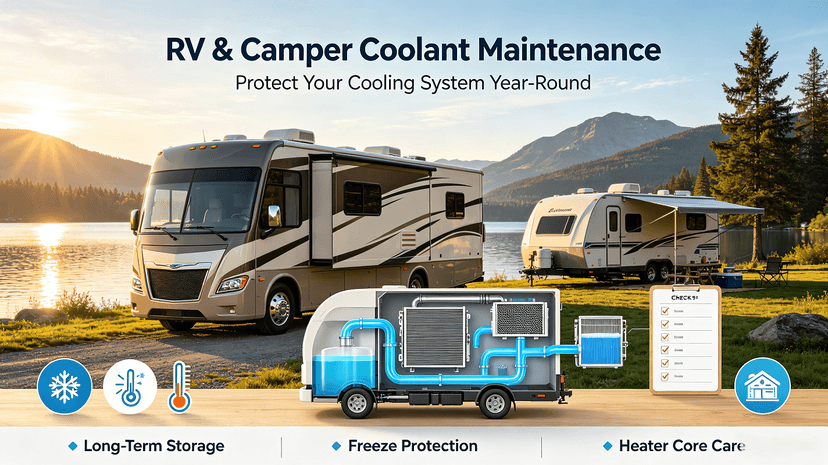
RVs and camper vans face unique cooling system challenges that regular passenger cars never encounter: long-term seasonal storage without running engines, drastic temperature swings between hot summer camping and freezing winter parking, plus integrated cabin heating circuits linked to the radiator. Improper coolant selection or careless maintenance leads to heater breakdowns, pipe corrosion and expensive mobile home repairs.
This full maintenance guide covers all key rules to keep your camper’s cooling system reliable in any climate.
Unique Cooling Risks for RV & Camper Vans
Two core pain points separate recreational vehicles from ordinary cars:
- Long idle storage
Many campers sit unused for 6–8 months annually. Low-quality coolant separates, forms sediment and corrodes narrow heater core pipes during stationary storage.
- Extreme temperature fluctuation
RVs travel across tropical high heat and sub-zero mountain winters. Ordinary coolant fails to balance anti-boiling and anti-freeze performance across wide temperature ranges.
Essential RV Coolant Maintenance Checklist
1. Pick RV-suitable coolant formulas
- Eco propylene glycol coolant: Ideal for families with pets; low toxicity if spills happen on campsite ground.
- Long-life ethylene glycol coolant: Best for heavy motorhomes with large diesel engines, delivers 5+ years of service.
Avoid generic cheap coolants with weak inhibitors—they damage thin aluminum RV radiators quickly.
2. Coolant care before long-term storage
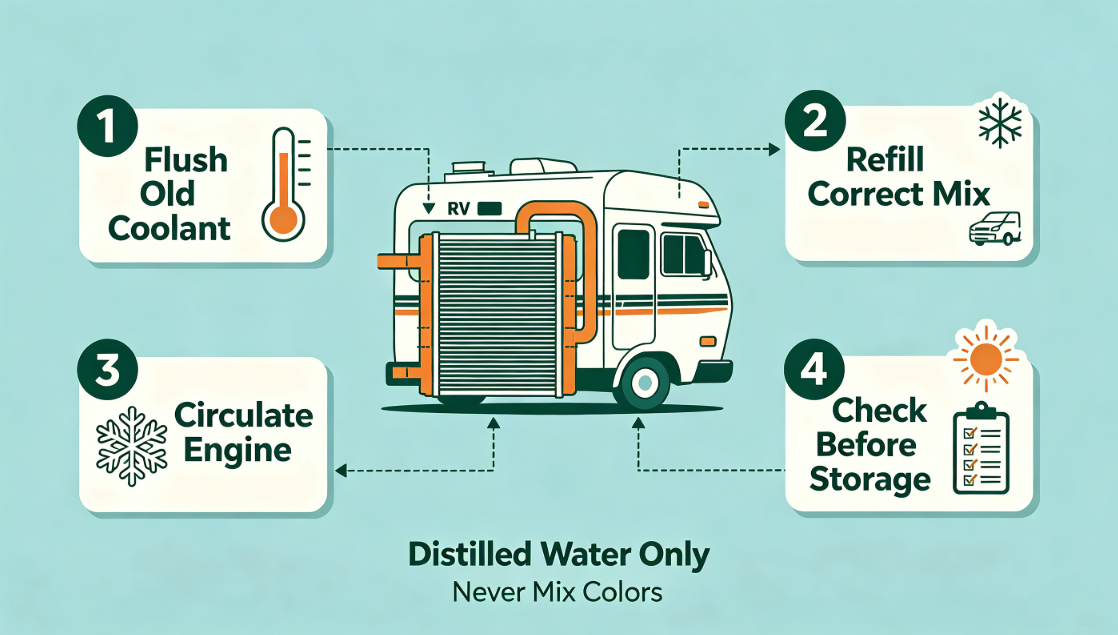
- Flush old coolant fully before seasonal parking; drain all residual fluid from heater pipelines.
- Refill with fresh full-strength coolant matched to your local lowest winter temperature.
- Run the engine for 15 minutes after refilling to circulate coolant evenly through the heating circuit.
3. Regular inspection during travel seasons
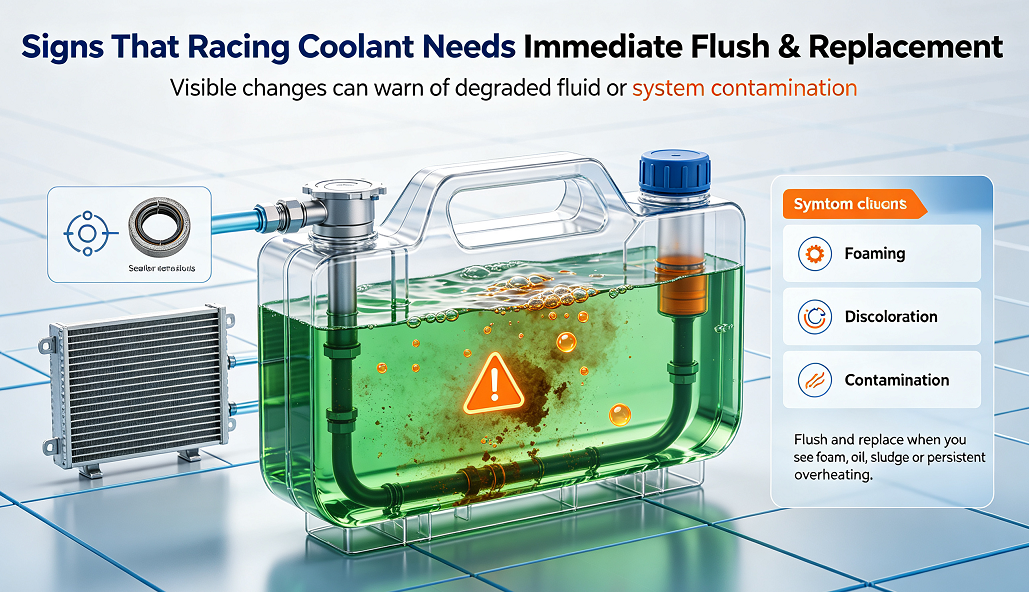
Check coolant color and liquid level every 3,000 miles. Dark, muddy coolant means inhibitor depletion—replace it immediately to avoid pipe blockage.
Common RV Coolant Mistakes To Avoid
- Mixing different coolant colors/formulas: Cross-contamination destroys anti-corrosion additives and creates sludge.
- Over-diluting coolant with tap water: Tap water minerals scale up narrow camper heater cores. Always use distilled water for dilution.
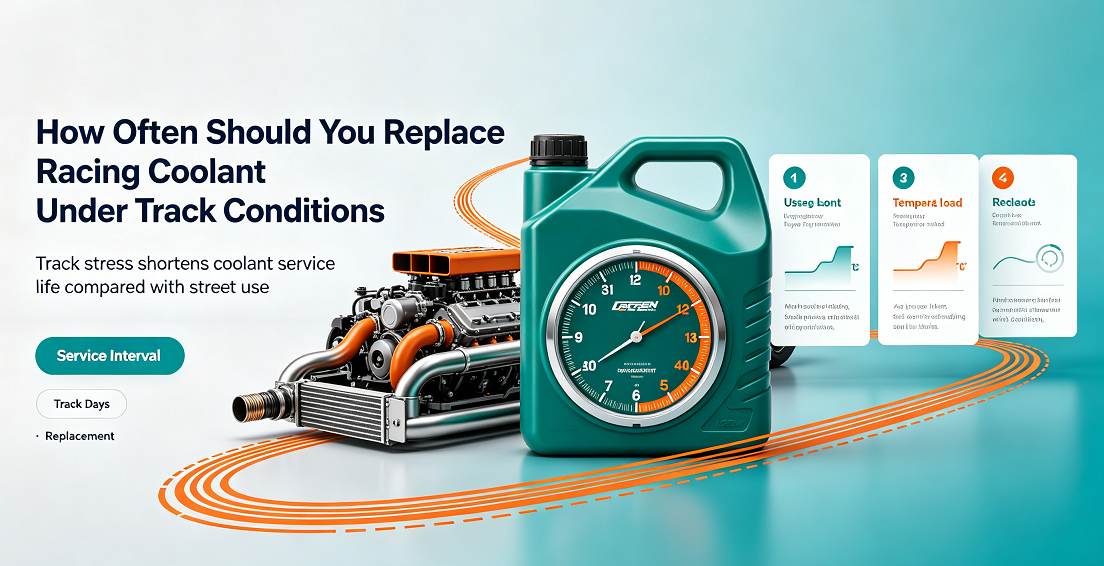
- Ignoring coolant age: Even unused coolant degrades during storage; replace it after the manufacturer’s service lifespan ends.
Conclusion
Proper coolant maintenance is the easiest way to extend your RV cooling system’s service life and avoid costly breakdowns during camping trips or long storage. Contact our team for custom RV bulk coolant and private label supply if you are a camper parts wholesaler.
Welcome to contact GAFLE for more information & cooperation!
peter
ZHEJIANG GAFLE AUTO CHEMICL CO.,LTD
Tel:86-579-8222 1665
Fax:86-579-8246 4690
Cel/Wechart:86-13335993986
E-mail:peter@gafle.net
Web:www.gafle.net
peter
ZHEJIANG GAFLE AUTO CHEMICL CO.,LTD
Tel:86-579-8222 1665
Fax:86-579-8246 4690
Cel/Wechart:86-13335993986
E-mail:peter@gafle.net
Web:www.gafle.net