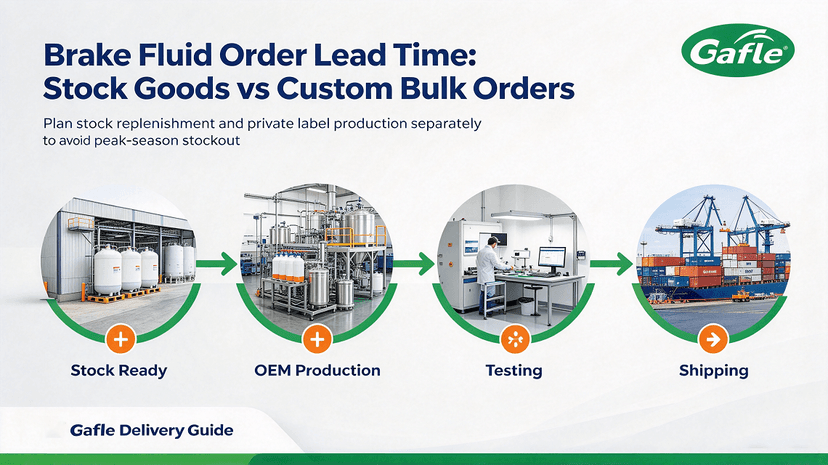
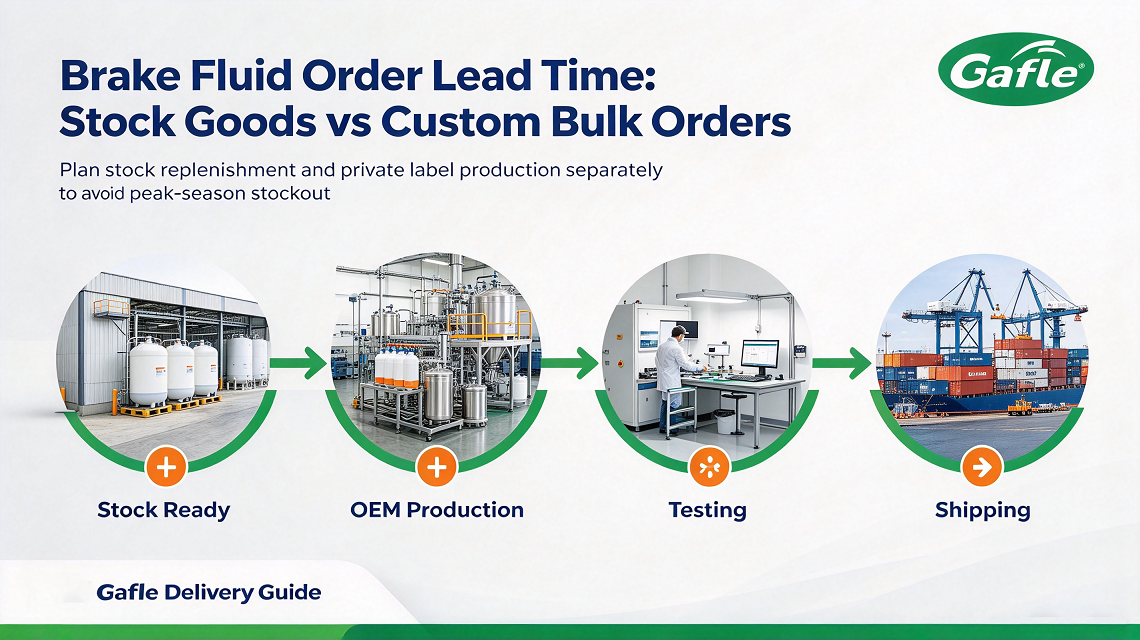
Sourcing teams transitioning from regional distributors to chemical compounders quickly discover that brake fluid bulk order lead time is rarely dictated by the chemical synthesis alone. Blending polyalkylene glycol ethers, borate esters, and corrosion inhibitors is often the fastest step in the process. Instead, real-world delivery schedules hinge on a cluster of packaging, testing, and regulatory requirements that can either compress a turnaround to three weeks or push it past twelve.
For procurement managers balancing aftermarket demand or assembly line schedules, understanding where these weeks accumulate is critical to keeping operations funded and fluid inventory lean.
Deconstructing the Manufacturing Timeline
When evaluating order velocity, it helps to separate the chemical phase from the packaging and compliance phase.
Formulating an un-packaged bulk batch—say, a 20,000-liter blend loaded into intermediate bulk containers (IBC totes) or an ISO tank container—typically requires 2 to 4 weeks, assuming standard DOT 3 or DOT 4 base fluids are held in active tank storage. If a bespoke formulation is specified, such as a high-wet-boiling-point racing fluid or an ultra-low viscosity DOT 4 LV formulation targeting advanced electronic stability control (ESC) systems, base chemical procurement can add two weeks up front.
The timeline shifts substantially once retail-ready filling enters the equation. Liquid filling lines operating under strict hygroscopic controls—necessary to prevent moisture absorption above the typical 0.2% to 0.3% baseline—run at specific set intervals. Filling half-liter bottles or tin containers involves nitrogen purging, induction sealing, and line sanitization between different fluid chemistries, especially when shifting between glycol-based and silicone-based (DOT 5) products.
OEM Brake Fluid Production vs. Off-the-Shelf Bulk
A bulk order meant for industrial factory fill operates on a different cadence than branded shelf-ready merchandise.
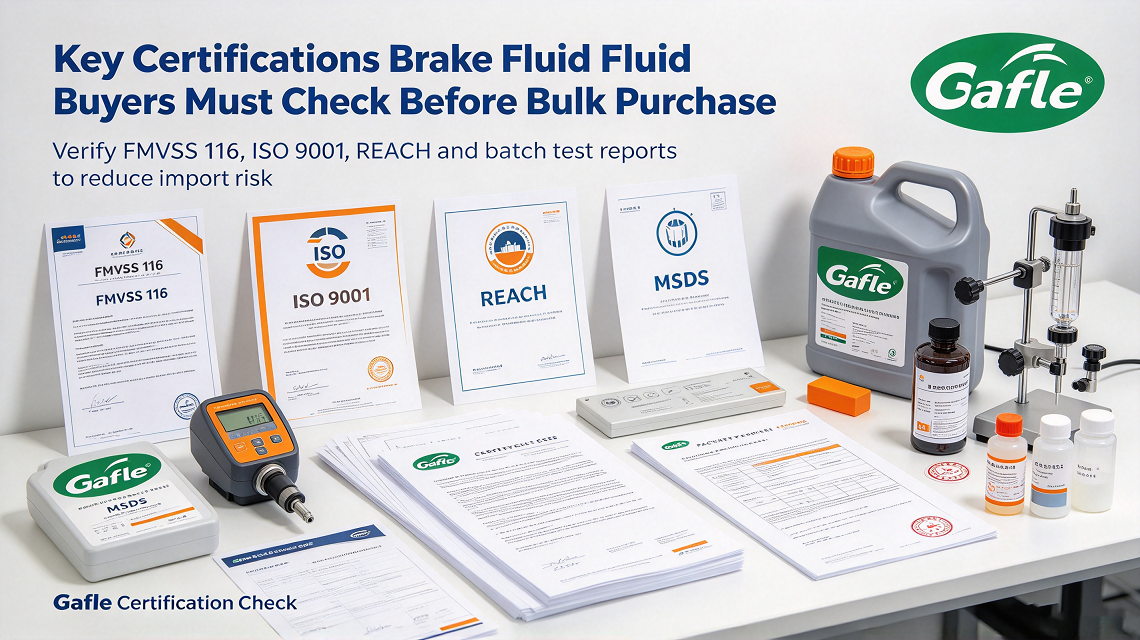
In standard OEM brake fluid production, compounding facilities work against pre-validated master formulations. The fluid is blended in dedicated vessels, batch-tested against OEM-specific internal engineering standards (often exceeding FMVSS 116 or ISO 4925 specifications), and cleared for tank trailer or IBC shipment. In these established vendor-managed inventory programs, re-order cycle times generally hover between 3 and 5 weeks.
However, initiating a new run under OEM specifications requires first-article testing, line audit reviews, and stability sign-offs. If a contract compounder must adjust anti-foaming packages or elastomeric swell inhibitors to suit a proprietary brake caliper seal compound, early phase development easily pushes lead schedules out to several months before the first commercial batch ships.
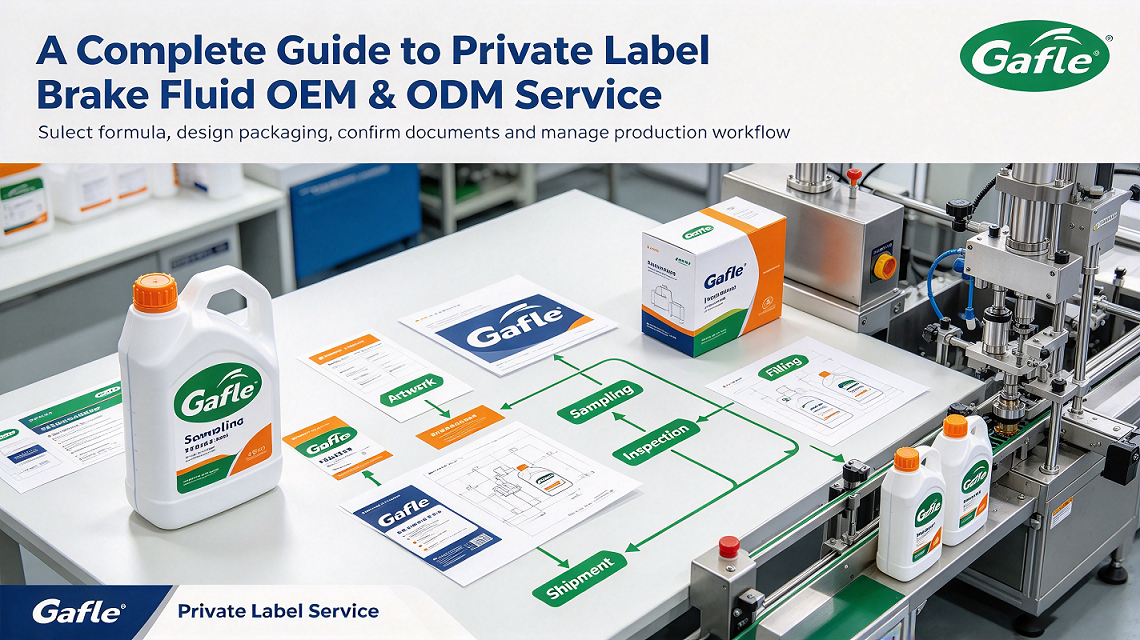
Packaging: The Primary Bottleneck in Private Label Lead Times
For aftermarket distributors, private label brake fluid lead time is almost always throttled by hardware and label approvals rather than chemical availability.
Standard packaging routes introduce distinct operational variables:
1. Containers: Custom blow-molded high-density polyethylene (HDPE) bottles often carry a 6-to-8-week tool-and-run timeline unless an existing factory mold is selected. Metal tinplate cans, commonly preferred for premium export markets, can carry even longer purchasing lead times due to regional metal-sheet stamping constraints.
2. Artwork and Regulatory Proofing: Because hydraulic brake fluid is classified as a hazardous consumer commodity, labels must carry exact hazard warnings (GHS, OSHA, or regional equivalents like CLP). Artwork revision cycles between marketing, legal, and factory print shops regularly consume two to three weeks if not handled aggressively.
3. Induction Liners and Closures: Child-resistant caps and barrier-grade foil induction liners must maintain shelf stability against aggressive glycol compounds. Sourcing interruptions for these specific fluoropolymers or barrier seals can quietly stall a packaging schedule.
When packaging components are pre-staged in the compounder's warehouse, a standard private label packaging cycle will generally run in the 4-to-6-week range. If packaging must be produced from scratch, buyers should plan on 8 to 12 weeks from purchase order to factory gate dispatch.
Quality Control Testing and Release Schedules
Unlike standard lubricants, hydraulic fluid performance is hyper-sensitive to atmospheric exposure and volatile compound balance. A compounder cannot simply certify a batch based on in-line refractive index readings. Full batch release testing requires verified laboratory data:
- Equilibrium Reflux Boiling Point (ERBP) and Wet ERBP testing (often requiring 48-hour moisture absorption procedures).
- Low-temperature kinematic viscosity measurements at -40°C, verifying fluid responsiveness in cold-weather anti-lock braking situations.
- pH value, fluid stability, and water tolerance evaluations.
Most certified facilities run these tests internally over a 3-to-5-day quarantine window. If third-party laboratory verification or formal governmental registration is required for an import market, buyers should account for an additional 7 to 10 working days before shipping papers can be finalized.
Strategies to Mitigate and Stabilize Delivery Time
Supply chain volatility cannot be completely engineered away, but experienced procurement professionals use concrete operational strategies to protect their delivery time:
- Utilize Blanket Purchase Orders with Rolling Forecasts: Locking in a 12-month volume commitment allows the compounder to hold raw glycol stocks and pre-purchase custom containers, effectively cutting individual shipment cycles down to fill-and-ship turnarounds of 2 to 3 weeks.
- Standardize on Common Mold Geometries: Sourcing managers who accept stock bottle geometries and differentiate solely through silkscreening, in-mold labeling, or pressure-sensitive wraps sidestep the long lead times inherent to custom plastic tooling.
- Build Buffer for Transit Regulations: Brake fluid transported in large volumes may fall under specific freight classifications depending on local flash points and packaging volumes. Ensure freight forwarding partners are cleared for hazardous chemical handling well before the fluid completes packaging.
Frequently Asked Questions
What is the typical brake fluid bulk order lead time for repeat orders?
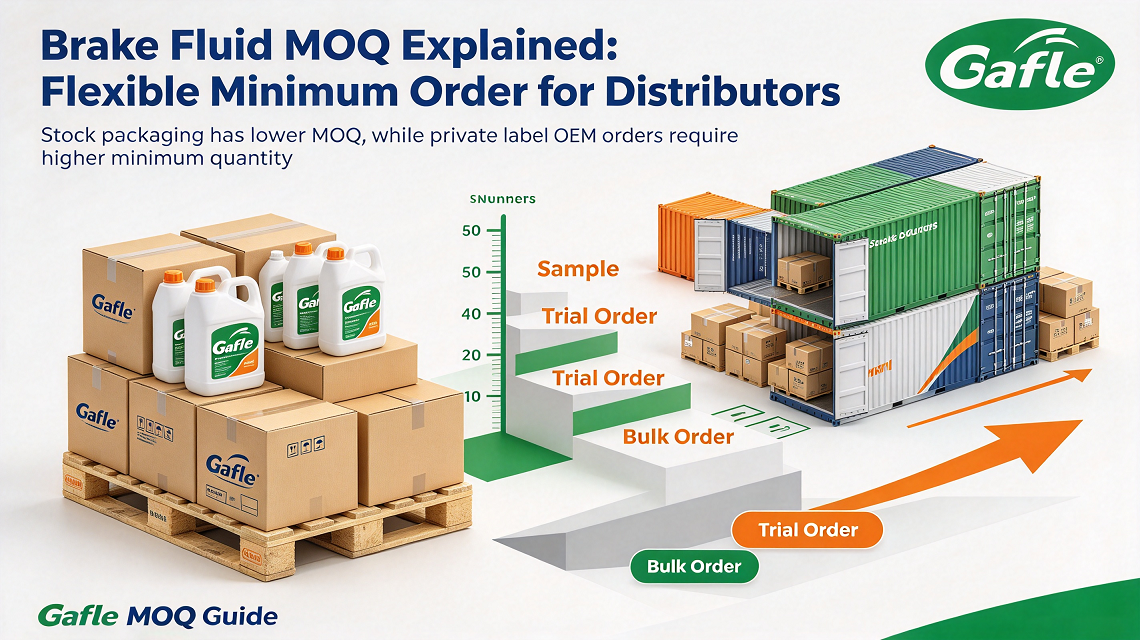
For existing formulas packed in standard drums or totes, repeat orders typically average 3 to 4 weeks. If packaging involves customer-branded small bottles with pre-stocked packaging inventory, lead times generally average 4 to 6 weeks.
Does moving from DOT 3 to DOT 5.1 increase lead times?
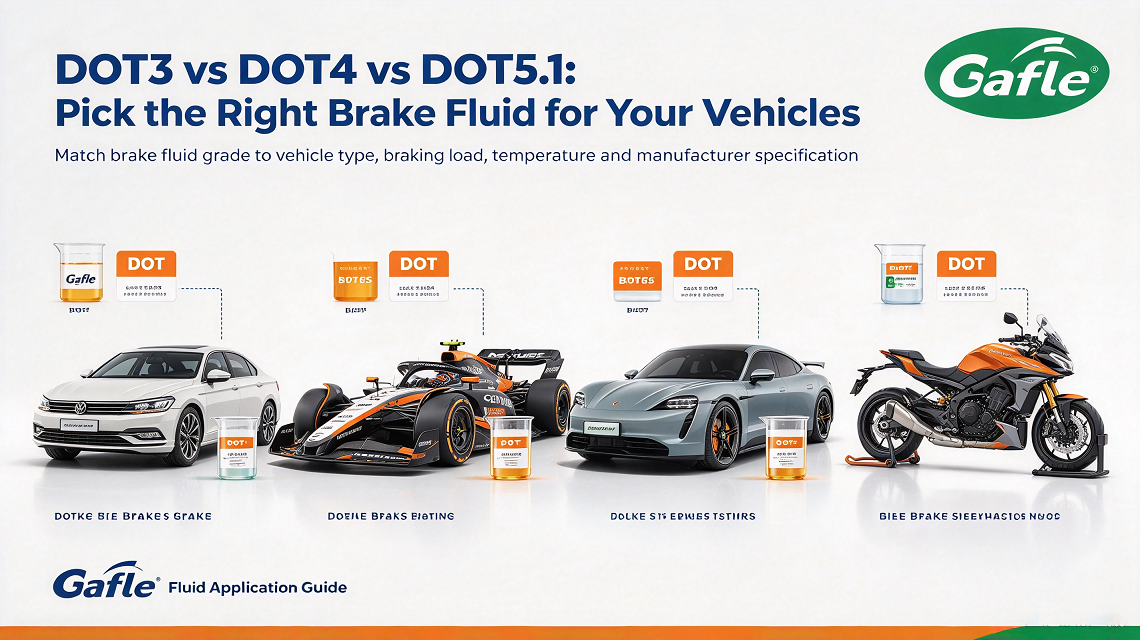
It can. DOT 5.1 uses advanced borate ester chemistries with tighter moisture limits and specialized additive blends. Because batch volumes are generally smaller across the industry than commodity DOT 3 or DOT 4, compounding facilities schedule DOT 5.1 runs in specific production campaigns rather than continuous operations.
Can accelerated lead times compromise fluid quality?
Accelerating the chemical blending phase is rarely an issue; the danger lies in skipping post-packaging quarantine or compressing wet-boiling-point testing. Bypassing line purging protocols to rush an order can also result in cross-contamination, which compromises brake fluid viscosity and vapor-lock resistance.
If your organization is planning an upcoming seasonal stocking order or establishing a new product line, engage your chemical formulator early. Aligning on packaging specs, chemical certifications, and shipping formats before the PO is signed remains the most dependable way to keep your order on schedule.
Welcome to contact GAFLE for more information & cooperation!
peter
ZHEJIANG GAFLE AUTO CHEMICL CO.,LTD
Tel:86-579-8222 1665
Fax:86-579-8246 4690
Cel/Wechart:86-13335993986
E-mail:peter@gafle.net
Web:www.gafle.net