Navigating the Private Label Brake Fluid Market: Sourcing, Formulations, and Compliance
For automotive aftermarket distributors, fleet operators, and retail service networks, packaging high-margin consumables under their own brand has moved from a tactical experiment to a core margin strategy. Sourcing private label brake fluid allows regional businesses to build brand equity without capital-intensive blending and testing facilities. Yet, unlike motor oils or windshield wash, brake fluid occupies a distinct, safety-critical tier within chemical procurement. A failure in fluid integrity does not merely mean accelerated wear; it means hydraulic vapor lock and brake failure.
Procurement teams and sourcing directors must look past simple price-per-liter comparisons. Sourcing hydraulic fluid requires evaluating formulation chemistry, packaging barrier properties, and the precise contract model you negotiate with a chemical partner.
DOT Standards and Chemical Formulations: What Buyers Must Verify
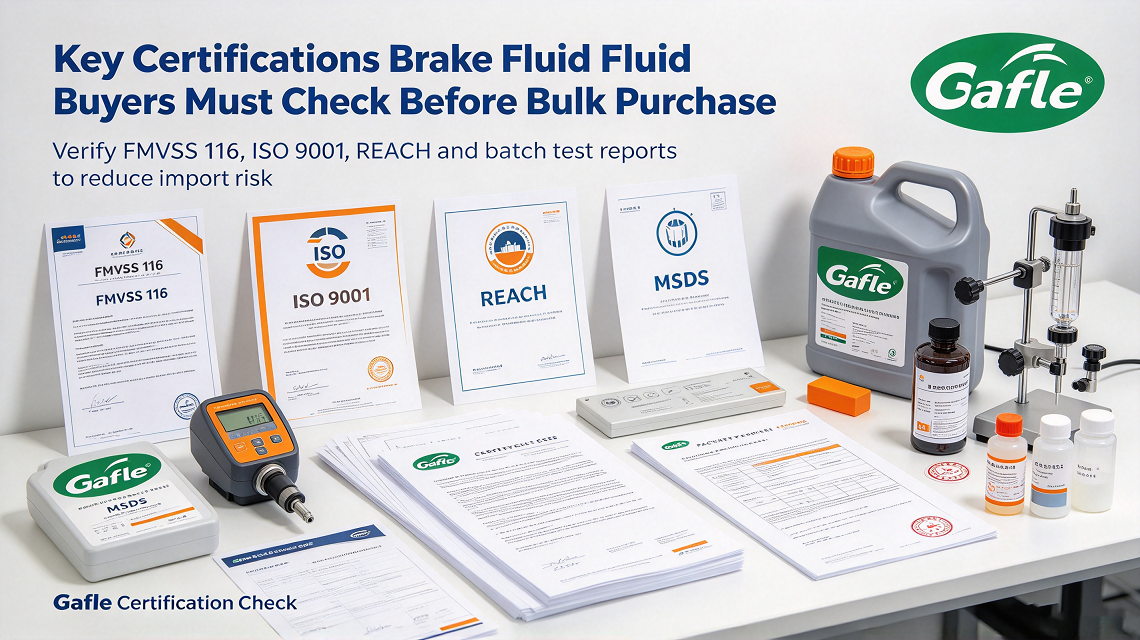
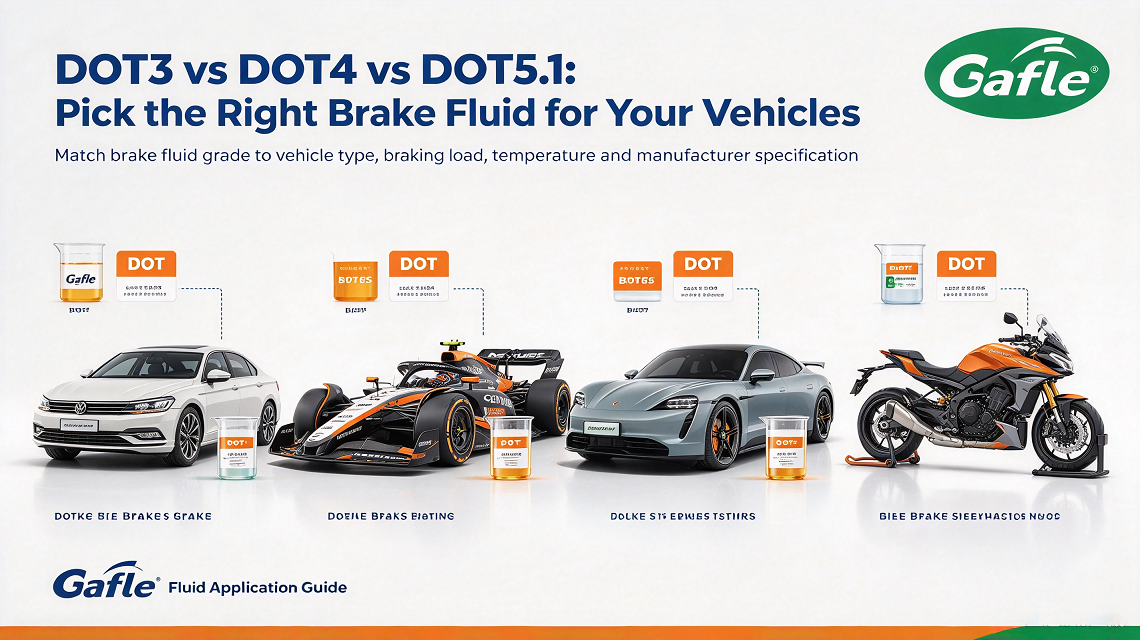
Brake fluid formulations are governed primarily by standards like FMVSS No. 116, SAE J1703/J1704, and ISO 4925. When entering into contracts, buyers typically negotiate across three main glycol-based categories, alongside specialty silicone variants:
- DOT 3: Primarily triethylene glycol monomethyl ether blends. While cost-effective, its lower dry equilibrium reflux boiling point (Dry ERBP: 205°C minimum) and wet boiling point (Wet ERBP: 140°C minimum) limit its suitability in modern, high-heat electronic stability control (ESC) systems.
- DOT 4: Incorporates borate esters to chemically bind with absorbed moisture, raising the minimum dry ERBP to 230°C and wet ERBP to 155°C. Within this category, low-viscosity variants (often designated DOT 4 LV or Class 6) are increasingly demanded by European and modern Asian platforms due to their rapid hydraulic pressure modulation at -40°C.
- DOT 5.1: Glycol-ether based, delivering DOT 5-level boiling thresholds (260°C dry, 180°C wet) while retaining compatibility with DOT 3 and DOT 4 seals and fluids.
- DOT 5: Polydimethylsiloxane (silicone) based. Non-hygroscopic and chemically incompatible with glycol-ether fluids. It remains largely restricted to specific military applications and classic car fleets.
When briefing an OEM brake fluid manufacturer, technical managers must demand batch-specific Certificates of Analysis (CoA) demonstrating kinematic viscosity at -40°C, corrosion test data against brass, tin, and cast iron, and reserve alkalinity, which buffers against acidic degradation over time.
OEM vs. ODM: Structuring the Supply Contract
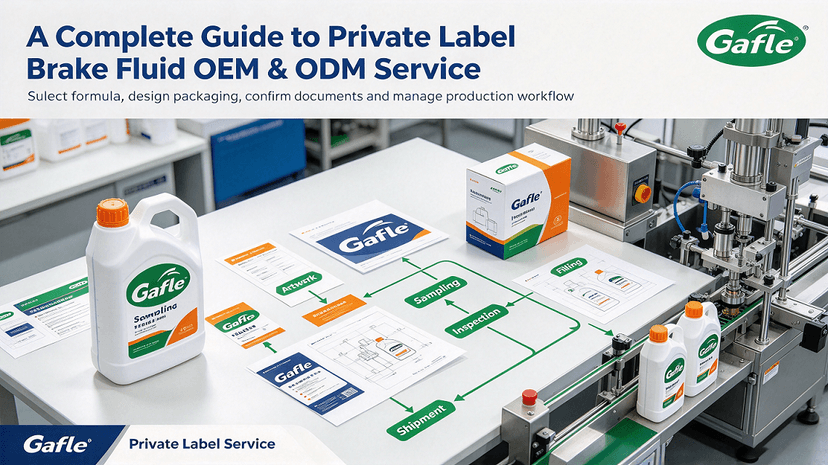
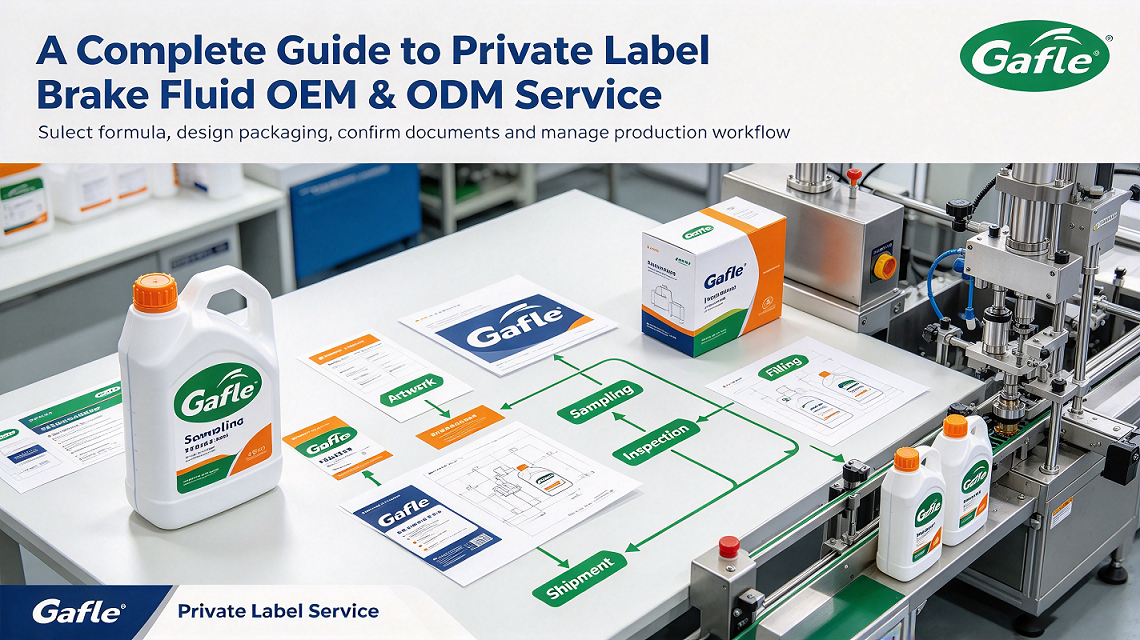
Choosing between an OEM model and an ODM brake fluid service dictates your team's development overhead and speed to market.
Under a strict OEM arrangement, the buyer owns or specifies the exact additive package, base fluid composition, and target performance curves. The manufacturer acts purely as a toll blender and packaging plant. This approach fits established multinational parts conglomerates that maintain in-house chemical engineering teams and proprietary formulations.
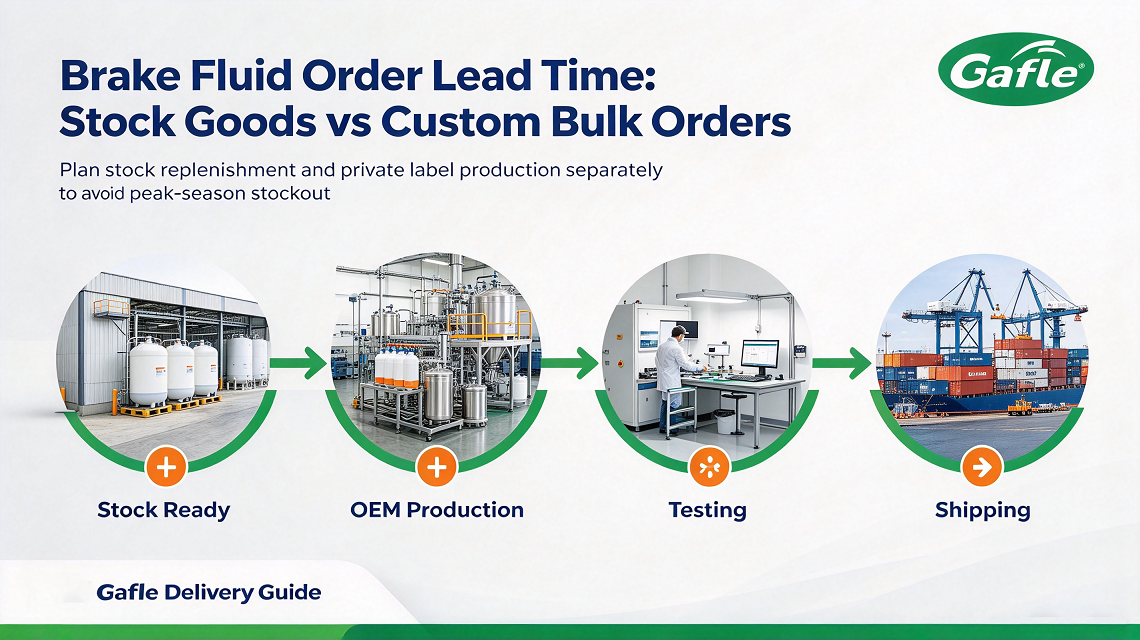
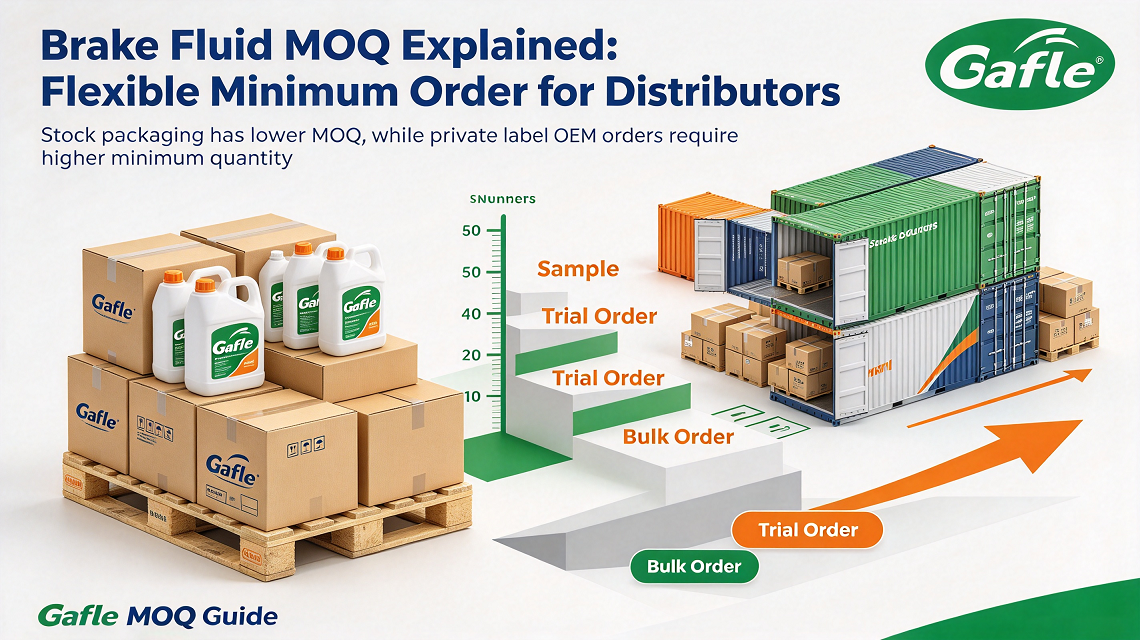
Conversely, mid-sized distributors and regional chains usually opt for an ODM model. Here, the blender holds pre-qualified, standardized formulations that already meet FMVSS 116 and international equivalents. The buyer selects a baseline chemistry—such as an ISO 4925 Class 6 fluid—and focuses primarily on retail sizing, container design, and shelf presentation. Working through an established ODM route substantially shortens development lead times, usually lowering initial batch requirements and eliminating formulation qualification costs.
Packaging, Ingress, and Custom Label Regulations
Brake fluid is hygroscopic; it naturally pulls water vapor directly out of the ambient atmosphere. The chemical integrity of your product is tied directly to the quality of the bottle and the seal. Sourcing teams cannot treat bottle selection as an aesthetic afterthought.
High-density polyethylene (HDPE) remains the industry baseline, but wall thickness and resin consistency dictate moisture vapor transmission rates (MVTR). For premium fluids, bottles with fluorinated barriers or specialized multi-layer blow molding prevent water vapor migration during extended warehouse transit. Furthermore, induction foil heat-sealing is not optional—any container lacking a hermetic foil seal will experience depressed wet boiling points before the bottle is even cracked open by a technician.
From an operational standpoint, applying a custom label introduces immediate regulatory obligations. A private label container must comply with GHS pictograms, mandatory hazardous substance statements, local language mandates, and explicit manufacturer identification codes required by transport authorities. Failing to audit label text against regional safety guidelines can leave an entire container shipment stranded at customs.
Managing Branded Brake Fluid for Resellers
For independent warehouse distributors offering branded brake fluid for resellers, inventory management requires tighter discipline than other fast-moving hard parts. Shelf life for unopened glycol fluid in optimal storage is typically two to three years. Stock rotation protocols (FIFO) must be rigorously enforced across distribution hubs.
Additionally, small bottle volumes (250 ml to 1 liter) targeted at repair shops require carton packaging robust enough to prevent bottle deformation during pallet stacking. Deformed containers frequently compromise the induction seal, permitting atmospheric moisture to degrade the fluid prematurely.
Common Sourcing Traps to Avoid
A frequent misstep among procurement professionals is negotiating based on unit container cost while ignoring freight density and purge volumes. Blenders run large batch tanks; if your order volume requires the manufacturer to flush lines between distinct formulations, you may absorb substantial changeover fees or risk trace contamination from adjacent runs.
Another overlooked detail is seal compatibility. If your private label program includes dispensing equipment or proprietary shop-sized drums (such as 20-liter or 60-liter barrels for service bays), ensure that internal bungs and pump gaskets are composed of EPDM rather than nitrile rubber, which rapidly swells and disintegrates when exposed to glycol ethers.
Frequently Asked Questions
Can private label brake fluid be cross-filled into different container materials?
Brake fluid should generally be kept in virgin HDPE, metal tins, or specialty barrier plastics. Standard PET or unlined PVC plastics often exhibit higher moisture permeability and should not be used for long-term storage of hygroscopic fluids.
What minimum testing data should accompany every production batch?
Every shipment should come with a Certificate of Analysis documenting equilibrium reflux boiling point (ERBP), wet ERBP, pH level, and kinematic viscosity measured at both 100°C and -40°C.
How do regulatory bodies trace liability for private label fluids?
While the brand name on the face of the bottle belongs to the reseller, regulatory compliance requires traceable batch codes that map directly back to the blender's production records. The contract between brand owner and blender must explicitly outline warranty indemnification and testing log retention periods.
Next Steps: Auditing Potential Blending Partners
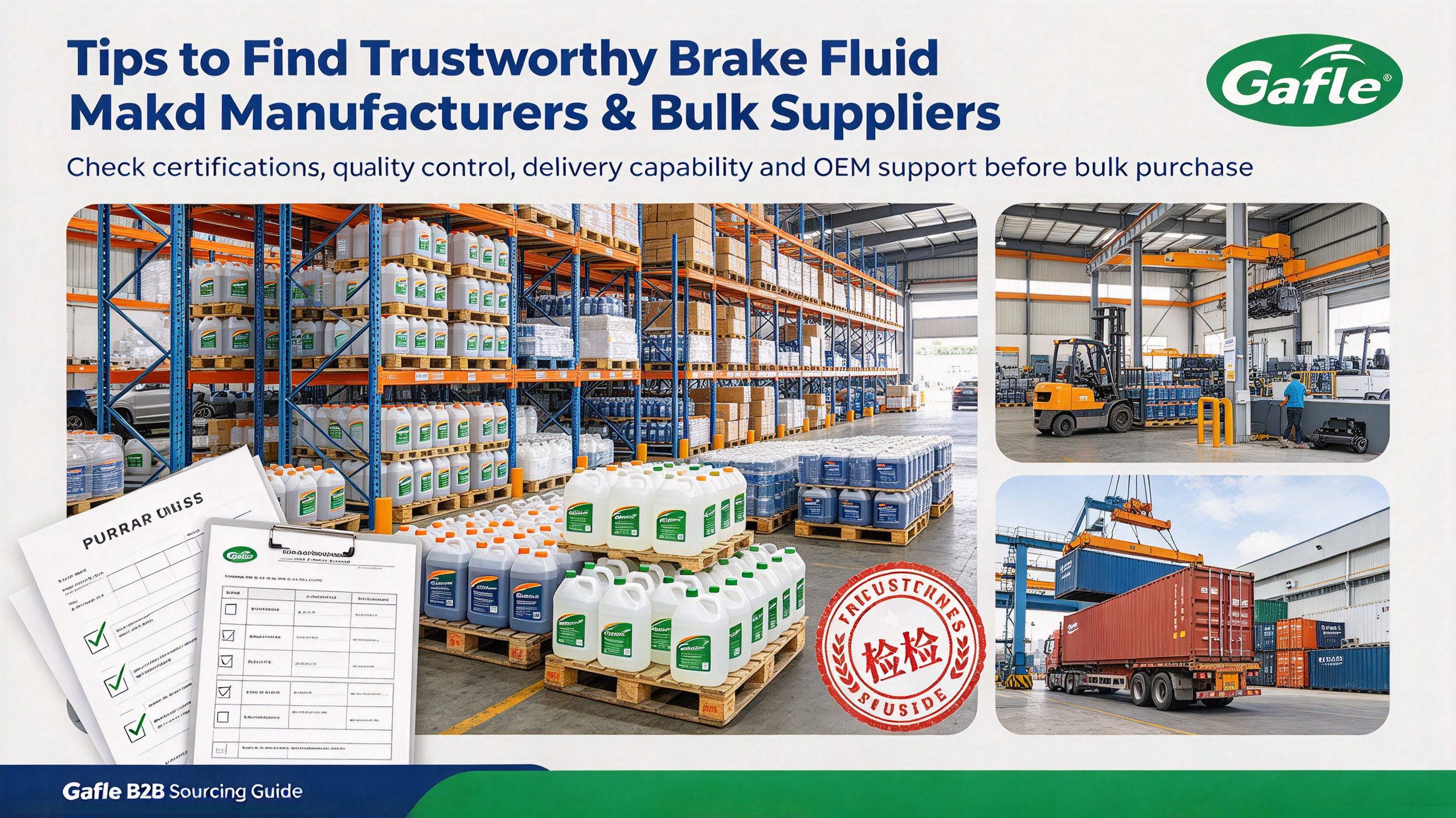
Before issuing requests for quotation (RFQs), define your required product tier (DOT 3, standard DOT 4, or DOT 4 Low Viscosity) and projected annual volume per stock keeping unit. When shortlisting candidates, schedule an on-site or third-party audit focused on three points: batch-to-batch CoA traceability, automated induction sealing verification, and in-house laboratory capabilities for wet boiling point testing. Securing dependable quality at the factory floor is the only reliable way to protect your brand reputation on the road.
Welcome to contact GAFLE for more information & cooperation!
peter
ZHEJIANG GAFLE AUTO CHEMICL CO.,LTD
Tel:86-579-8222 1665
Fax:86-579-8246 4690
Cel/Wechart:86-13335993986
E-mail:peter@gafle.net
Web:www.gafle.net