How to Choose a Reliable Brake Fluid Supplier for Long-Term Quality
Procuring hydraulic fluids carries operational liabilities that engine oils rarely match. If an engine lubricant shears out of grade early, the engine suffers premature wear over tens of thousands of miles; if hydraulic fluid fails due to moisture contamination or poor thermal stabilization, the vehicle experiences sudden vapor lock and immediate brake failure. For distributors, aftermarket brand owners, and OEM procurement teams, knowing how to choose a reliable brake fluid supplier is fundamentally about risk mitigation. You are not simply buying chemical volumes; you are contracting an ongoing quality assurance process that spans glycol ether synthesis, moisture-proof packaging, and rigorous lot tracing.
Formulation Integrity: Blending vs. True Chemical Control
The global brake fluid supply market is roughly divided into two operational tiers: primary chemical formulators that synthesize and refine polyglycol ethers and borate esters, and secondary blending plants that purchase chemical bases to blend and bottle. While both can produce fluids that comply with FMVSS No. 116 and ISO 4925, their vulnerability to upstream supply shocks differs dramatically.
A stable brake fluid supplier maintains tight internal control over their raw material feedstocks. Brake fluids (specifically DOT 3, DOT 4, and DOT 5.1) are highly hygroscopic. If a blender receives raw polyglycols with marginal water content or fails to maintain an inert nitrogen blanket over bulk storage tanks, the dry equilibrium reflux boiling point (ERBP) begins degrading before the fluid even reaches the packaging line. When vetting candidates, ask specifically how they monitor raw feedstock water levels upon intake and whether their bulk blending vessels are sealed with desiccant breathers or dry nitrogen systems.
Critical Benchmarks for Factory Evaluation
Finding a reliable factory requires looking past broad ISO 9001 certifications to examine testing protocols and packaging machinery. Brake fluid production demands strict containment because cross-contamination with even trace amounts of mineral oil or petroleum lubricants will swell and destroy EPDM rubber seals used in modern braking systems.
1. On-Site Laboratory Capabilities
Never rely solely on a manufacturer's standard specification sheet. A qualified bulk brake fluid manufacturer should possess an internal laboratory capable of performing routine batch tests for:
- Dry and Wet ERBP: Verifying both the initial boiling point and the boiling point after controlled humidification (wet ERBP is the single truest indicator of long-term real-world safety).
- Low-Temperature Kinematic Viscosity: Vital for ABS and electronic stability control (ESC) response times at -40°C.
- pH and Corrosion Resistance: Ensuring the inhibitor package protects cast iron, aluminum, steel, and brass within the master and slave cylinders.
- Evaporation Loss: Confirming minimal residue and volatile loss under elevated temperatures.
2. Filling Line Integrity and Sealing
The fluid chemistry matters little if the packaging allows ambient humidity to permeate the bottle over months in a warehouse. Whether you use metal cans or high-density polyethylene (HDPE) bottles, inspect the capping setup. Polyethylene containers require specialized moisture-barrier resins or fluorination treatments to curb water vapor transmission. Furthermore, verify that the filling line employs induction-sealed foil liners. A loose induction seal is the most frequent cause of premature moisture absorption in transit.
Working with a Private Label Brake Fluid Factory
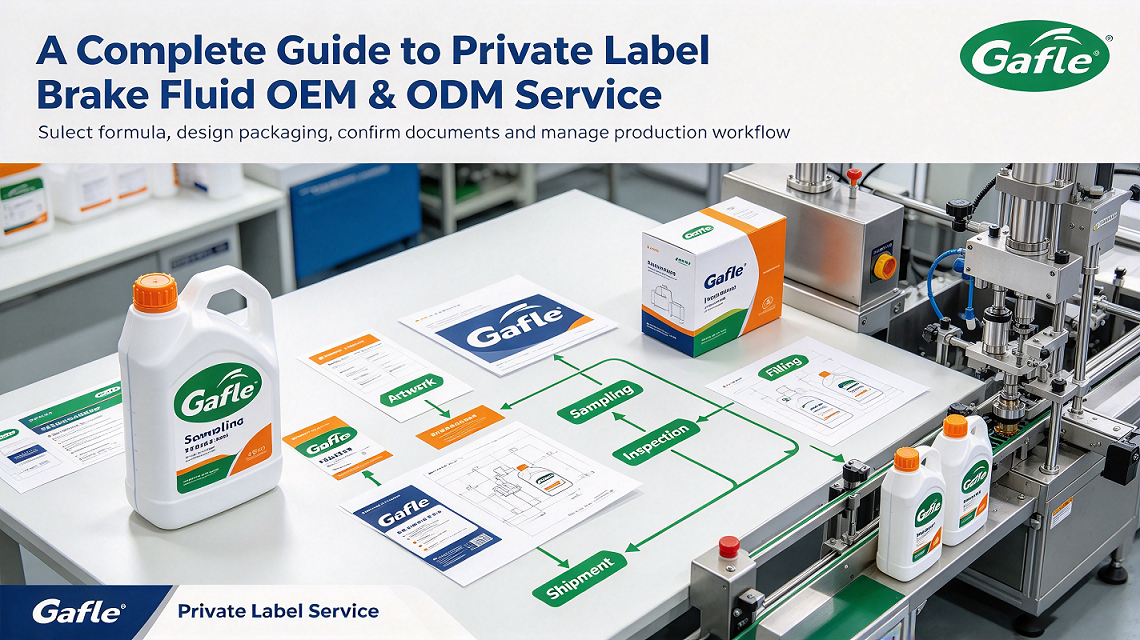
If your procurement model involves brand building, partnering with a private label brake fluid factory introduces unique packaging and compliance requirements. Automotive chemical labeling is heavily regulated in most jurisdictions, requiring precise bilingual hazard warnings, DOT certification symbols, and batch lot traceability.
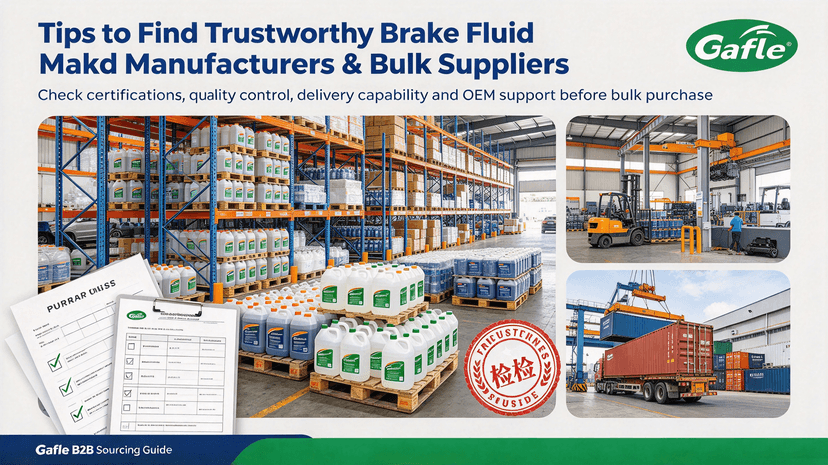
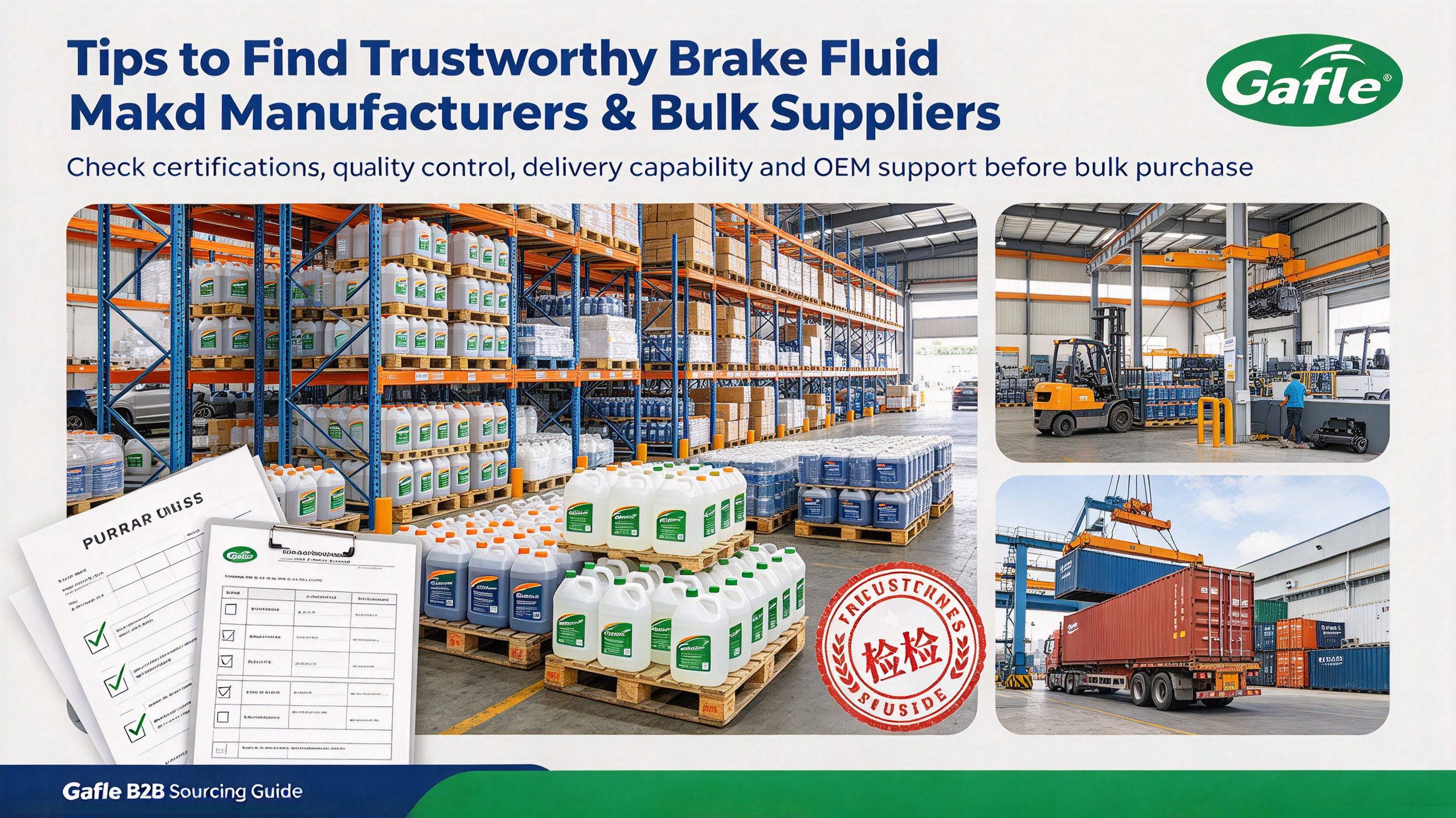
A capable private label partner will provide turnkey assistance with container design, label regulatory reviews, and multi-tier palletization designed to prevent container crushing during ocean transit. They should also maintain batch retention samples for at least two to three years. In the event of a customer warranty dispute in the field, having access to an archived sample from the exact production batch can quickly protect your brand against unfounded liability claims.
Common Pitfalls in Fluid Sourcing
One recurring mistake buyers make is prioritizing unit price over formulation stability. Brake fluid is a mature chemical product with relatively thin margins; unusually low bids often indicate the use of low-grade reclaimed glycols or stripped-down additive packages. Inhibitor packages—compounds like triazoles, amines, and antioxidants—prevent internal corrosion and oxidation. Formulations that cut corners on inhibitors may pass initial dry boiling point checks, but their reserve alkalinity will drop quickly, resulting in internal galvanic corrosion within vehicle brake lines.
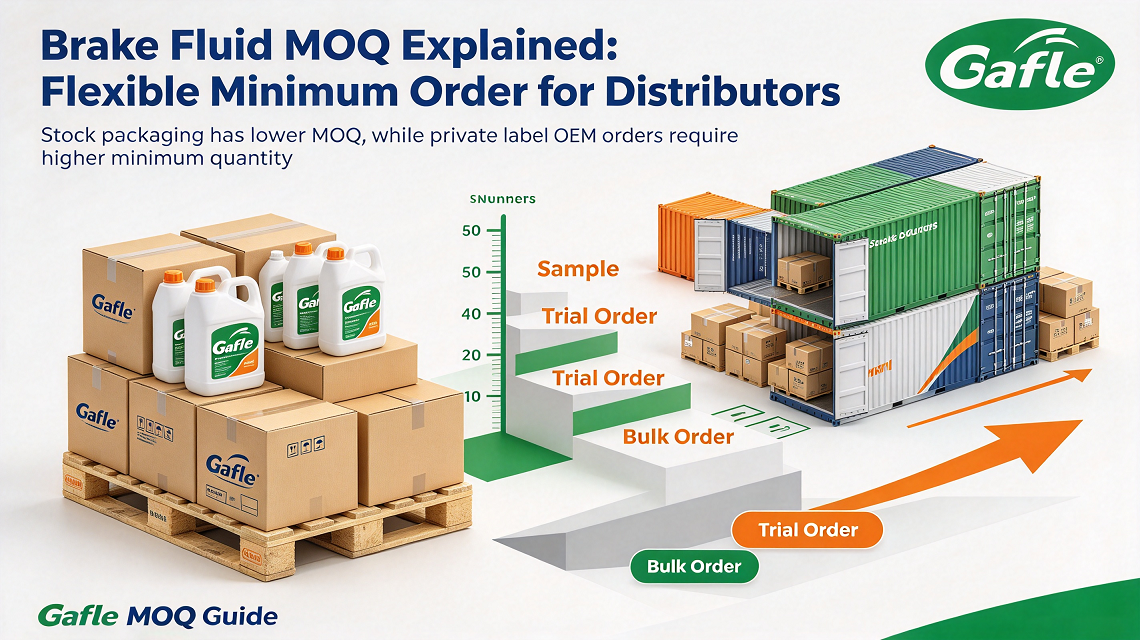
Another blind spot is minimum order quantity (MOQ) flexibility versus packaging batch sizing. Fluid packaging runs must be sized properly to balance production volume against line washouts. If a supplier switches between DOT 3, DOT 4, and silicone-based DOT 5 without exhaustive flushing and dedicated tooling, cross-fluid contamination can silently compromise an entire production run.
Practical Steps for Buyer Audits
Before issuing a formal purchase order or committing to high-volume contracts, take these concrete verification steps:
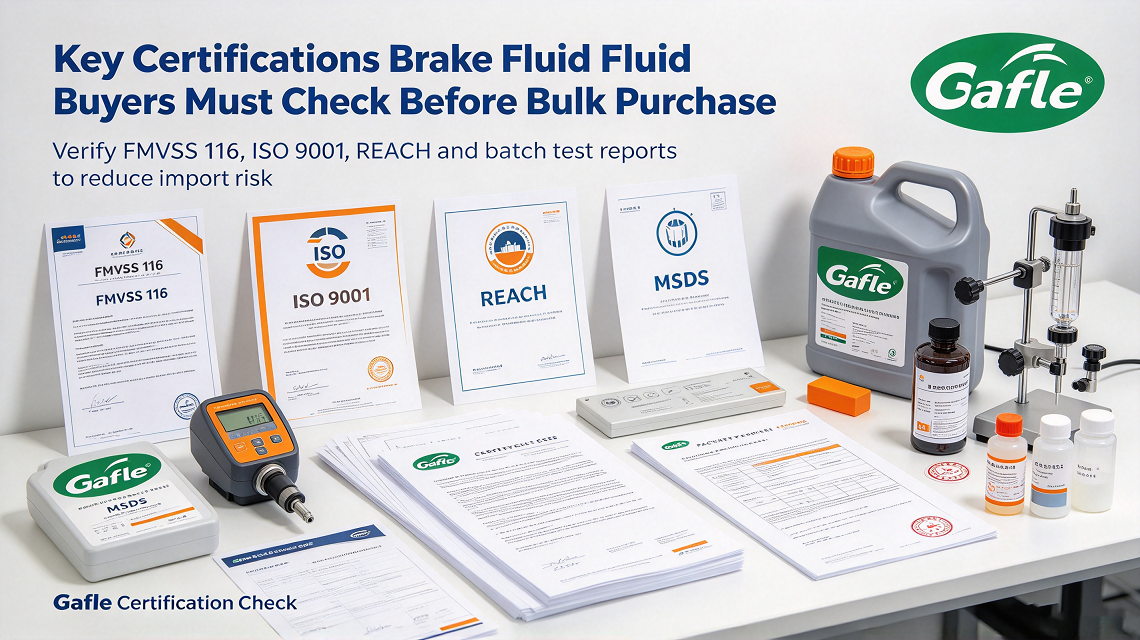
- Request a Certificate of Analysis (CoA) tied to a specific batch lot: Reject generic spec sheets. Require a lot-specific CoA that details both dry and wet boiling points, pH, and water percentage.
- Verify third-party compliance reports: Ask for independent test reports from recognized laboratories demonstrating compliance with SAE J1703, SAE J1704, or ISO 4925 Class 6 (crucial for modern ABS/ESP units).
- Inspect supply chain redundancies: Inquire about raw chemical allocation agreements during regional ethylene oxide shortages.
- Order sample runs for independent destructive testing: Send packaged production samples to an accredited testing lab to confirm that the seal integrity matches the factory's claims.
Frequently Asked Questions
Why is Class 6 brake fluid becoming the standard benchmark over standard DOT 4?
ISO 4925 Class 6 fluids feature substantially lower kinematic viscosity at sub-zero temperatures (typically under 750 mm²/s at -40°C compared to 1,500 mm²/s for standard DOT 4). This allows modern electronic stability control systems to cycle valves faster in cold conditions. If your market includes modern vehicles with active driver-assist systems, ensure your supplier has proven Class 6 blending capacity.
Can a factory package DOT 3, DOT 4, and DOT 5 on the same line?
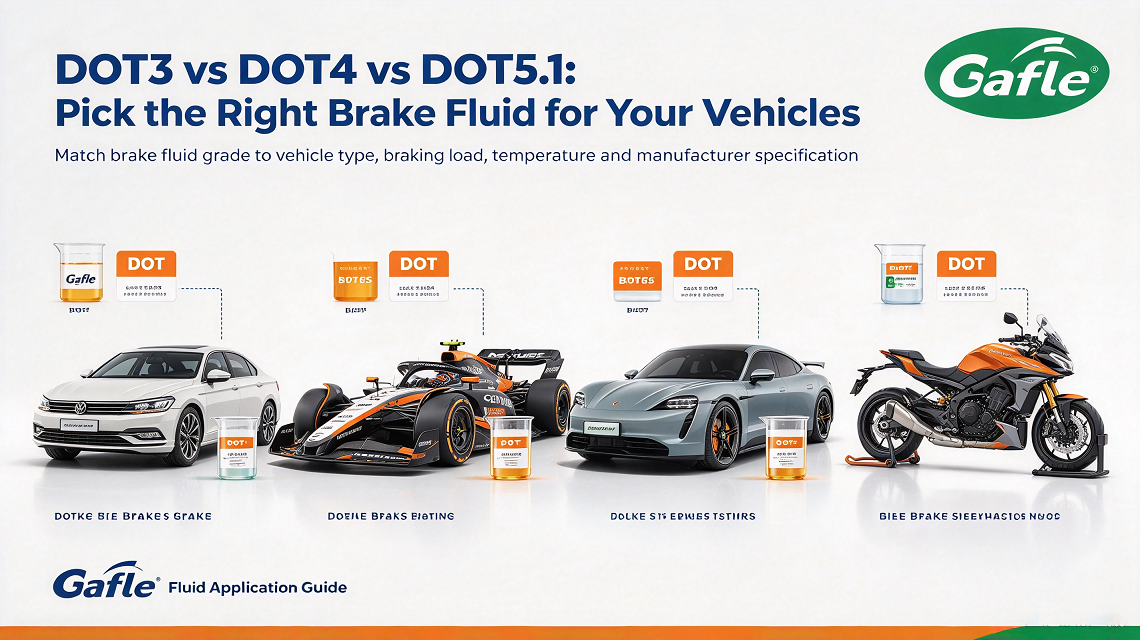
DOT 3, DOT 4, and DOT 5.1 are glycol-ether-based and can be bottled on the same lines with standard flushing protocols. However, DOT 5 is silicone-based and completely incompatible with glycol chemistries. A responsible factory should use a dedicated, segregated line for DOT 5 packaging to avoid even microscopic traces of silicone in glycol-based products.
What is the realistic shelf life of packaged brake fluid?
Unopened in a hermetically sealed metal can, brake fluid can remain viable for up to three to five years. In standard HDPE bottles with induction foil seals, two to three years is the realistic storage limit before ambient humidity slowly drives the wet boiling point down. Inquire about your supplier's bottle resin specs if your stock tends to move through extended distribution chains.
Securing Your Supply Chain
Selecting the right production partner requires balancing technical laboratory discipline against consistent packaging mechanics. If you are re-evaluating your current supplier base or developing a private label automotive line, prioritize manufacturers that openly share batch testing methodologies and welcome third-party technical audits. For specific inquiries regarding custom formulations, bulk packaging options, or private label capabilities, contact our technical procurement team today.
Welcome to contact GAFLE for more information & cooperation!
peter
ZHEJIANG GAFLE AUTO CHEMICL CO.,LTD
Tel:86-579-8222 1665
Fax:86-579-8246 4690
Cel/Wechart:86-13335993986
E-mail:peter@gafle.net
Web:www.gafle.net