What Brake Fluid Documents Are Mandatory for EU Import
Navigating customs clearance in the European Union for automotive functional fluids is rarely a simple exercise in tariff classification. If you are sourcing hydraulic fluids from overseas manufacturers, knowing precisely what brake fluid documents are mandatory for EU import can mean the difference between a smooth container discharge and an impounded shipment incurring steep demurrage charges at ports like Rotterdam or Antwerp. Because brake fluids are classified as chemical mixtures under European law, import authorities examine safety, environmental registration, and technical performance with equal scrutiny.
For European procurement managers and tier-one automotive distributors, commercial viability hinges on getting the compliance dossier right before goods leave the port of origin. Below is a detailed breakdown of the mandatory documents and technical records required to import these formulations legally into the EU single market.
1. The Chemical Compliance Dossier: REACH and SDS
Under EU law, hydraulic brake fluid is treated as a preparation or mixture containing complex polyglycol ethers, borate esters, and specialized corrosion inhibitor packages. Consequently, customs checks prioritize environmental safety regulations above nearly everything else.
The EU-Compliant Safety Data Sheet (SDS)
A standard factory data sheet or an American OSHA-format sheet will be rejected outright. A compliant brake fluid SDS must adhere strictly to Annex II of the REACH regulation, as updated by Commission Regulation (EU) 2020/878. Critical requirements include:
- Language Localization: The SDS must be provided in the official language(s) of the member state where the product is placed on the market.
- 16-Section Structure: Including specific information on nanoforms, endocrine-disrupting properties, and detailed toxicological endpoints.
- Emergency Contact: Listing authorized 24/7 national poison center numbers or emergency advisory contacts valid within the destination territory.
Proof of REACH Compliance
Any non-EU chemical supplier importing quantities exceeding one metric ton per year must account for REACH compliance. Non-EU blenders cannot hold REACH registrations directly; they must appoint an Only Representative (OR) based in the EU. Buyers must secure an OR Declaration of Compliance or confirmation that every component substance in the fluid has been pre-registered or registered by an upstream importer within the supply chain. If the formulation contains Substances of Very High Concern (SVHC) from the ECHA Candidate List at concentrations above 0.1% by weight, formal notifications and SCIP database submissions become legally mandatory.
2. Hazard Communication: CLP and Poison Centre Notification
Customs officials and domestic market surveillance inspectors pay close attention to packaging and hazard markings. Under Regulation (EC) No 1272/2008, meeting every specific CLP label requirement is a prerequisite for entry.
The product packaging must display appropriate hazard pictograms, signal words (such as 'Warning' or 'Danger'), hazard statements (H-statements), and precautionary statements (P-statements). For glycol-based fluids containing diethylene glycol or specific alkyl ester stabilizers, health warnings regarding systemic toxicity or eye damage are routinely scrutinized.
In addition, importers must ensure that the Unique Formula Identifier (UFI) is printed directly on the container label or secondary packaging. Generating a UFI requires submitting the complete chemical recipe to the ECHA Poison Centres Notification (PCN) portal under Annex VIII of CLP. Without a valid PCN submission confirmation linked to that UFI, the shipment cannot be legally sold in EU member states.
3. Technical Performance and Conformity Records
While chemical safety satisfies border environmental authorities, vehicle safety regulations demand documented verification of physical properties. Sourcing teams should bundle the following mandatory technical records into the import file:
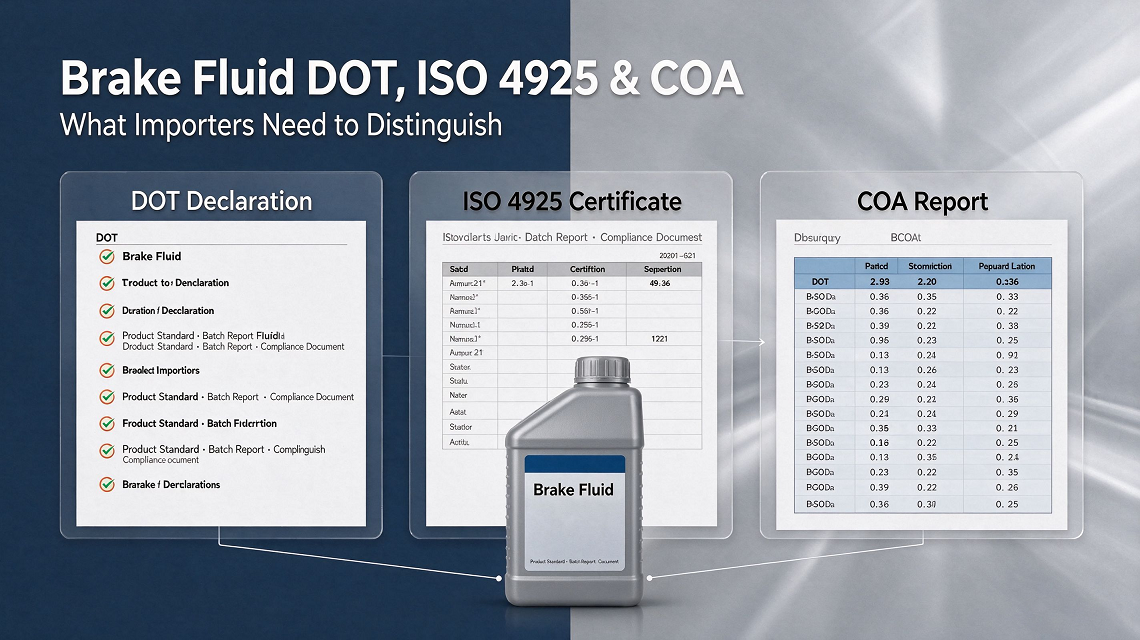
- Batch-Specific Certificate of Analysis (CoA): Demonstrates equilibrium reflux boiling point (ERBP), wet boiling point, kinematic viscosity at -40°C and 100°C, and pH value for the specific production lot inside the container.
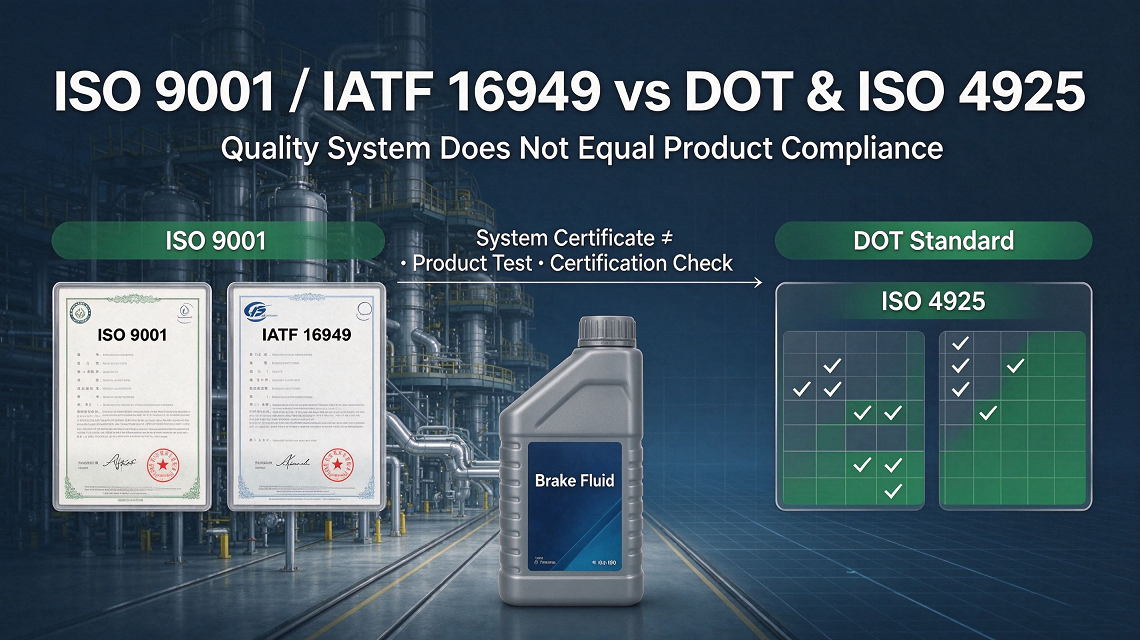
- Technical Data Sheet (TDS): Specifies fluid performance against international automotive benchmarks, such as ISO 4925 (Classes 3, 4, 5.1, or 6), SAE J1703/J1704, and US FMVSS 116 (DOT classifications).
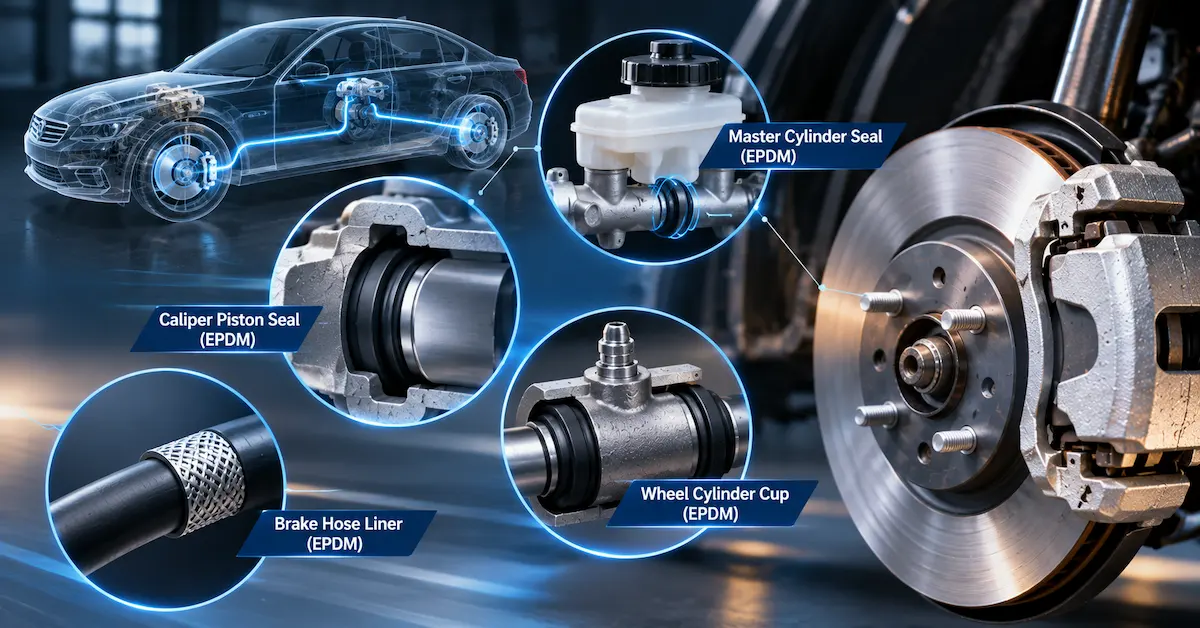
- Type Approval or OEM Equivalency Statements: Highly recommended when supplying parts distributors who require proof that the formulation meets OEM seal compatibility and rubber swell criteria.
Quick-Reference Matrix: Mandatory Import Filings
To keep customs clearance teams aligned, use this quick checklist of required filings before initiating container bookings:
| Document Type | Governing Regulation | Primary Inspection Point |
|---|---|---|
| EU REACH Safety Data Sheet | Reg. (EU) 2020/878 | Customs broker / Port health & safety |
| PCN / UFI Notification Dossier | CLP Annex VIII | ECHA Portal / Market surveillance |
| REACH OR / Volume Statement | Reg. (EC) No 1907/2006 | EU Customs border inspection |
| Lot Certificate of Analysis (CoA) | ISO 4925 / SAE / FMVSS | Technical import auditor / Quality receiver |
| Customs Commercial Documentation | Union Customs Code (UCC) | EU Customs clearing agent |
4. Standard Commercial and Customs Paperwork
Alongside technical dossiers, standard customs entry documents must reflect accurate chemical declarations. Brake fluid is typically classified under HS / TARIC code 3819 00 00 (hydraulic brake fluids and other prepared liquids for hydraulic transmission, not containing or containing less than 70% by weight of petroleum oils). Your customs entry packet must include:
- Commercial Invoice: Clearly noting net weight, formulation grade (e.g., DOT 4 LV, DOT 5.1), and delivery terms under Incoterms 2020.
- Packing List: Specifying packaging types (IBC totes, steel drums, or consumer metal tins/bottles) and net volumes per pallet.
- Certificate of Origin (CoO): Essential for calculating applied tariffs and proving preferential origin if your export origin holds bilateral trade agreements with the EU.
- Single Administrative Document (SAD): Handled by your freight forwarder or customs declarant via national automated clearance systems (such as ATLAS in Germany or DELTA in France).
Common Pitfalls in Fluid Importation
A frequent error made by buyers importing from Asian or North American toll blenders is relying on a single, global English SDS. If an ocean container enters a port in Spain or Italy, customs authorities may reject documentation not presented in Spanish or Italian. The costs to hold, translate, re-file, and clear containers at a terminal often exceed the commercial profit margin of the load.
Another blind spot is packaging compliance. Brake fluid containers intended for end-consumer retail must carry tactile danger warnings (raised triangles) for the visually impaired and child-resistant fastenings if classified under certain aspiration or acute toxicity criteria. Missing a tactile warning on a retail pack can trigger an immediate sales ban, even if your laboratory chemistry is flawless.
Frequently Asked Questions
Can my overseas supplier use their own national SDS format?
No. EU customs and regional environmental bodies accept only data sheets compiled in accordance with REACH Annex II regulations. Using standard non-EU templates will stall your clearance process.
Who is legally responsible for PCN and UFI registration?
The legal EU importer of record bears the ultimate legal duty to ensure notifications are complete. While non-EU suppliers can use an Only Representative or third-party consultant to handle formulations confidentially, the final product cannot enter free circulation until the UFI is properly registered and printed on labels.
Are silicone-based brake fluids (DOT 5) subject to the same rules?
Yes. Although their base chemistry differs from traditional borate/glycol ether mixtures (DOT 3, DOT 4, DOT 5.1), silicone formulations remain chemical mixtures under REACH and CLP jurisdiction and require the exact same core compliance documentation.
Next Steps for Procurement Teams
Before releasing a purchase order or opening a Letter of Credit, establish an auditable compliance checklist with your toll manufacturer. Demand signed copies of their REACH OR coverage certificate, ensure your internal team or third-party regulatory advisor reviews the draft brake fluid SDS, and verify that all mandatory documents are translated and lodged before the vessel arrives at your destination port.
Welcome to contact GAFLE for more information & cooperation!
peter
ZHEJIANG GAFLE AUTO CHEMICL CO.,LTD
Tel:86-579-8222 1665
Fax:86-579-8246 4690
Cel/Wechart:86-13335993986
E-mail:peter@gafle.net
Web:www.gafle.net