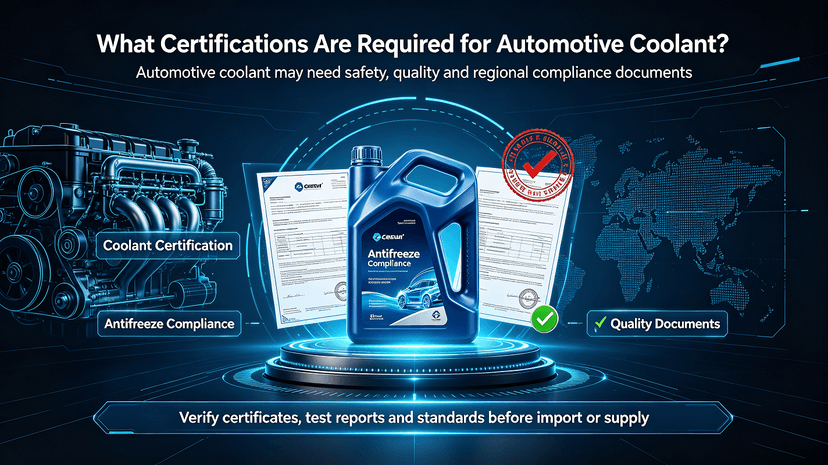
Why coolant certification matters more than many buyers expect
For anyone sourcing engine fluids, coolant certification is not just paperwork. It is the shorthand that tells engineers, procurement teams, and maintenance managers whether a coolant is likely to behave as promised in the field. That matters because the wrong coolant can affect corrosion control, heat transfer, seal life, water pump performance, and even warranty exposure. In heavy-duty fleets, industrial engines, and mixed-platform manufacturing operations, a fluid that looks interchangeable on the shelf may still fail an OEM requirement or miss an antifreeze compliance expectation in a target market.
The basic problem is simple: coolant is a functional chemical, not a commodity liquid. Buyers often have to choose between a broad product claim, a regional standard, and a supplier’s test data. Those are not the same thing. The right decision depends on where the engine is used, what metals are inside the cooling circuit, and whether the application needs long service intervals, mixed-fleet compatibility, or a specific approval path.
What certification usually covers
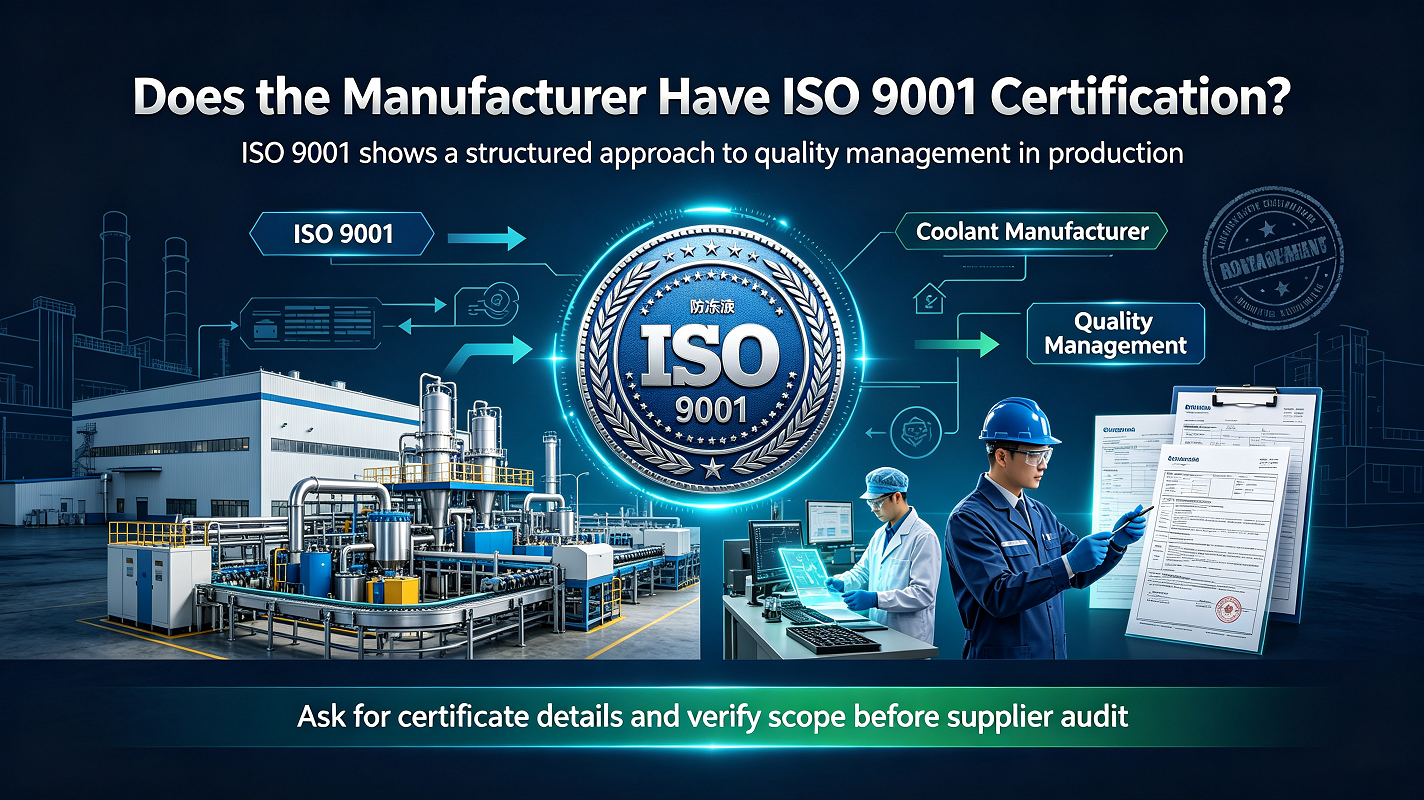
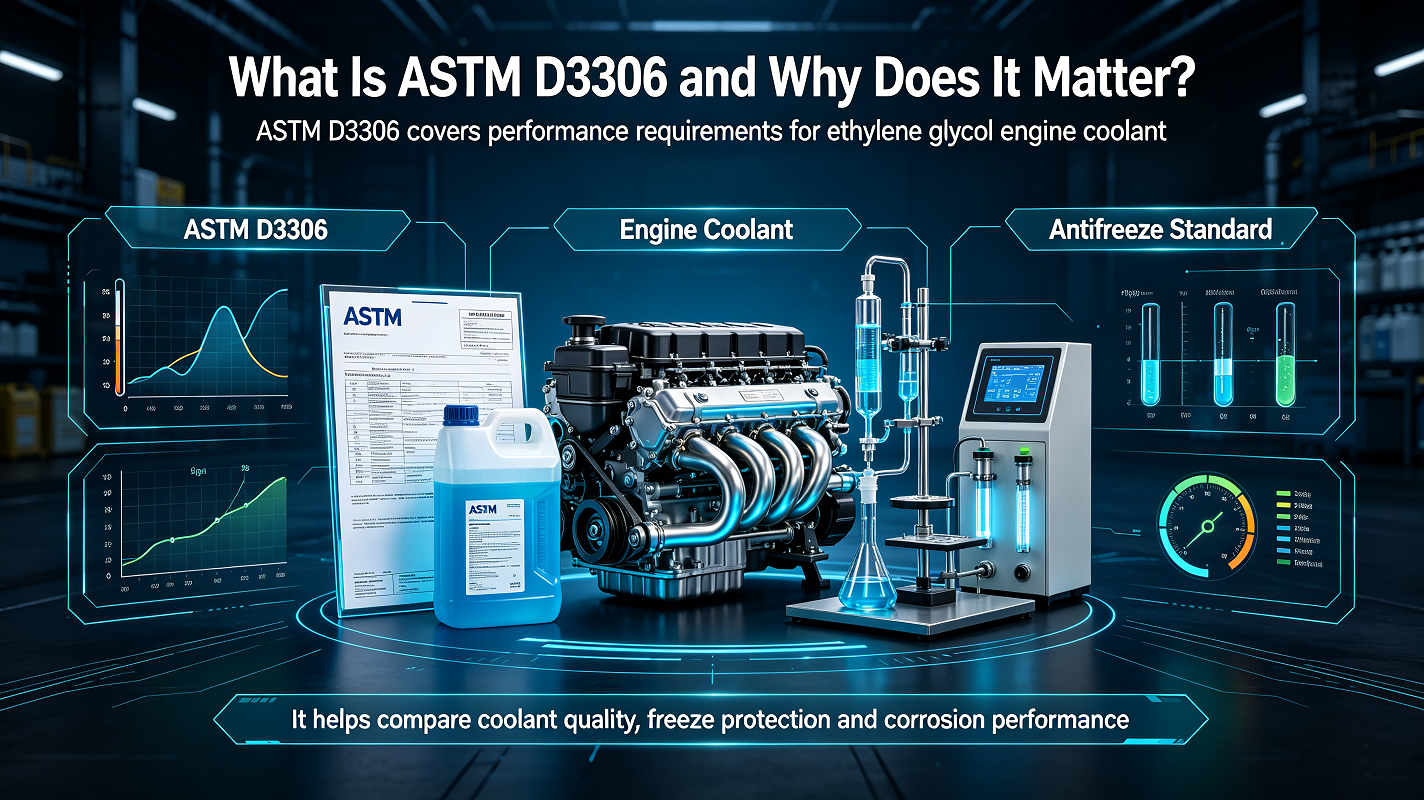
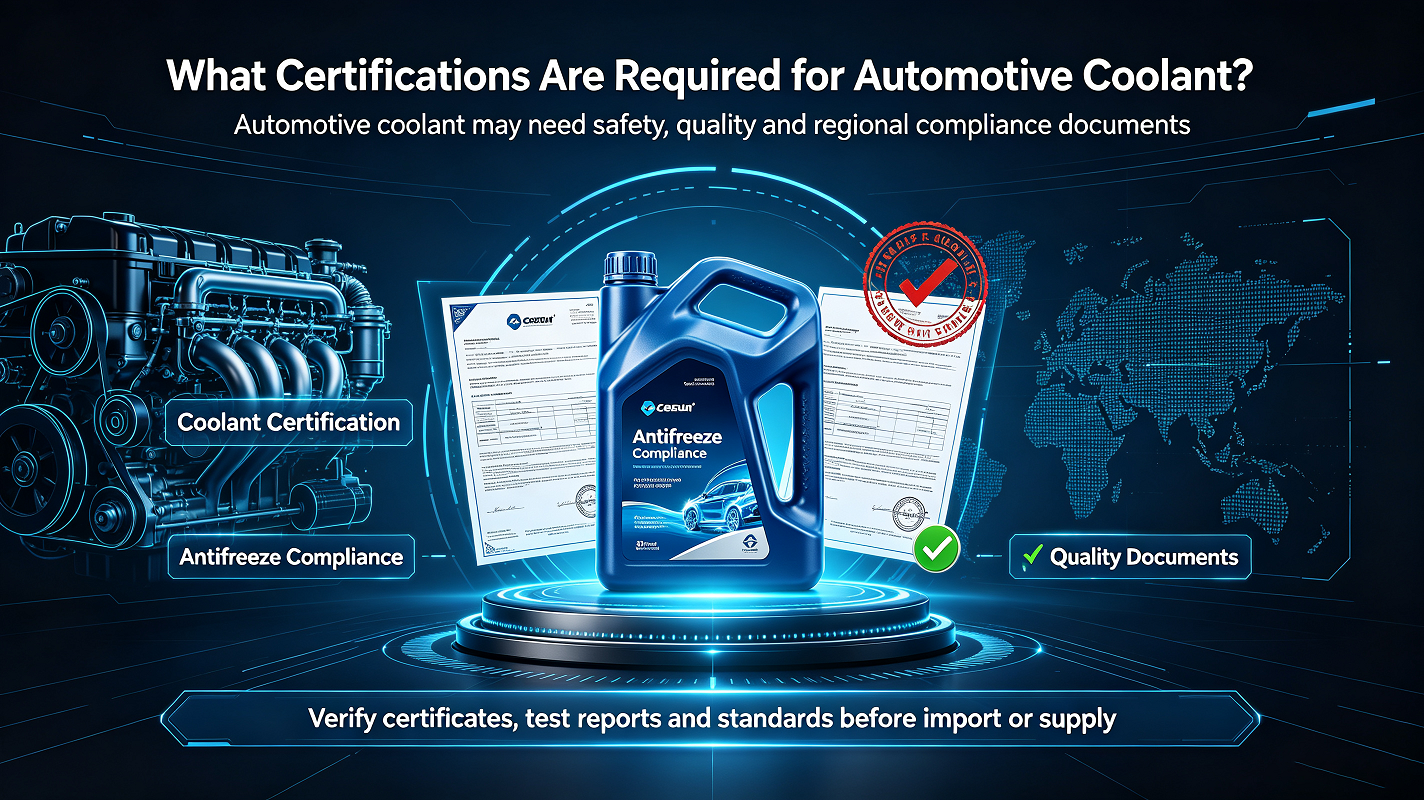
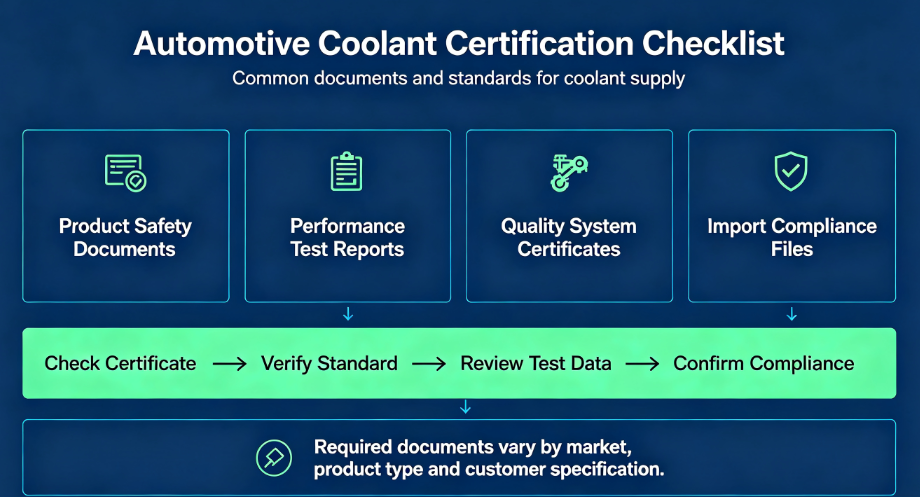
There is no single global seal that tells you everything about engine coolant. In practice, coolant certification can mean one or more of the following: compliance with a published industry standard, alignment with an OEM specification, third-party testing to a recognized protocol, or inclusion on a buyer’s approved products list. A supplier may also reference a global certification list for engine coolant, but that still needs to be checked against the exact engine family and region of use.
For buyers, the key question is not “Is it certified?” but “Certified against what, and for which application?” A coolant can be suitable for one engine platform and a poor fit for another, even when both use similar base chemistries. That is why the wording on the label, technical data sheet, and test summary should all be read together.
Quick comparison: what buyers are really evaluating
Industry standard versus OEM approval
An industry standard is useful because it provides a common baseline. It helps compare products from different suppliers without relying entirely on marketing language. OEM approval, on the other hand, usually carries more weight for a specific engine or vehicle family because it ties the coolant to a manufacturer’s own durability and compatibility requirements.
Claimed compatibility versus proven compliance
Some products claim broad compatibility with multiple antifreeze formulations. That may be useful, but compatibility is not the same as documented compliance. Buyers should ask whether the product was tested under the relevant standard, whether the test data is current, and whether the claim applies to a finished coolant or only to the concentrate before dilution.
The practical details engineers care about
Coolant performance is built from several layers of chemistry and control. The base fluid controls freezing and boiling behavior. Additives manage corrosion, cavitation, and scale formation. Dye is mostly a visual cue and should not be treated as a performance indicator. More importantly, the additive package has to suit the metals in the system, including aluminum, cast iron, copper alloys, solder, and elastomers.
From a sourcing point of view, the technical risk often appears at the boundaries: mixed top-offs, regional formulation differences, or a switch from one coolant family to another without a proper flush. Those are small process decisions that can turn into large service problems. A fluid that is acceptable on paper can still create trouble if maintenance teams mix chemistries or ignore dilution guidance.
Selection criteria that reduce buying mistakes
When evaluating suppliers, start with the application rather than the packaging. Ask what engine types, cooling system materials, and operating temperatures the coolant is intended for. Then check whether the supplier can document the relevant standard, OEM approval, or market-specific compliance requirement. If the product is sold across regions, confirm whether formulation changes exist between markets. This is an easy point to miss and one of the more common causes of specification drift.
It also helps to look at service interval expectations. Some coolants are designed for longer drain intervals, but only if the system is maintained correctly and contamination is controlled. Long-life chemistry is attractive, though not a substitute for disciplined maintenance. In the real world, dirty top-up water and incompatible additives can shorten service life faster than a technical brochure suggests.
Common mistakes in coolant sourcing
The first mistake is buying by color. Color is not a reliable indicator of chemistry or certification status. The second is assuming one antifreeze compliance claim covers every engine in a plant or fleet. It often does not. The third is treating “meets” language as identical to formal approval. Sometimes it is, sometimes it is only a supplier declaration. That distinction matters when warranty audits or field failures happen.
Another frequent issue is failing to define what documentation is required before purchase. If procurement asks only for a product name, the approval trail can get messy later. A better approach is to request the exact standard reference, dilution ratio, base formulation type, and any regional restrictions before the first order is placed.
Buyer-facing questions worth asking suppliers
Ask for the current technical data sheet, the revision date, and the exact scope of the claim. Ask whether the coolant is premixed or concentrate. Ask what water quality is required if dilution is done in-house. Ask whether the product is intended for light-duty, heavy-duty, or mixed-fleet use. These are basic questions, but they flush out a surprising number of weak answers.
If the supplier mentions a global certification list for engine coolant, request the underlying reference rather than accepting the list name alone. Lists can be helpful, but they are only useful if the product, region, and engine family are all clearly matched.
FAQ: short answers for sourcing and engineering teams
Is certification the same as compatibility?
No. Compatibility is broader and often less formal. Certification usually refers to a specific standard or approval path.
Can two coolants meet the same standard and still behave differently?
Yes. They may both pass the same baseline requirement while differing in inhibitor package, service life, or dilution sensitivity.
Should color be part of the buying decision?
Only as a secondary check. It is useful for identification, but it should never replace documentation.
What to do next
If you are sourcing for a new program or reviewing an existing supply base, start by building a simple approval matrix: engine family, region, required standard, dilution method, and maintenance interval. That matrix will do more for purchasing discipline than a stack of promotional claims. From there, compare suppliers on documentation quality, not just on price or packaging. In this category, the cheapest bottle can become the most expensive decision after a warranty claim or a cooling-system cleanup.
Welcome to contact GAFLE for more information & cooperation!
peter
ZHEJIANG GAFLE AUTO CHEMICL CO.,LTD
Tel:86-579-8222 1665
Fax:86-579-8246 4690
Cel/Wechart:86-13335993986
E-mail:peter@gafle.net
Web:www.gafle.net