Why the Safety Data Sheet matters before a shipment moves
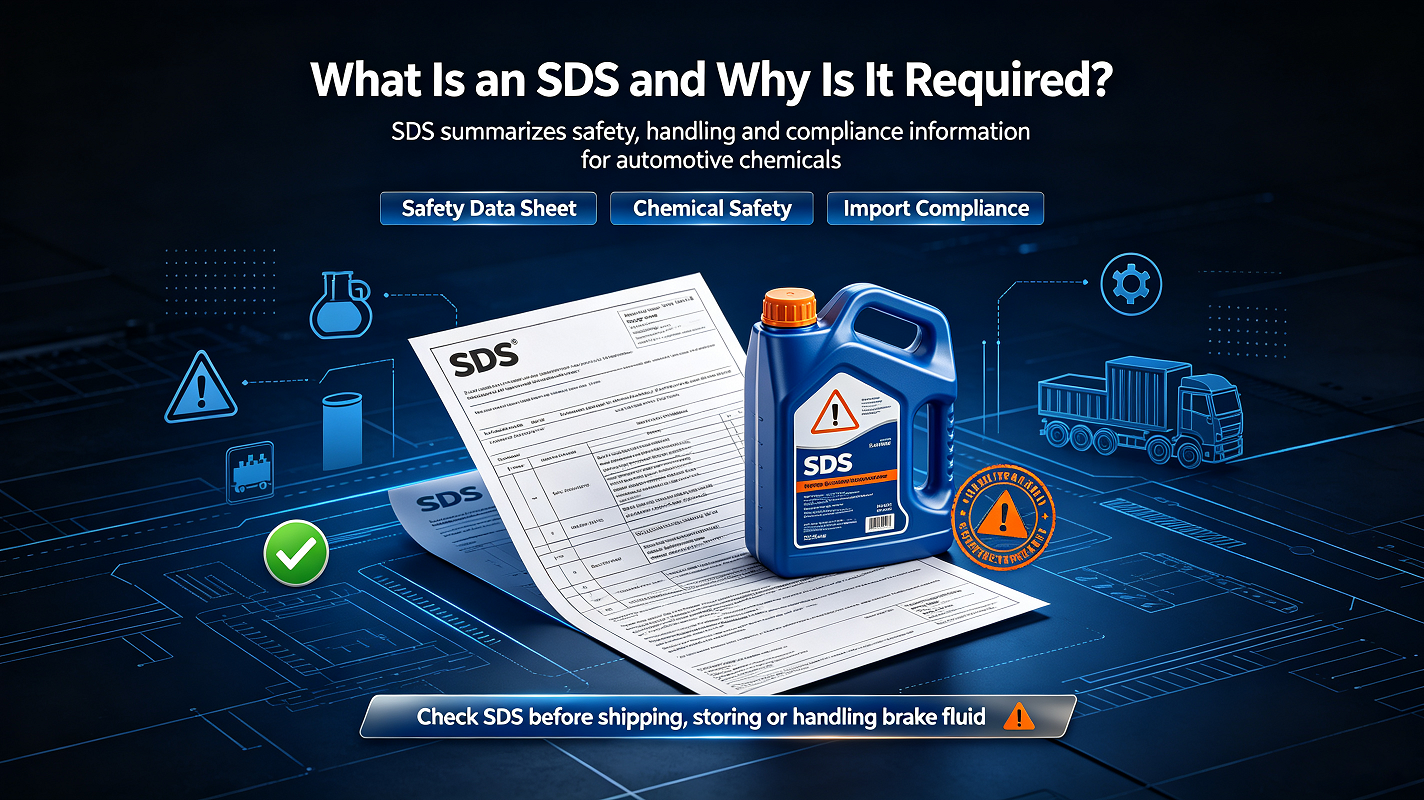
A Safety Data Sheet is one of those documents people tend to notice only when something goes wrong. In manufacturing, distribution, and import work, that is usually too late. Whether the product is brake fluid, a solvent blend, a coating, or a cleaning chemical, the Safety Data Sheet is the core chemical safety document that tells buyers, handlers, and regulators what the material is, what risks it carries, and how it should be stored, used, and transported. For engineers and sourcing managers, the question is not just what is an SDS, but whether the paperwork matches the actual material and the way it will be handled on your site.
That matters because a missing or poorly prepared SDS can delay receiving, create warehouse friction, and complicate an import. It can also create real safety exposure. A label may say one thing, but the SDS is where people look for hazards, first aid steps, firefighting guidance, exposure controls, and disposal advice. If the document is weak or outdated, the risk is not abstract. It affects the people opening drums, mixing batches, filling lines, or moving pallets through a plant.
What an SDS is meant to do
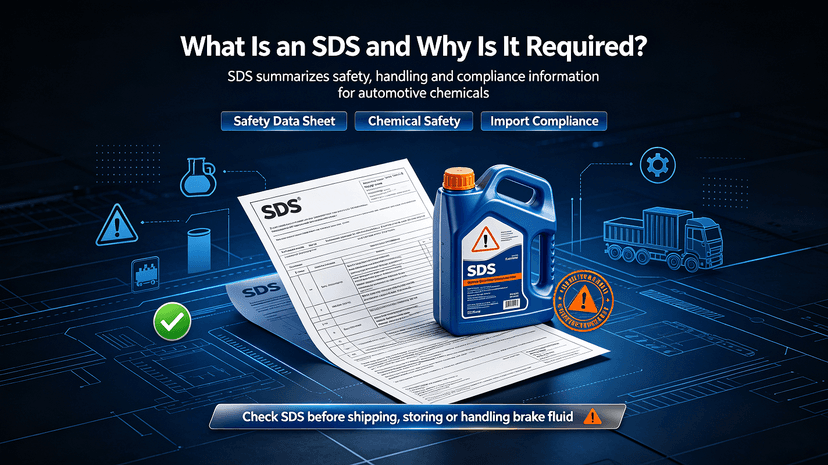
At its best, an SDS is a working document, not a piece of compliance theater. It helps a buyer make practical decisions: can this material be stored near other chemicals, does it need ventilation, what PPE is sensible, and does the shipping paperwork line up with the product classification? For common industrial products, including brake fluid, the SDS may also signal how the fluid behaves under heat, how it should be cleaned up, and whether incompatibilities are likely to cause trouble in transit or use.
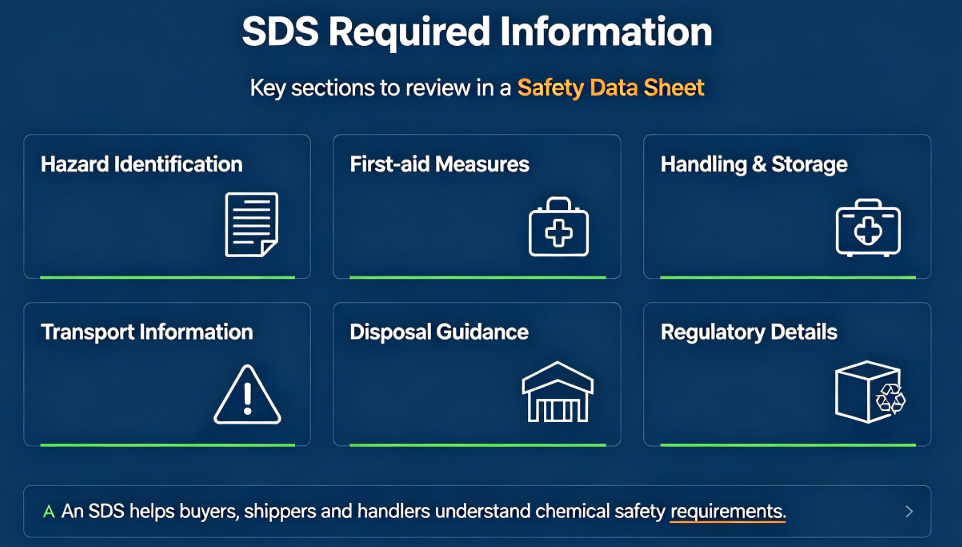
A proper sheet usually covers the product identification, hazard identification, composition, first aid measures, firefighting measures, accidental release response, handling and storage, exposure controls, physical and chemical properties, stability and reactivity, toxicological information, and transport or regulatory notes. Not every section will be dramatic. In fact, most of the value comes from the ordinary details: flash point, odor, appearance, ingredient class, and storage precautions. Those are the fields that help operations teams avoid mistakes.
Where buyers usually run into problems
The biggest issue is assuming the document is universal. It is not. An SDS is specific to a formulation and, in many cases, to a region or regulatory framework. A supplier may provide a document that looks polished but does not reflect the exact grade being shipped. That is especially risky in import work, where customs, freight forwarders, and local compliance teams may expect documentation in a specific format or language.
Another common problem is treating the SDS as static. Formulas change. Ingredient disclosures shift. Regulatory classifications can be revised. If your purchasing team is still using an older version, the plant may be operating on outdated assumptions. That creates avoidable headaches when the receiving team asks for one document and the EHS team asks for another.
How to review an SDS without getting lost in jargon
Start with identity and version control
Check that the product name, supplier name, issue date, and revision date are clear. If those fields do not align with the purchase order or technical data sheet, pause. A mismatch here is often a sign that the wrong file has been attached or that the supplier is using a generic template.
Then look at the practical hazards
For production teams, the most useful sections are often the hazard summary, first aid, storage conditions, and spill response. If the material is a brake fluid or another workshop chemical, pay attention to what the sheet says about moisture sensitivity, incompatibility with certain materials, and whether contamination changes performance. Those details influence how containers are opened, sampled, and transferred.
Don’t skip transport and import notes
If you are planning an import, confirm that the SDS supports the shipping method and destination market. Freight partners may ask whether the document identifies the product class correctly, whether the packaging group applies, and whether special declarations are needed. A chemical safety document that is technically complete but unusable for logistics is still a problem.
Common mistakes that slow down sourcing
One mistake is asking for the SDS only after the order is confirmed. That is backwards. The document should be reviewed during qualification, before the first shipment. Another is relying on a sales brochure or catalog description to stand in for compliance paperwork. Those documents are useful, but they are not substitutes.
Another buyer-facing warning: do not assume a supplier’s SDS automatically satisfies your internal standards. Some companies need site-specific review, language translation, or comparison against restricted substance lists. That is normal. It is also why purchasing, quality, and EHS should look at the same file, not separate versions stored in different inboxes.
Practical buyer advice
If you are sourcing chemicals regularly, build a simple document check into procurement. Confirm the file name, revision date, product identity, and destination-market suitability before release. If the product is used in a line or workshop setting, ask how the SDS aligns with storage temperature, cleaning procedures, and waste handling. Those are mundane questions, but they prevent the expensive kind of surprise.
It also helps to keep a controlled archive. When a formulation changes, the old version should not disappear into a shared drive where nobody can tell which file is current. That is especially important for imported material, where customs records, warehouse instructions, and internal safety training may all depend on the same document set.
FAQ: what people usually ask first
Is a Safety Data Sheet the same thing as an MSDS?
In many workplaces, people still use the older MSDS term casually, but SDS is the more current format in most modern systems. The important point is not the acronym; it is whether the document matches the product and the governing rules in your market.
Can I accept an SDS if it looks generic?
Only with caution. Some sections can be standardized, but the document should still reflect the actual product. If the wording is too broad or the composition details are vague, ask for clarification before the material ships.
Who should review it?
At minimum, purchasing, quality, and EHS should all have a look. If the product is going into a regulated process, add the production or engineering owner as well.
What a good next step looks like
For buyers, the goal is simple: make the Safety Data Sheet part of qualification, not paperwork after the fact. When the SDS is current, specific, and usable, it supports safer handling, smoother import activity, and fewer delays at receiving. When it is missing or sloppy, it becomes a small document with an outsize ability to slow a plant down.
If you are setting up a new supplier or reviewing a chemical line item, ask for the SDS early and compare it against the product description, shipment route, and intended use. That short check often reveals whether the supply chain is ready or whether more questions need answering before anyone signs off.
Welcome to contact GAFLE for more information & cooperation!
peter
ZHEJIANG GAFLE AUTO CHEMICL CO.,LTD
Tel:86-579-8222 1665
Fax:86-579-8246 4690
Cel/Wechart:86-13335993986
E-mail:peter@gafle.net
Web:www.gafle.net