
Why repeated brake fluid loss matters
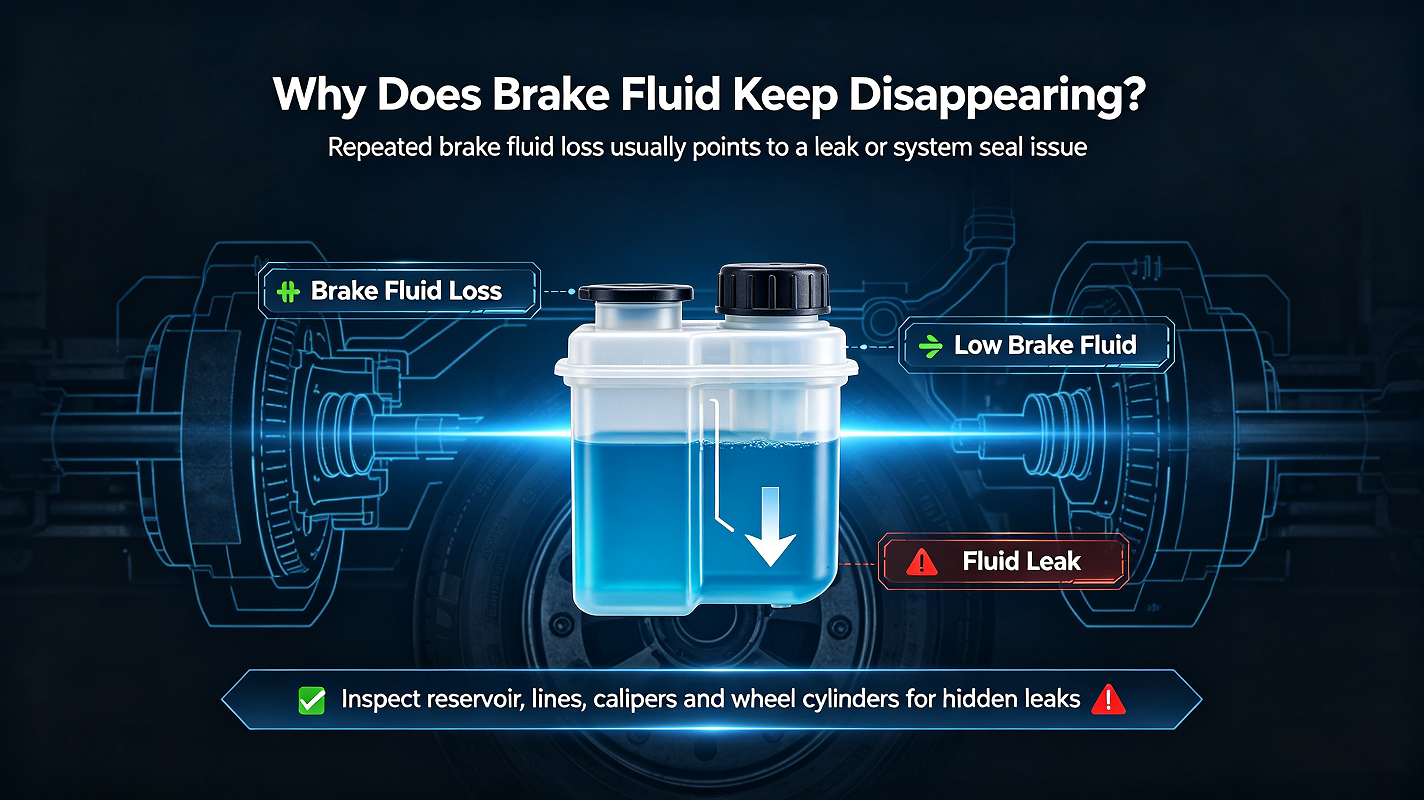
When a driver notices brake fluid loss, the first question is usually whether it is a minor maintenance issue or the start of a real safety problem. In most cases, a dropping reservoir level is not something to watch casually. A brake system is designed to hold pressure, and that pressure depends on the fluid staying where it belongs. A small level change can happen as brake pads wear, but repeated loss points to a leak, a worn component, or a fault that deserves attention before the pedal feel changes.
That distinction matters because the brakes often give only a short warning window. A vehicle may still stop one day and feel vague the next. By the time fluid is visibly missing from the reservoir, the system may already be pulling in air or struggling to build pressure consistently.
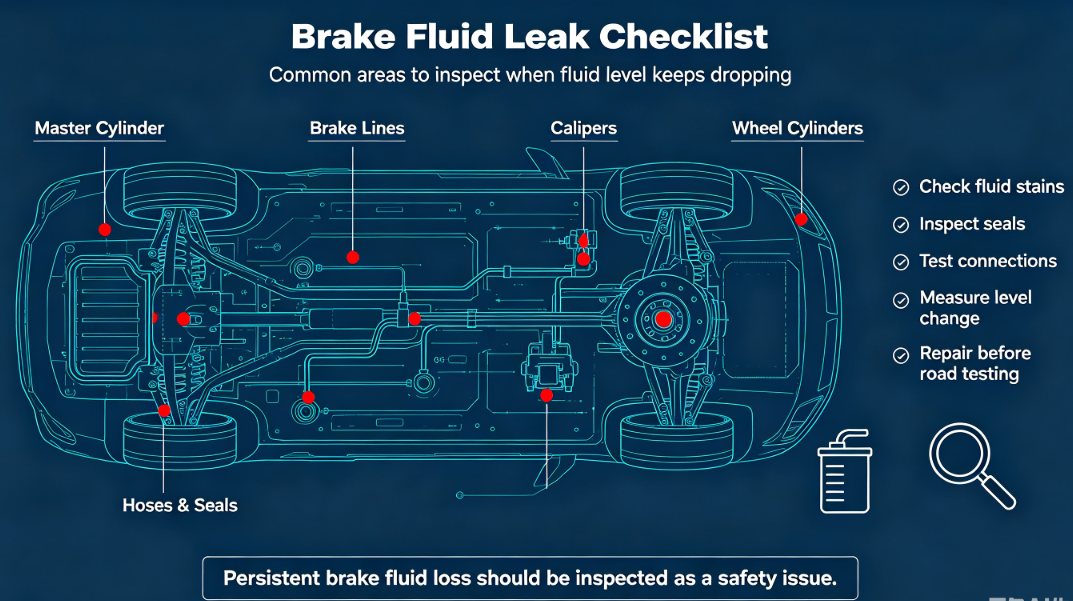
Where the fluid usually goes
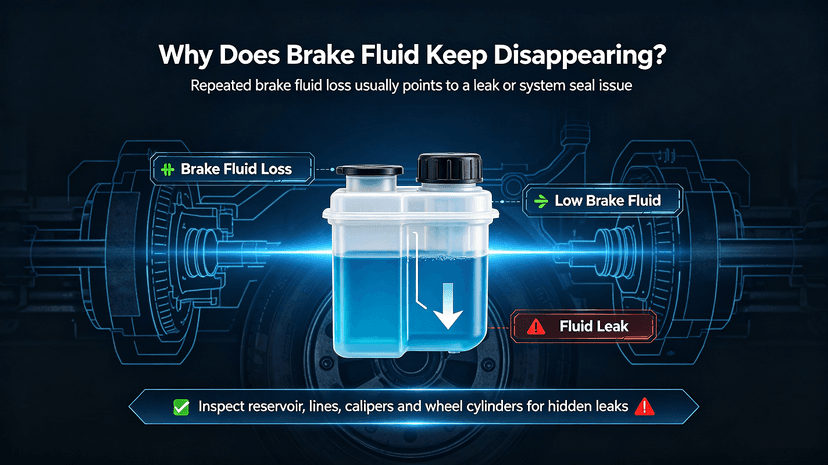
If the reservoir keeps dropping, the fluid is usually leaving through one of a few common paths. External leak points are the most obvious: calipers, wheel cylinders, flexible brake hoses, steel lines, fittings, bleeder screws, and the master cylinder itself. On some vehicles, corrosion on hard lines is the real culprit, especially where road splash and salt collect along the underbody.
There is also the less obvious case where the master cylinder seal fails and fluid moves into the brake booster. That may not leave a puddle on the floor, which is why a vehicle can lose braking performance without an obvious drip. A damaged wheel cylinder inside a drum brake can be just as sneaky. The inside of the drum may be damp long before fluid reaches the ground.
One practical caution: a low reservoir is not always the same thing as a fresh leak. As brake pads wear, caliper pistons extend farther, and the fluid level can drop a bit. That is normal. What is not normal is having to top it up again and again.
How to find leak points without guessing
How to find leak problems starts with a clean system and a methodical look. If the undercarriage is already dirty, wipe away the grime first so fresh wet spots are easier to spot. Then check the reservoir level, the master cylinder body, and the area around the brake booster. Follow the lines from the master cylinder down to each wheel, looking for a damp seam, a stained fitting, or an area that stays dusty because it is lightly wet with fluid.
At each wheel, look behind the tire and around the caliper or drum backing plate. Brake fluid can collect inside a dust boot and only show up when the boot is lifted or the part is moved. If the pedal is pumped with the engine off, a weak point may start to seep more clearly. A shop may also use UV dye or a pressure test to pinpoint a stubborn leak, but the basic approach is the same: start clean, inspect under pressure, and don’t assume the most visible wet spot is the original source.
If there is no obvious drip in the driveway, place cardboard under the vehicle overnight. It sounds simple because it is, and it often saves time. A paper trace is sometimes easier to interpret than a dark stain on concrete.
Causes of repeated brake fluid loss
The Causes of repeated brake fluid loss are usually mechanical rather than mysterious. Old rubber hoses can crack or bulge under pressure. Steel lines can rust through where they run along the frame or under body mounts. Caliper seals wear with age and heat cycles. Wheel cylinder cups can begin to seep after long service, especially if the brakes have seen moisture inside the system. Even a loose bleeder screw or an imperfect fitting can create a slow but persistent leak.
Another cause that gets overlooked is neglected brake service. A system that has not been flushed for years can carry moisture, and moisture speeds up internal corrosion. That does not mean every old vehicle will fail, but it does mean the components that handle fluid close to the road surface are working in a harsh environment. Heat, water, salt, and vibration are not kind to brake hardware.
When the problem is not really a leak
There are cases where the reservoir level drops because the pads are wearing, and once new pads are installed the level stabilizes again. That is normal compensation, not true fluid loss. The key clue is repeat behavior. If the level falls quickly after topping off, or if the pedal becomes softer, longer, or inconsistent, something else is happening.
What to do before driving again
If the pedal sinks, the warning light comes on, or fluid is visible near a wheel, the safest choice is to stop driving and inspect the system. Topping off the reservoir can get a vehicle off the road or into a repair bay, but it is not a fix. It just restores fluid volume temporarily. The underlying fault will usually return, and sometimes it returns in a worse place.
It is also important to use the correct brake fluid specification for the vehicle. Mixing fluid types is a mistake that can create compatibility problems, especially if the system is sensitive to rubber swelling or boiling point requirements. If the cap or service literature specifies a particular DOT rating, follow that rather than guessing. That sounds basic, but brake repairs often go wrong on basic details.
Repair choices that actually solve the problem
The right repair depends on where the loss is coming from. A leaking hose or line usually needs replacement, not patching. A caliper or wheel cylinder with a failed seal is often replaced as an assembly because labor time and reliability matter as much as parts cost. If the master cylinder is leaking into the booster or bypassing internally, replacing seals may not be the best long-term answer. In many vehicles, a full master cylinder replacement is the more dependable route.
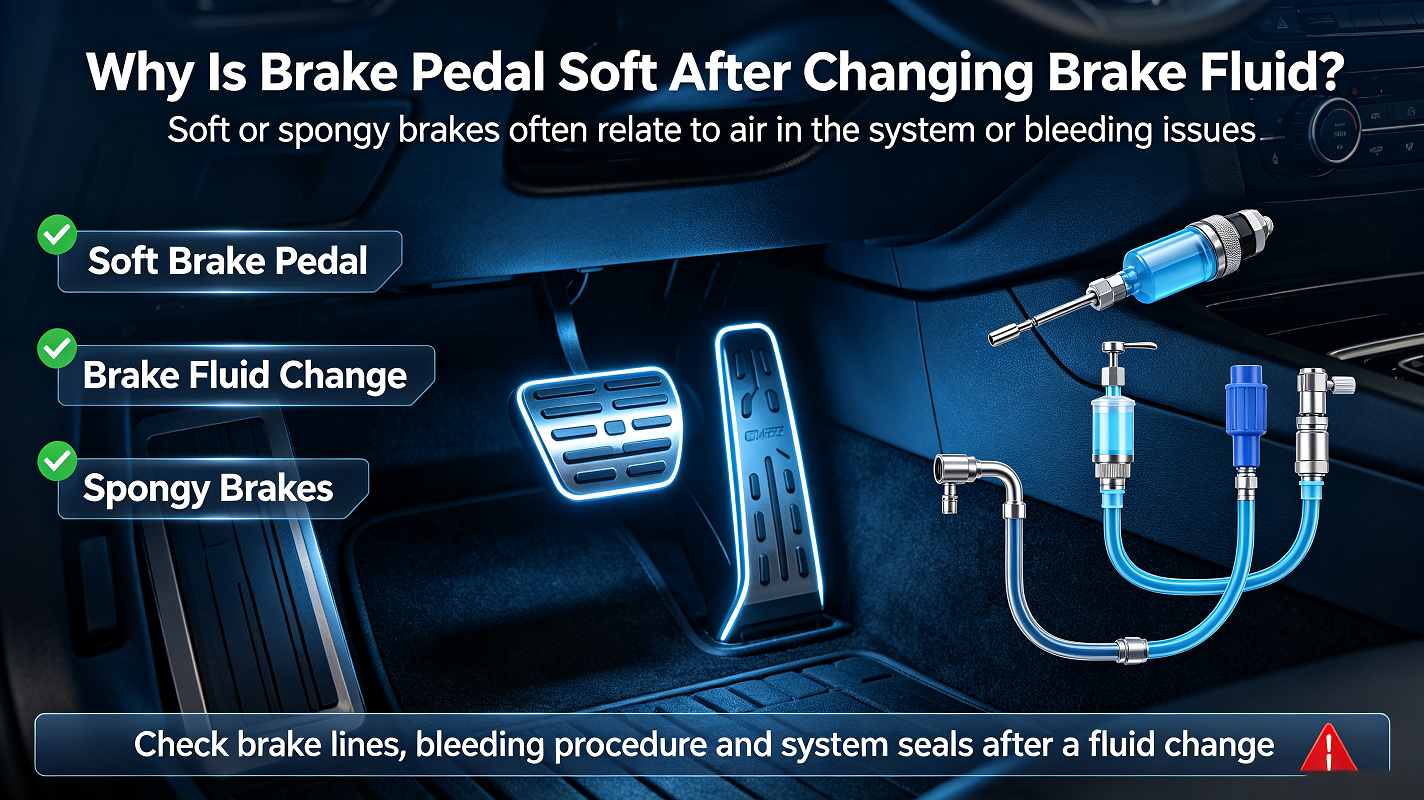
After the faulty component is repaired, the system should be bled properly so air is removed and pedal travel returns to normal. A fluid flush is often sensible at that point, especially if the old fluid is discolored or if moisture contamination is suspected. That extra step is not glamorous, but it helps protect the new parts from the same conditions that damaged the old ones.
What buyers and fleet managers should watch for
For anyone maintaining a vehicle over time, repeated brake fluid loss is a warning that maintenance records matter. The question is not just what failed, but why the failure was missed. Were the lines inspected at the last brake service? Was the fluid checked during tire rotations? Was the reservoir drop blamed on pad wear without looking for wet hardware?
Those are practical questions, and they are worth asking because brake problems rarely appear out of nowhere. They build. A small seep today can become a roadside failure later, and the repair bill usually grows with the delay.
FAQ
Can brake fluid disappear without a puddle?
Yes. It can seep into a caliper boot, a wheel cylinder, the booster area, or a hard-to-see fitting without leaving a dramatic stain on the ground.
Is it normal for the level to drop over time?
A slight drop can happen as brake pads wear. Frequent topping off is not normal and should be treated as a fault until proven otherwise.
Should I just add fluid and keep driving?
Only as a temporary measure, and only if the vehicle is still safe to move. Repeated loss needs inspection, not repeated refills.
Next step
If the reservoir keeps falling or the pedal feel is changing, have the brake system inspected before the car is put back into regular service. The fastest fix is usually the one that starts with a clean diagnosis, not the one that chases the first wet spot and hopes for the best.
Welcome to contact GAFLE for more information & cooperation!
peter
ZHEJIANG GAFLE AUTO CHEMICL CO.,LTD
Tel:86-579-8222 1665
Fax:86-579-8246 4690
Cel/Wechart:86-13335993986
E-mail:peter@gafle.net
Web:www.gafle.net