
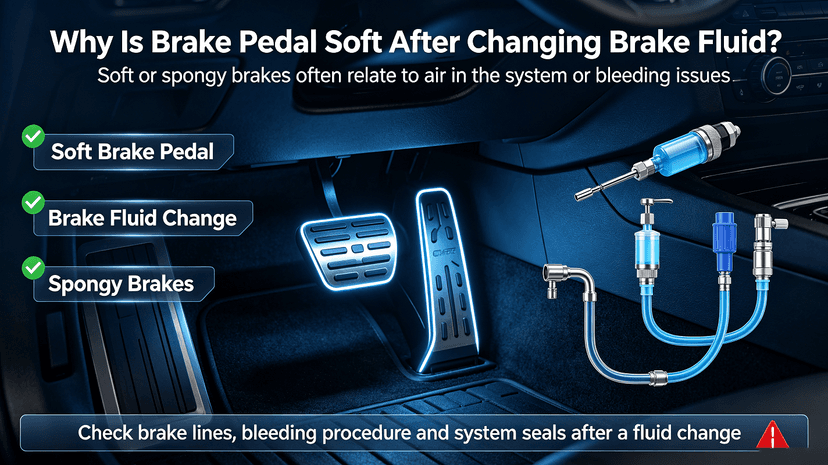
Why a soft brake pedal deserves attention fast
A soft brake pedal is one of those symptoms people tend to describe vaguely at first: the pedal travels farther than expected, pressure builds late, and the car may feel less predictable during the first part of the stop. For shop owners, fleet managers, and anyone responsible for vehicle uptime, that matters because the pedal feel is often the first sign that the brake system is not working as intended.
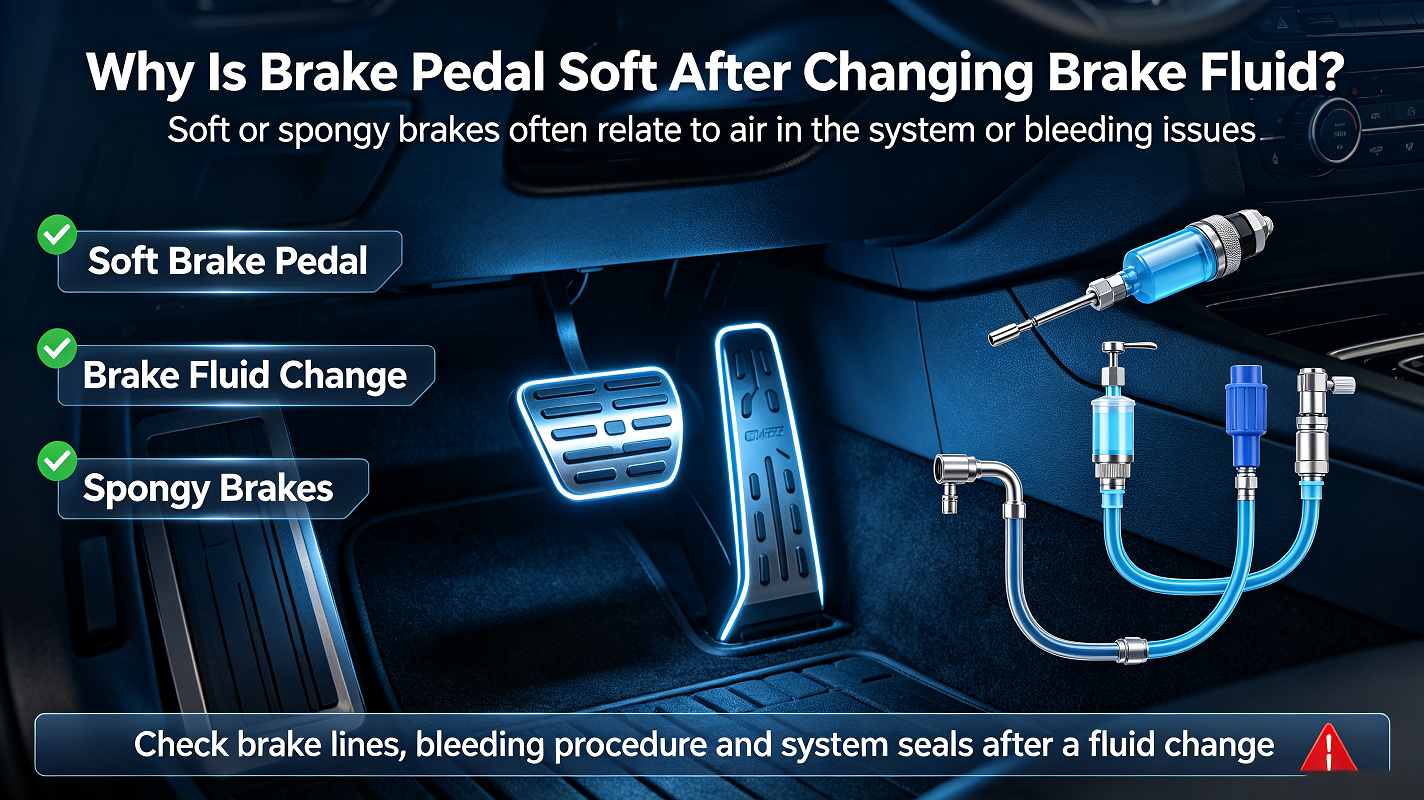
The issue is not just comfort. It is a control problem. A pedal that feels Spongy can mean the hydraulic system is compressing something it should not, usually air, moisture, or an internal leak. Sometimes the cause is simple and recent, such as a brake pedal feels soft after brake fluid change complaint that traces back to incomplete bleeding. Other times, the root cause is older and more mechanical, which is why a quick visual check rarely tells the full story.
What a soft pedal usually points to
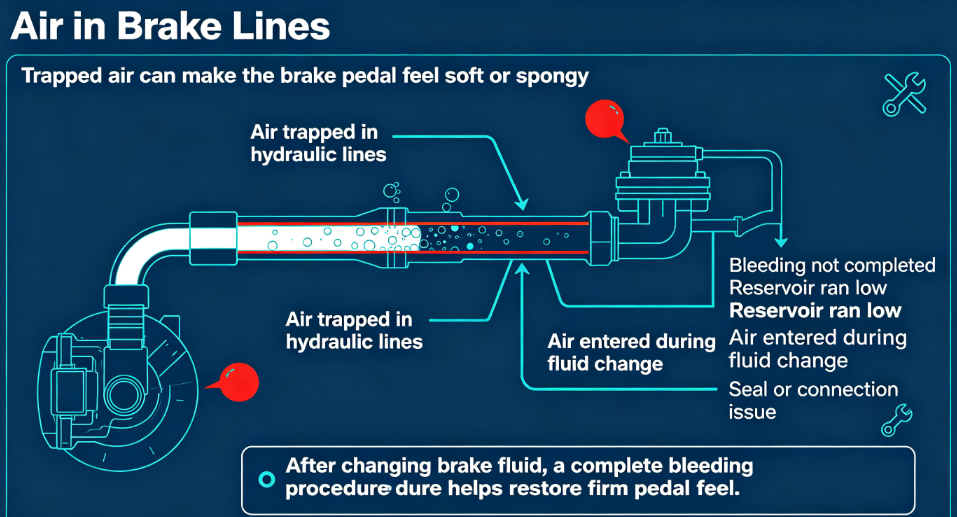
In a healthy hydraulic brake system, pedal movement transfers force directly through brake fluid to the calipers or wheel cylinders. Fluid does not compress much. Air does. That simple difference explains why Air in brake lines is so often the first suspect when a pedal feels wrong.
That said, a brake bleeding issue is not the only possibility. A soft pedal can also show up if the master cylinder is bypassing internally, if there is an external leak, if rubber hoses are expanding under pressure, or if contaminated fluid has changed the way the system behaves. On some vehicles, worn components can mask themselves as hydraulic softness, so it is worth separating pedal feel from actual stopping distance before jumping to conclusions.
Quick reference: common causes and what they tend to look like
Air introduced during service
This is the most common reason a driver notices a soft brake pedal right after maintenance. If the system was opened for a hose, caliper, or fluid replacement, trapped air can remain in the lines and compress under pedal force.
Incomplete brake bleeding
Bleeding that looks fine on paper can still leave pockets behind, especially in ABS-equipped systems or when the sequence is not followed carefully. A brake bleeding issue often shows up as inconsistent pedal travel, not just a single bad stop.
Fluid condition problems
Brake fluid absorbs moisture over time. That does not always create an immediate soft pedal, but it can reduce performance and make the system less stable under heat. If the fluid is old, dark, or contaminated, the problem may be broader than the pedal feel suggests.
Mechanical expansion or leakage
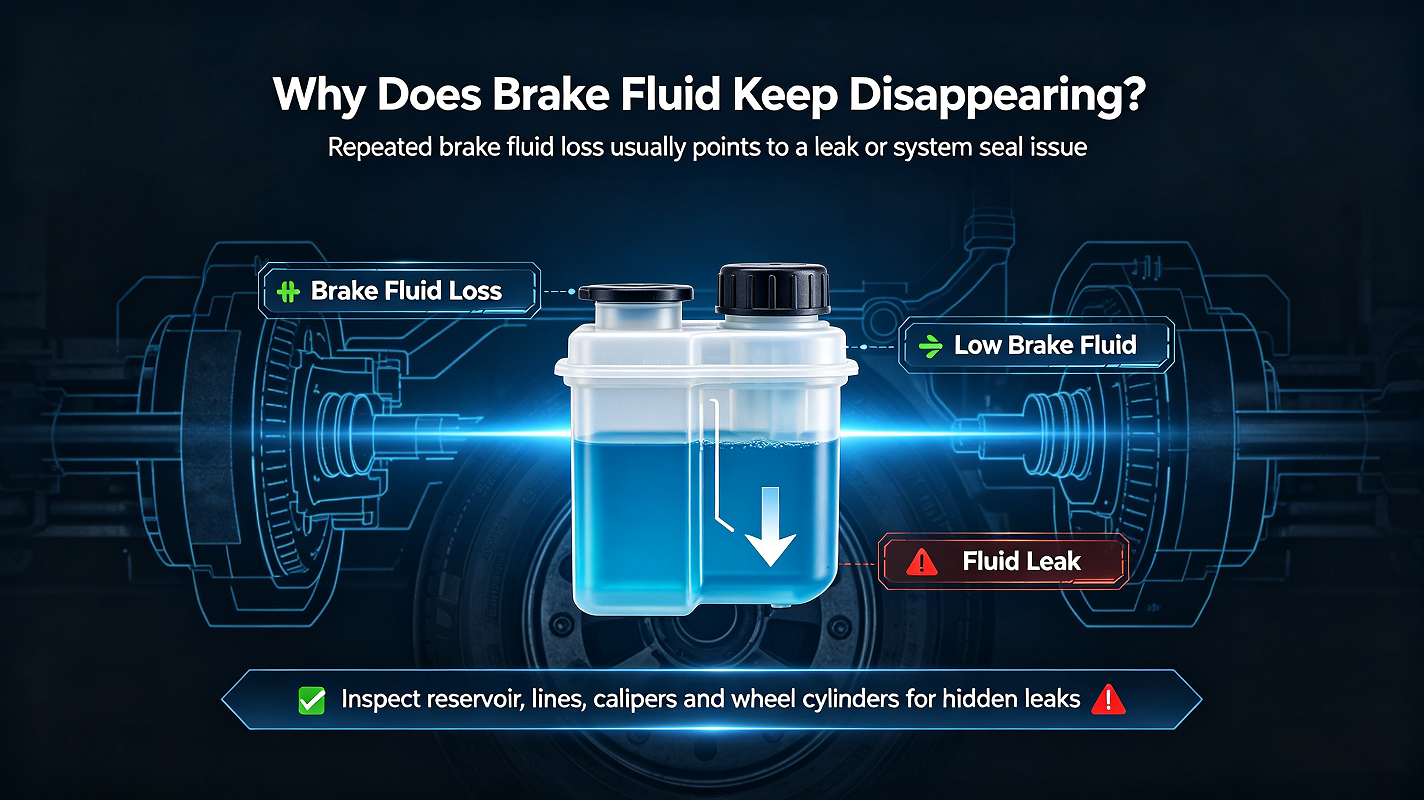
Softness can come from hoses that swell under pressure, a leaking caliper seal, or master cylinder wear. These issues may not always leave a visible puddle. That is the practical annoyance: the system can lose firmness before it loses fluid enough to drip.
How to narrow down the problem without guessing
A useful first step is to note when the symptom appears. If the brake pedal feels soft after brake fluid change, the timing strongly suggests trapped air or an incomplete bleed. If the pedal has slowly gotten worse over weeks, the more likely causes shift toward wear, fluid degradation, or a developing leak.
From there, the inspection should be methodical. Check fluid level, look for wet fittings around calipers, wheel cylinders, flexible hoses, and the master cylinder, then compare pedal behavior with the engine off and on. A pedal that firms up after a few pumps may point toward hydraulic free play or air. A pedal that sinks under steady pressure deserves closer inspection of the master cylinder and the rest of the brake system.
One practical caution: a soft pedal can feel different from vehicle to vehicle. A light passenger car, a loaded van, and a commercial chassis do not all communicate brake effort the same way. That makes a road test useful, but only after the basic checks are done. Do not rely on “it still stops” as proof that everything is fine.
Bleeding and fluid service: where many mistakes happen
When the symptom appears after service, the likely answer is usually procedural rather than mysterious. The system may not have been bled in the correct sequence, the reservoir may have run low during the job, or air may have entered through a fitting that was reopened too quickly. On some systems, especially those with ABS modules, standard bleeding methods may not remove every trapped bubble.
That is why a brake bleeding issue should be treated as a process check, not just a parts issue. The technician needs to confirm that the fluid path is fully purged and that the pedal is stable under repeated application. If not, repeating the service with the right sequence often solves more than replacing parts at random.
Selection and maintenance choices that reduce repeat complaints
For buyers and maintenance teams, the real decision is not just how to fix one soft brake pedal. It is how to avoid a repeat call. That starts with using the correct brake fluid for the vehicle, keeping contamination out of open lines, and documenting service steps so bleeding is not left to memory.
It also helps to treat hoses and seals as wear items, not permanent hardware. A brake system can look intact and still behave poorly under pressure. If a vehicle is older, high-mileage, or operated in heat and stop-and-go duty, a more conservative inspection schedule is usually cheaper than chasing intermittent pedal complaints.
Common mistakes that waste time
One mistake is assuming that a soft pedal always means the same thing. It does not. Another is replacing the master cylinder before checking for trapped air or a small external leak. That can become an expensive detour.
A second mistake is ignoring the symptom because the brakes still work. A Soft pedal may leave enough stopping power for a cautious drive, but the margin is smaller than it should be. In fleet work, that is a poor trade.
Finally, some shops bleed one corner, test quickly, and call the job done. That may be enough on simple systems, but not always. If the pedal is still inconsistent, the diagnosis is unfinished.
Frequently asked buyer questions
Does a soft pedal always mean air in the brake lines?
No. Air is common, but leaks, hose expansion, fluid condition, and master cylinder problems can produce a similar feel.
Why does the pedal feel soft right after a fluid change?
That often points to air left in the system or an incomplete bleed. It is one of the clearest clues in brake diagnostics.
Should the vehicle be driven?
If the pedal feel has changed noticeably, the safest choice is to inspect it before normal driving. The symptom can worsen quickly if the underlying issue is a leak.
What to do next
If the symptom appeared after maintenance, start with bleeding and procedure checks. If it developed gradually, inspect the full brake system for leaks, hose condition, fluid quality, and master cylinder behavior. The goal is not just to restore a firmer pedal, but to understand why the pedal changed in the first place. That is what keeps the repair from turning into a repeat job a week later.
Welcome to contact GAFLE for more information & cooperation!
peter
ZHEJIANG GAFLE AUTO CHEMICL CO.,LTD
Tel:86-579-8222 1665
Fax:86-579-8246 4690
Cel/Wechart:86-13335993986
E-mail:peter@gafle.net
Web:www.gafle.net